Latin: musculus quadratus plantae
Overview
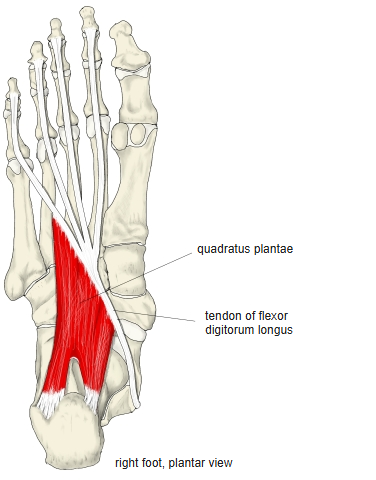
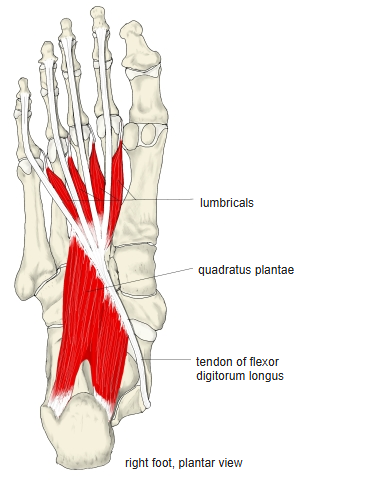
- Also called flexor accessorius: the tendons of the flexor digitorum longus reach the lateral toes obliquely, and this muscle pulls them into line with the long axis of the metatarsals.
- Wikipedia describes two heads, separated by the long plantar ligament: a larger, fleshy medial head and a flat, tendinous lateral head. Other sources rarely mention them.
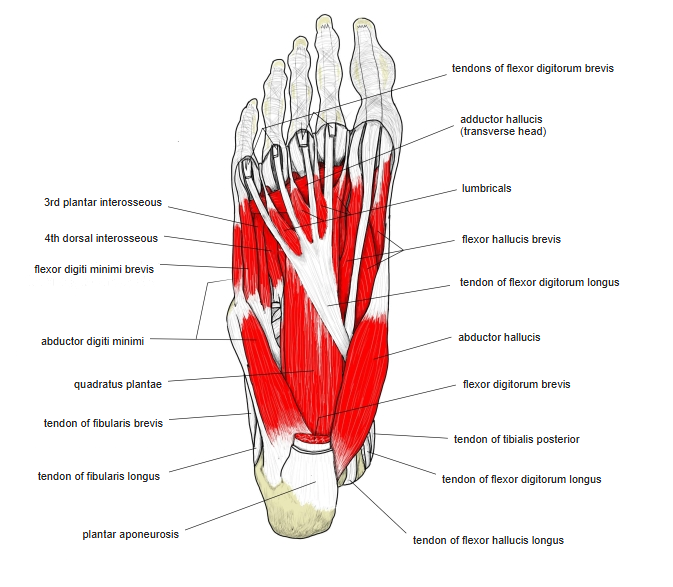
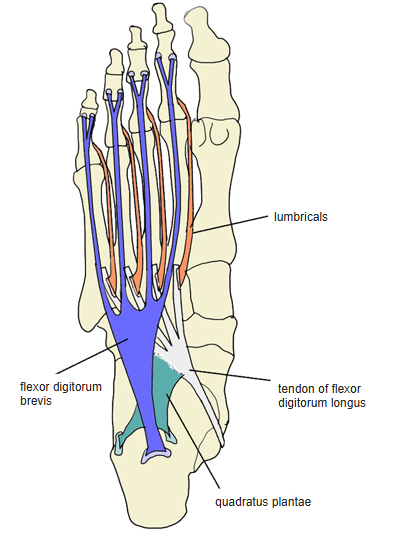
- Lies deep to the flexor digitorum brevis, so it cannot be felt directly; its tension can be sensed a little when the toes are flexed and relaxed.
- One of the few muscles of the foot with no counterpart in the hand.
Position in the classification
Lower Limb › Foot › Sole of foot › Metatarsal muscles
Illustrations
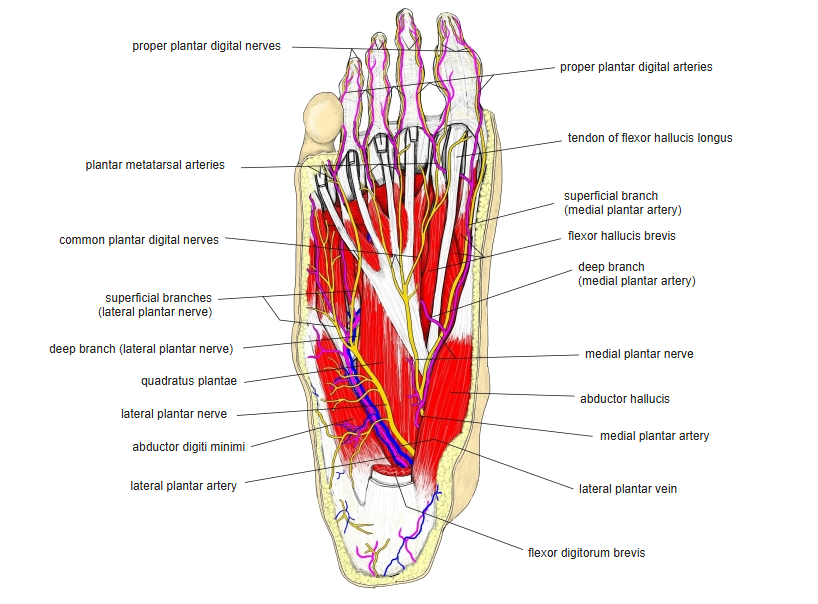
Origin / insertion
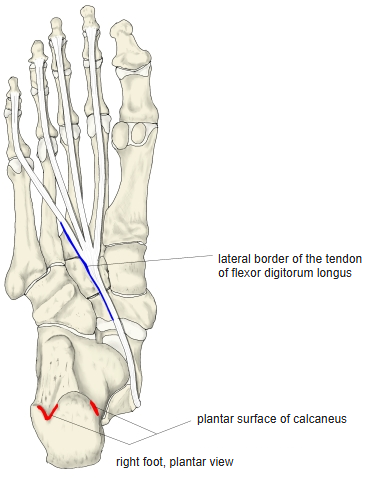
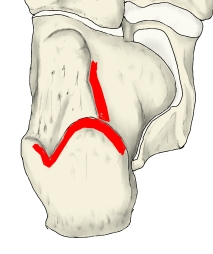
- Origin: calcaneus
- Medial and inferior surfaces of the calcaneus
- Also given: plantar surface of the calcaneus
- Medial and plantar borders of the underside of the calcaneal tuberosity (Prometheus)
- Insertion: lateral border of the tendon of the flexor digitorum longus
Action
- Helps the flexor digitorum longus to flex the 2nd–5th toes (middle phalanges) by pulling its tendon backwards and straightening its line of pull
Innervation
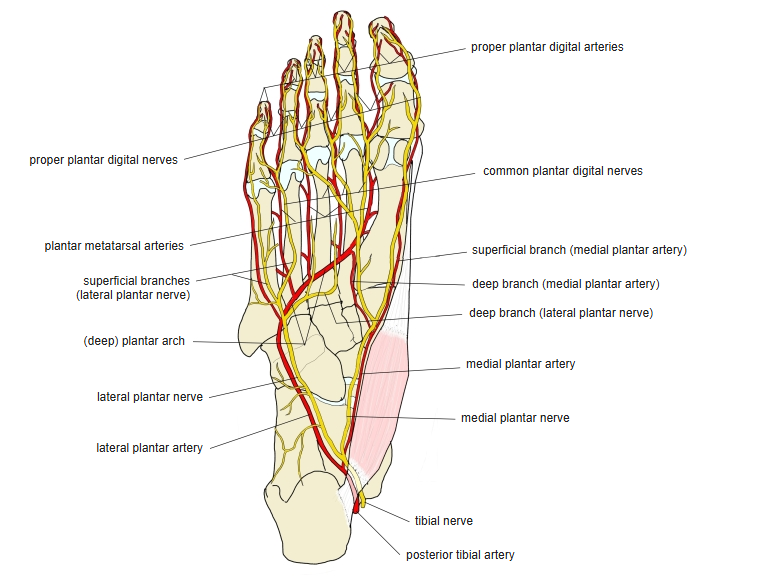
- Plantar nerve (S1, S2): sources differ between the medial plantar nerve and the lateral plantar nerve
Blood supply
- Medial and lateral plantar arteries
Anatomical variations
- The lateral head is often missing; the whole muscle may be absent (Wikipedia)
- The number of long flexor tendons it joins varies: usually those of the 2nd–4th toes, often also the 5th, occasionally only two (Wikipedia)
Related terms
- Flexor digitorum longus
- Flexor digitorum brevis
- Lumbricals (foot)
- Calcaneus
- Long plantar ligament
- Lateral plantar nerve
- Medial plantar nerve
References and sources
- Further reading: Quadratus plantae muscle, Wikipedia.