Latin: musculus rhomboideus major
Overview
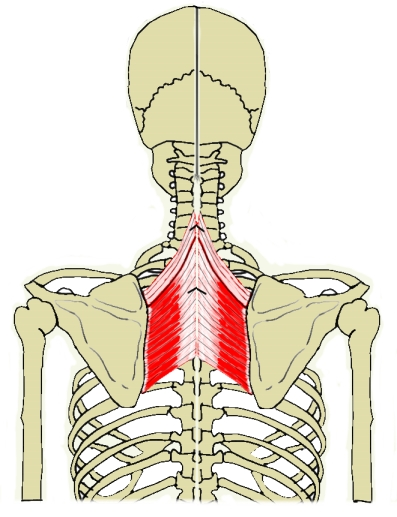
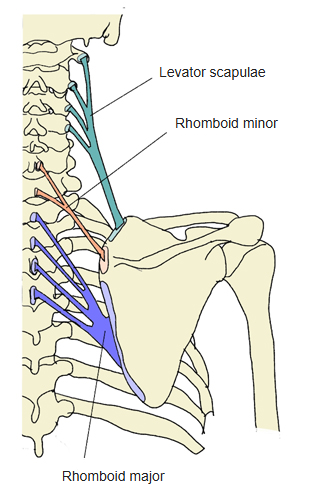
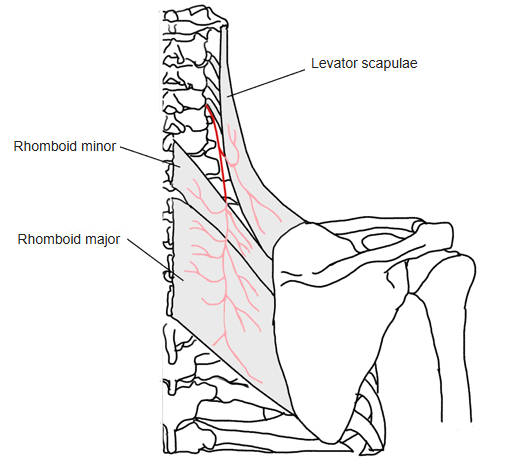
- A diamond-shaped muscle of the back, deep to the trapezius and just below the rhomboid minor; the boundary between them is sometimes unclear, and the two may be fused.
- Membranous and tendinous near its origin, but thick near its insertion.
- The fibres run parallel, and the belly may split into several bundles.
- Blood vessels pass through the border between the rhomboid major and minor.
- Continuous in places with the rhomboid minor, trapezius and serratus anterior.
Position in the classification
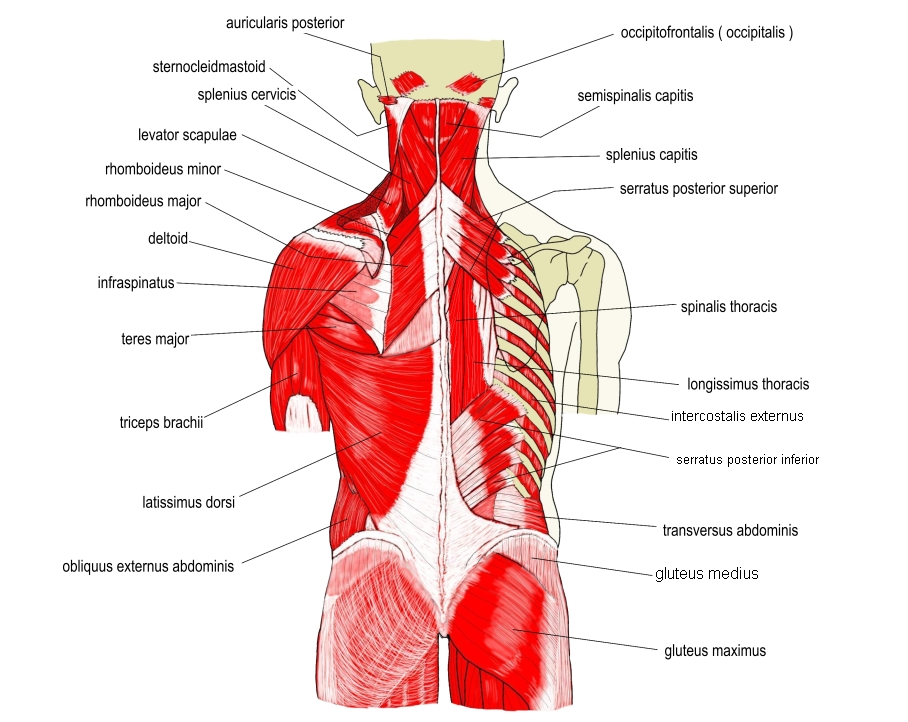
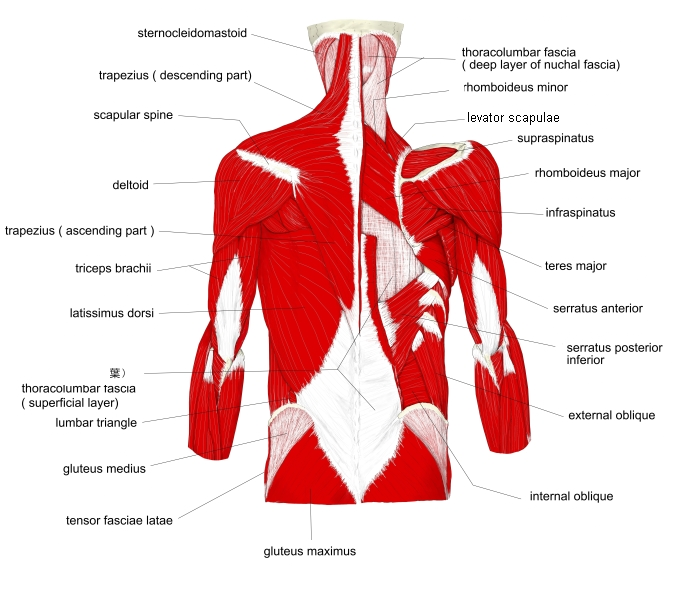
Trunk › Back › Superficial back muscles › Second layer
- Rhomboid major
- Rhomboid minor
- Levator scapulae
Illustrations
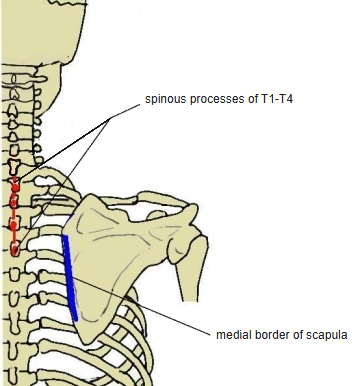
Origin / insertion
- Origin: spinous processes of T1–T4 and the interspinous ligaments (English sources: T2–T5)
- Insertion: medial border of the scapula
Action
- Retracts (adducts) and raises the scapula, and rotates it downwards
Innervation
- Dorsal scapular nerve (C4–C6)
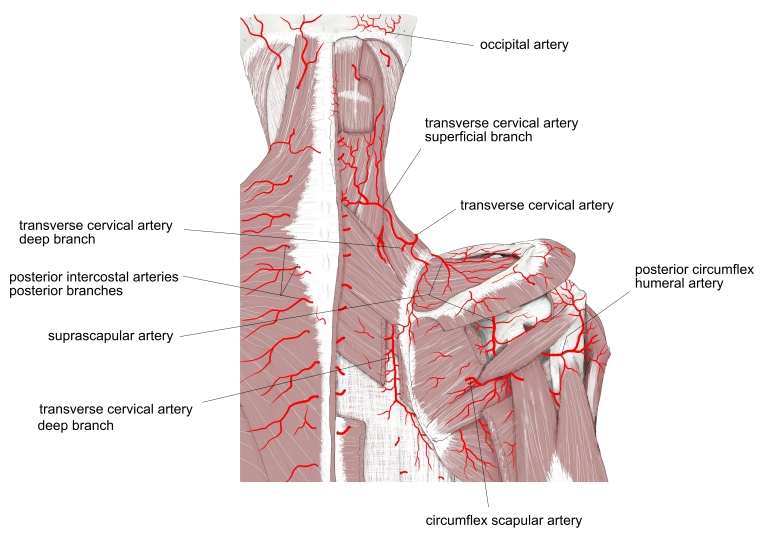
Blood supply
- Dorsal scapular artery (descending scapular artery)
Anatomical variations
- The two rhomboids are sometimes fused into a single muscle (Wikipedia)
Related terms
- Rhomboid minor
- Trapezius
- Levator scapulae
- Serratus anterior
- Scapula
- Dorsal scapular nerve
- Dorsal scapular artery
References and sources
- Further reading: Rhomboid major muscle, Wikipedia.