Latin: musculus rhomboideus minor
Overview
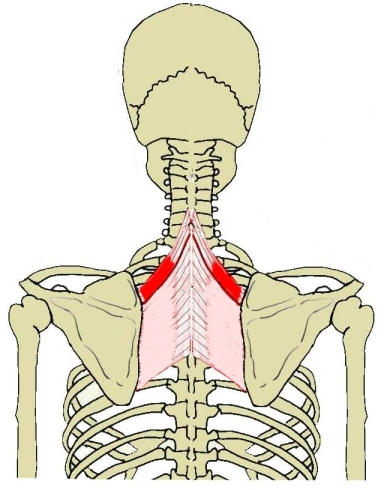
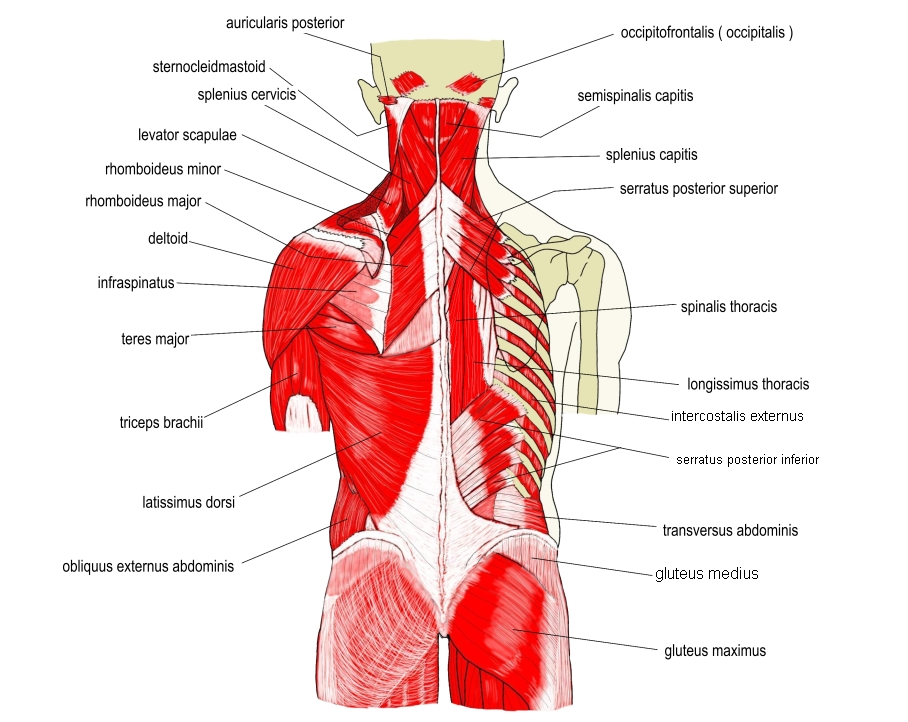
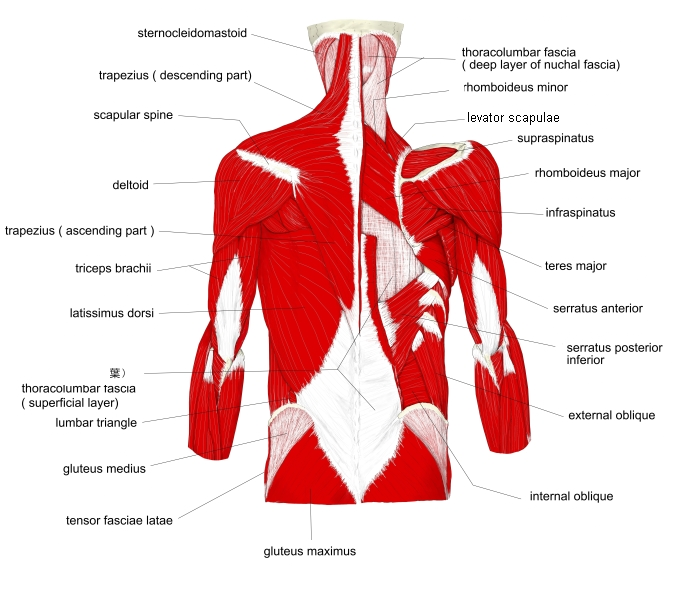
- One of the superficial muscles of the back (spinohumeral group).
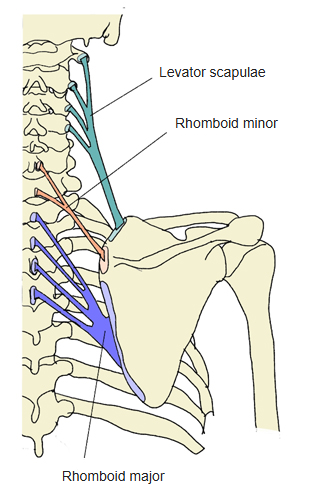
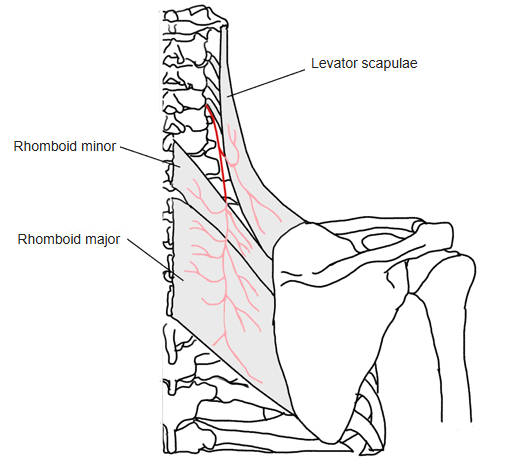
- Lies below the levator scapulae and directly above the rhomboid major; the boundary between the two is sometimes indistinct.
- Deep to the trapezius, superficial to the long spinal muscles.
- Blood vessels pass through the gap between the rhomboid major and minor.
- Continuous in places with the rhomboid major, trapezius, serratus posterior superior and serratus anterior.
Position in the classification
Trunk › Back › Superficial back muscles › Second layer
- Rhomboid major
- Rhomboid minor
- Levator scapulae
Illustrations
Origin / insertion
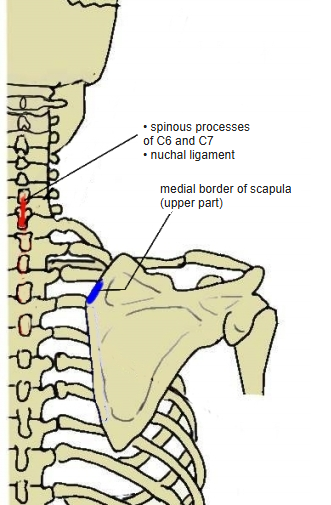
- Origin: spinous processes of C6 and C7 (English sources: C7 and T1) and the lower part of the nuchal ligament
- Insertion: upper part of the medial border of the scapula, below the superior angle, at the level of the spine of the scapula
Action
- Retracts (adducts) and elevates the scapula and rotates it downward
- With the rhomboid major, holds the scapula against the thoracic wall
Innervation
- Dorsal scapular nerve (C4–C6, mainly C5)
Blood supply
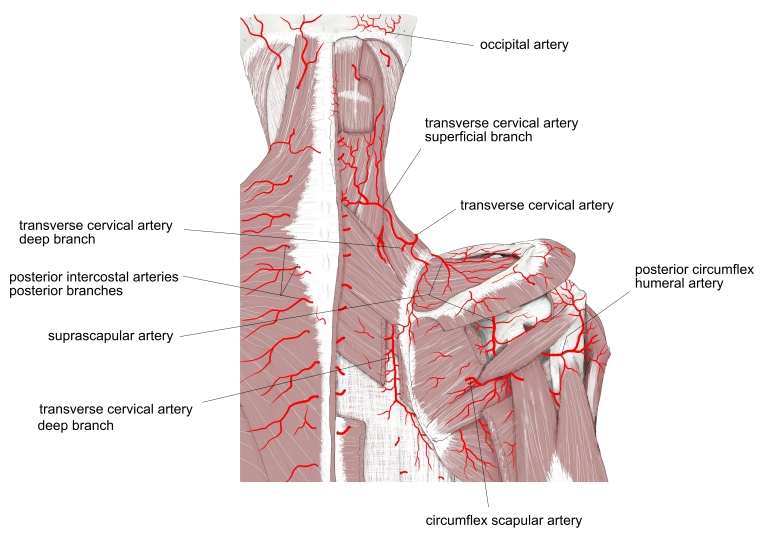
- Dorsal scapular artery (= descending scapular artery)
Anatomical variations
- Usually separated from the rhomboid major by a small gap, but the two may be joined
Related terms
- Rhomboid major
- Levator scapulae
- Trapezius
- Serratus posterior superior
- Nuchal ligament
- Scapula
- Dorsal scapular nerve
- Dorsal scapular artery
References and sources
- Further reading: Rhomboid minor muscle, Wikipedia.