Latin: musculus scalenus posterior
Overview
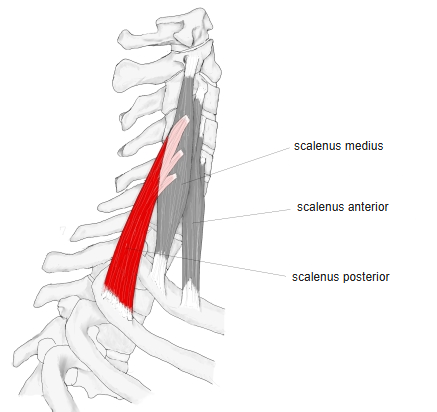
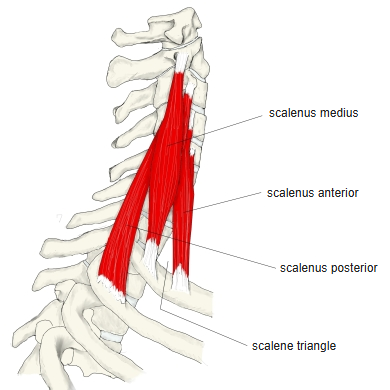
- One of the scalene muscles (anterior, middle, posterior and minimus), in the deep layer of the neck.
- The smallest and deepest of the scalene muscles; smaller than the middle scalene.
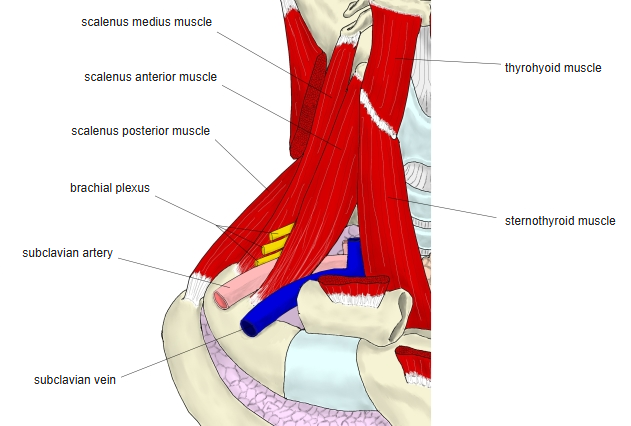
- The scalenes run down the side of the neck, deep to the sternocleidomastoid, from the transverse processes of the cervical vertebrae to the ribs.
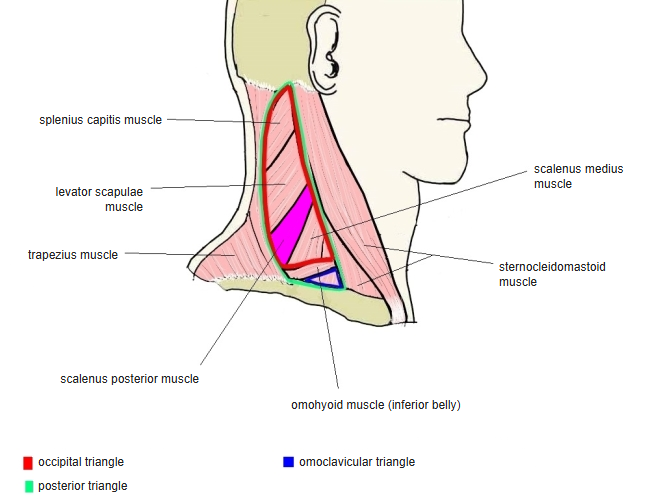
- Seen from the side, most of the scalenes lie between the posterior border of the sternocleidomastoid and the anterior border of the trapezius.
- It is sometimes fused with the middle scalene.
Position in the classification
Neck › Deep muscles of the neck › Scalene muscles
- Scalenus anterior
- Scalenus medius
- Scalenus posterior
- Scalenus minimus
Illustrations
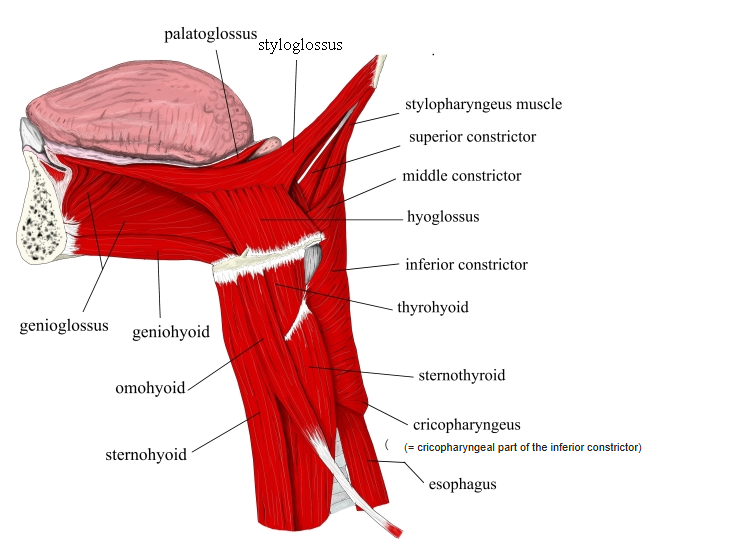
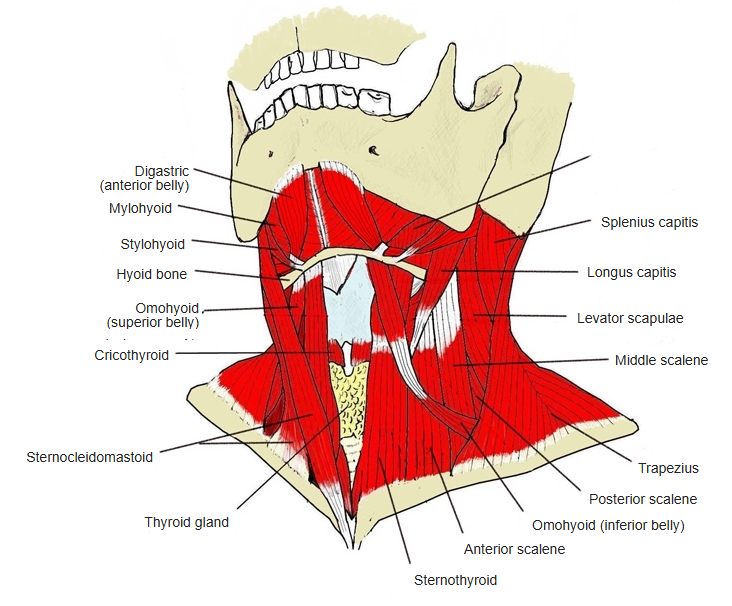
Origin / insertion
- Origin: posterior tubercles of the transverse processes of the 4th (or 5th) to 6th (or 7th) cervical vertebrae, by two or three separate tendons
- Insertion: outer surface of the second rib, behind the attachment of the anterior scalene
Action
- Raises the second rib
- With the ribs fixed: Bilateral — bends the cervical spine forward; Unilateral — bends it to the same side
Innervation
- Branches of the brachial plexus (C6–C8)
- Other sources give C5–C8 or C5–C7.
Blood supply
- Not stated in the sources used here.
Related terms
- Scalene muscles
- Anterior scalene
- Middle scalene
- Scalenus minimus
- Scalene triangle
- Sternocleidomastoid
- Brachial plexus
References and sources
- Further reading: Scalene muscles, Wikipedia.