Latin: musculus tensor veli palatini · also: tensor palati
Overview
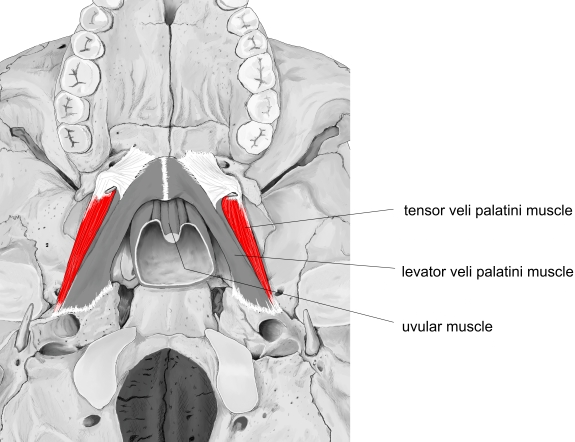
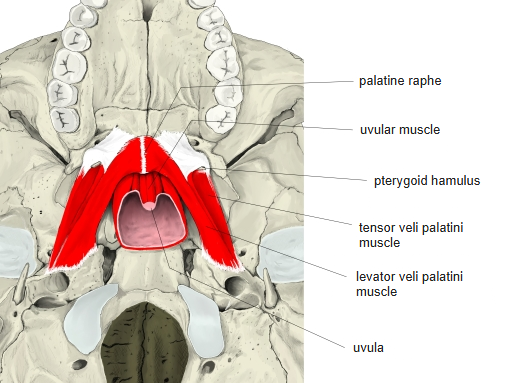
- One of the five muscles of the soft palate and fauces: a thin, broad, ribbon-like muscle.
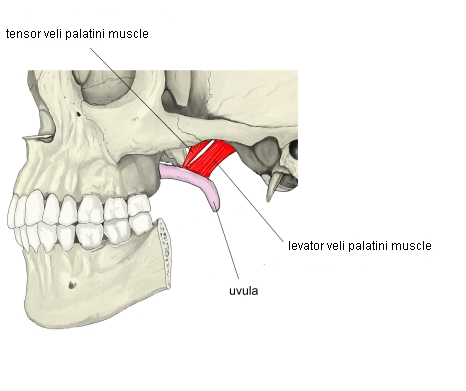
- It lies in front of and lateral to the levator veli palatini.
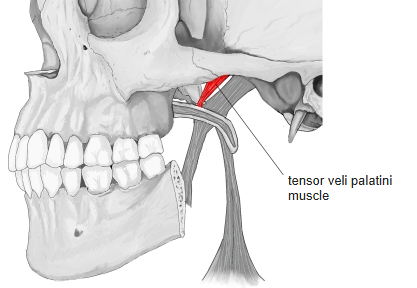
- Its tendon turns around the pterygoid hamulus; a small bursa lies between the tendon and the hamulus.
Position in the classification
Head › Muscles of the soft palate and fauces
- Tensor veli palatini
- Levator veli palatini
- Uvular muscle
- Palatoglossus
- Palatopharyngeal muscle
Illustrations
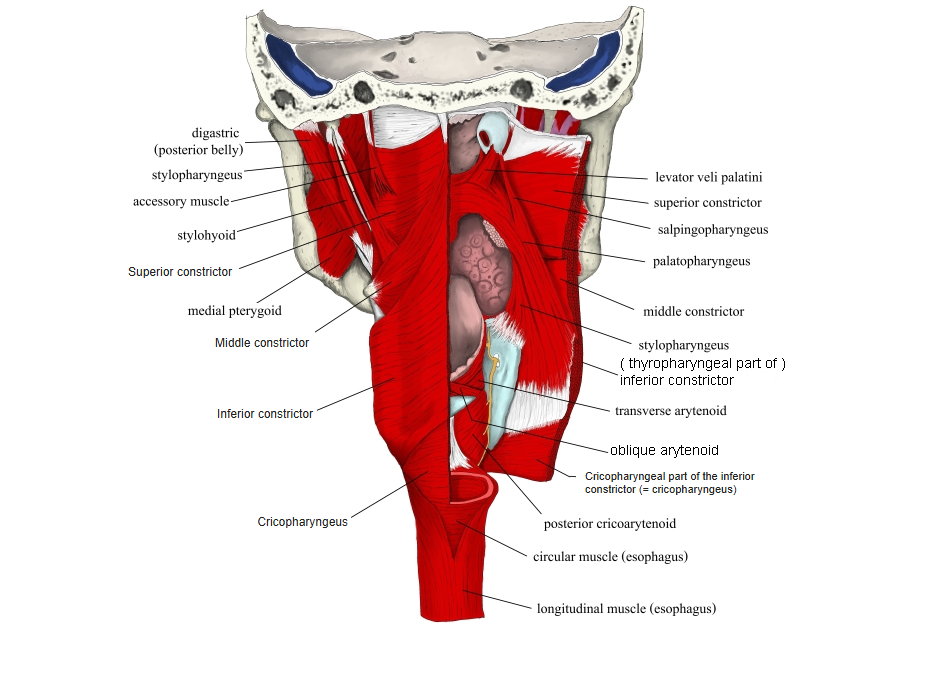
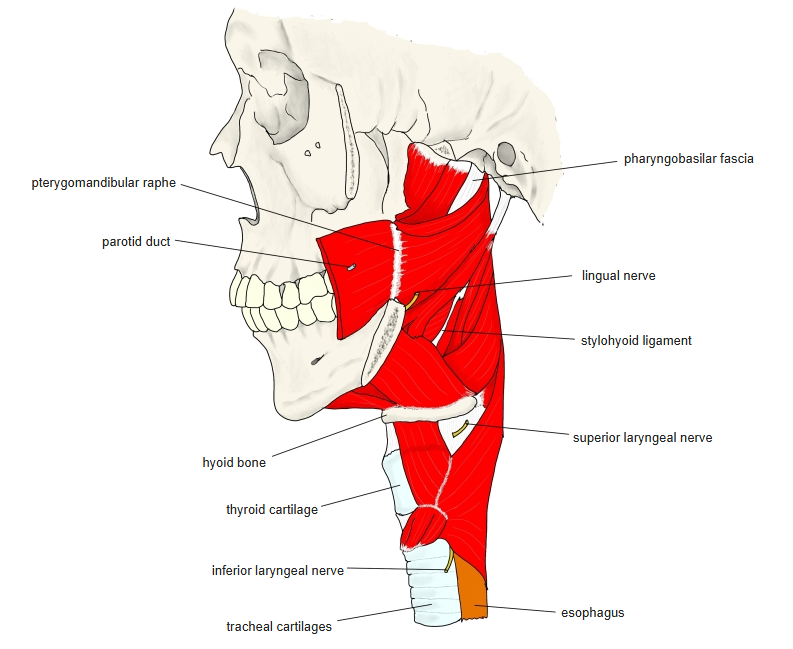
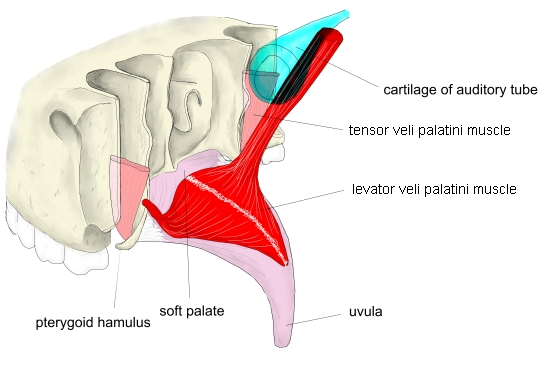
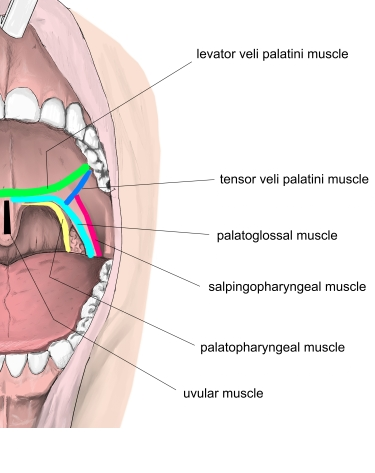
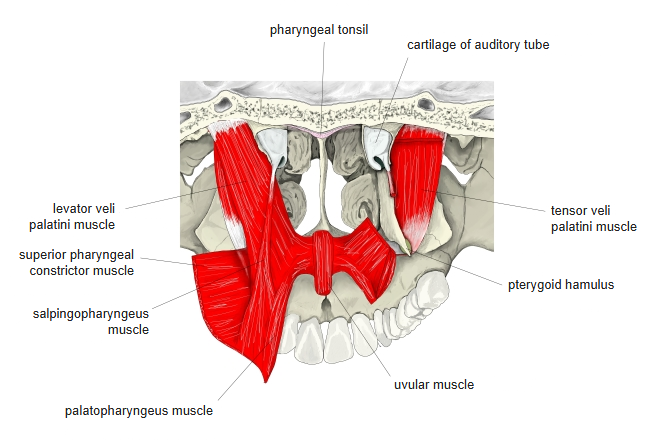
Origin / insertion
- Origin: spine of the sphenoid, scaphoid fossa at the base of the medial pterygoid plate, and the lateral (membranous) wall of the cartilage of the auditory tube
- Descends as a flat sheet between the medial pterygoid plate and the medial pterygoid muscle and becomes a tendon in the groove of the pterygoid hamulus.
- Insertion: the tendon turns sharply medially, runs horizontally and spreads into the palatine aponeurosis of the soft palate (and the palatine bone behind its transverse ridge)
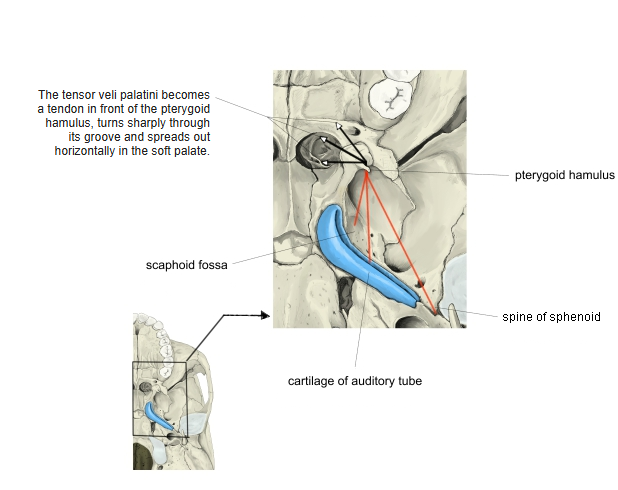
Action
- Tenses the soft palate laterally
- Helps the levator veli palatini close off the nasopharynx during swallowing, and gives a firm base for the pharyngeal muscles.
- Opens the auditory tube during swallowing or yawning, equalising the pressure in the tympanic cavity.
Innervation
- Nerve to the medial pterygoid, a branch of the mandibular nerve (V3)
- The only muscle of the palate not supplied through the pharyngeal plexus.
- A nerve named after the muscle (nerve to the tensor veli palatini) also exists; it may be the nerve that actually supplies it.
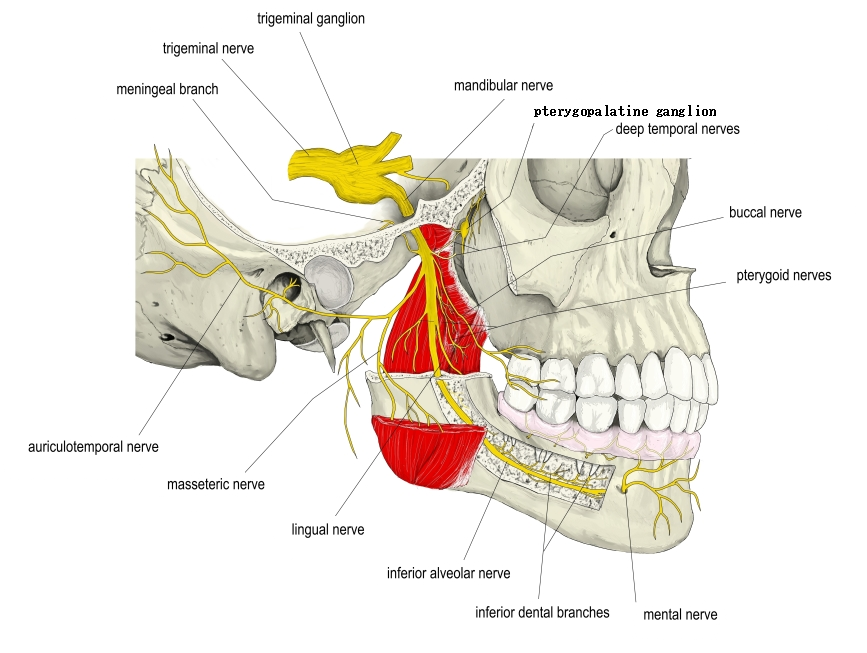
Blood supply
- Not stated in the sources used here.
Related terms
- Muscles of the soft palate and fauces
- Levator veli palatini
- Pterygoid hamulus
- Scaphoid fossa
- Spine of sphenoid
- Auditory tube
- Palatine aponeurosis
- Mandibular nerve
References and sources
- Further reading: Tensor veli palatini muscle, Wikipedia.