Latin: nervus obturatorius
Overview
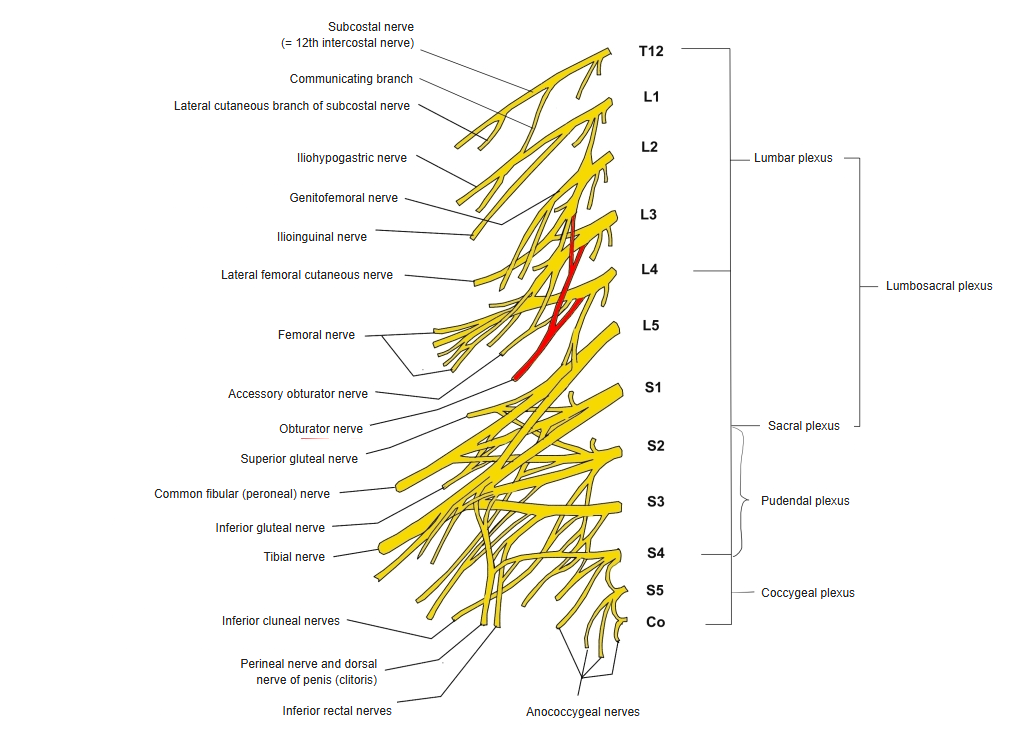
- A branch of the lumbar plexus from L2–L4 (the L3 contribution is the largest).
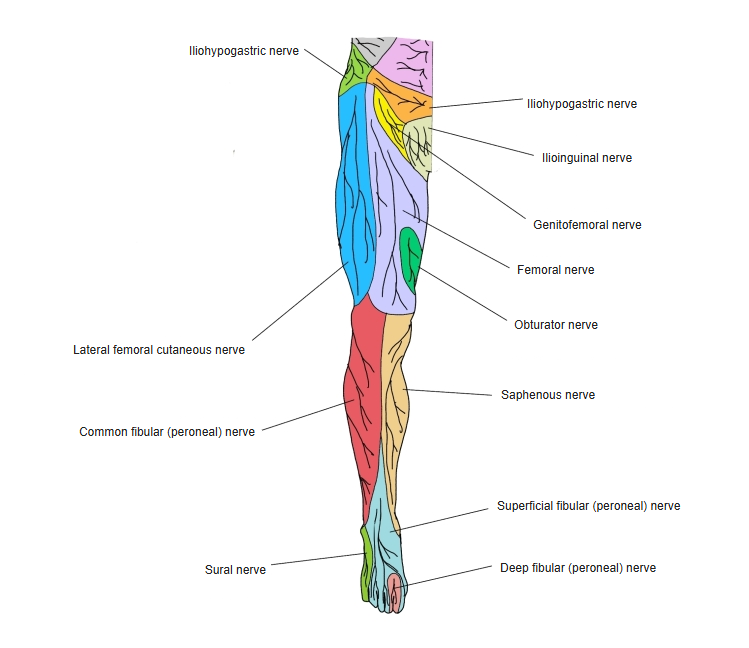
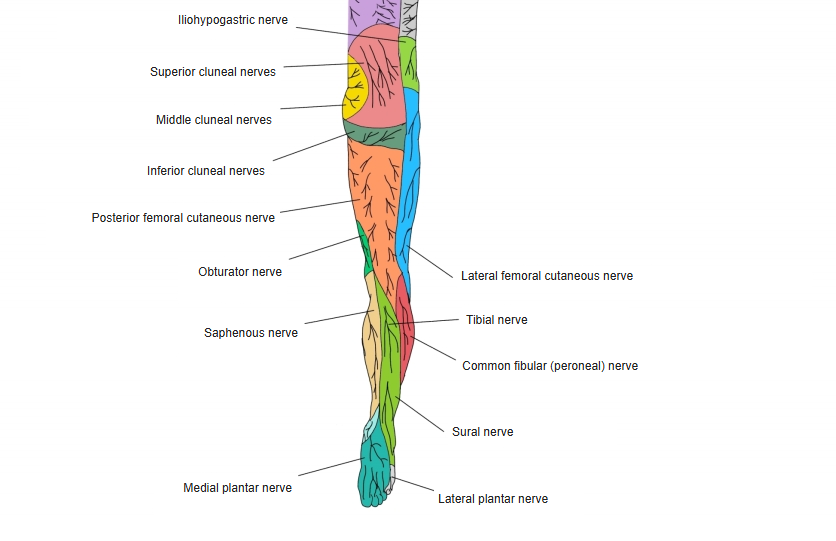
- Mixed nerve: motor to the adductor muscles, sensory to the skin of the medial thigh.
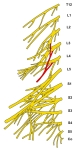
Origin of the obturator nerve 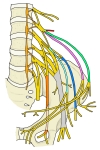
Lumbar plexus and its branches
Course
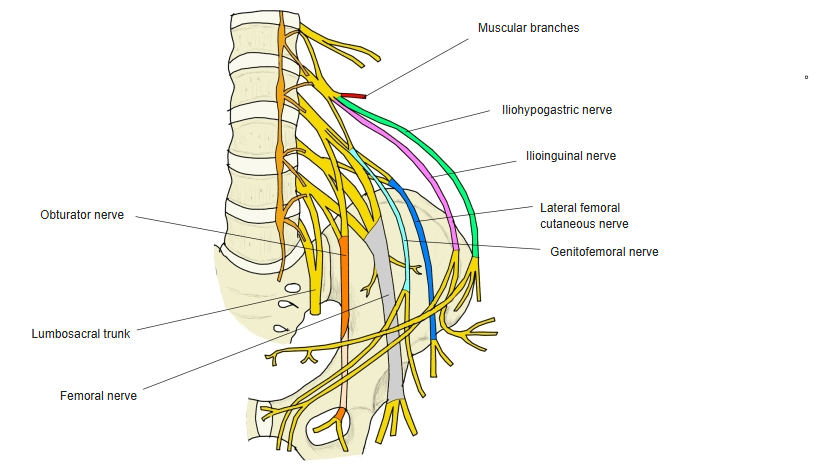
- Emerges at the medial border of psoas major.
- Runs almost vertically down behind the common iliac artery into the pelvis.
- Passes through the obturator canal with the obturator artery and vein.
- Divides into anterior and posterior branches in the upper medial thigh.
Course of the obturator nerve
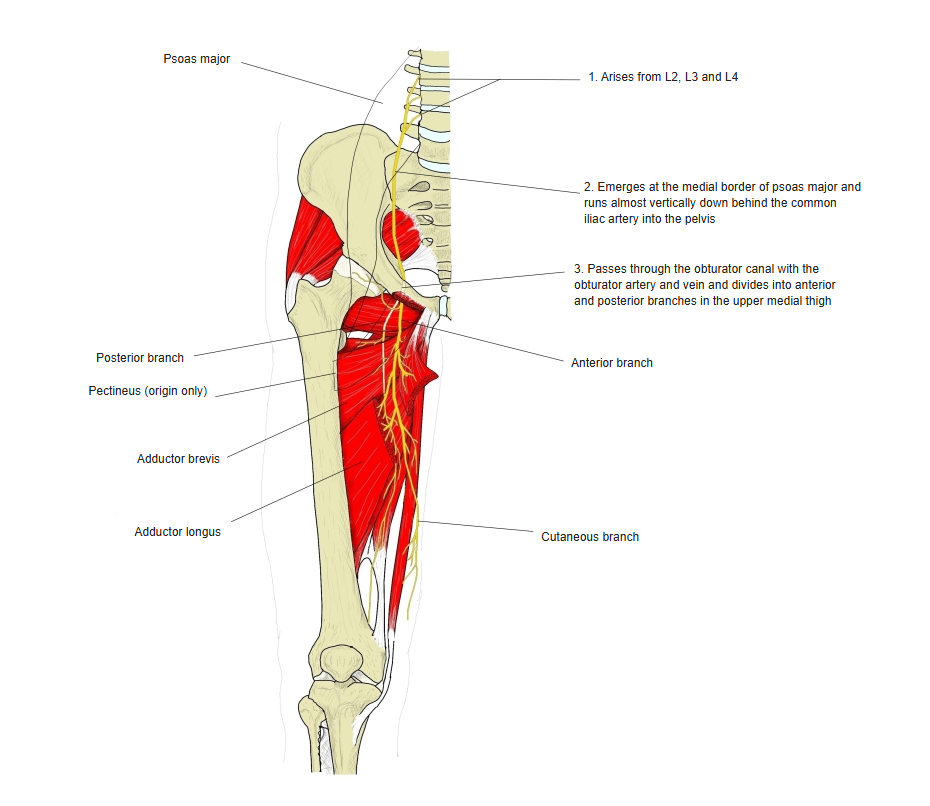
Branches and supply
| Branch | Course and supply |
|---|---|
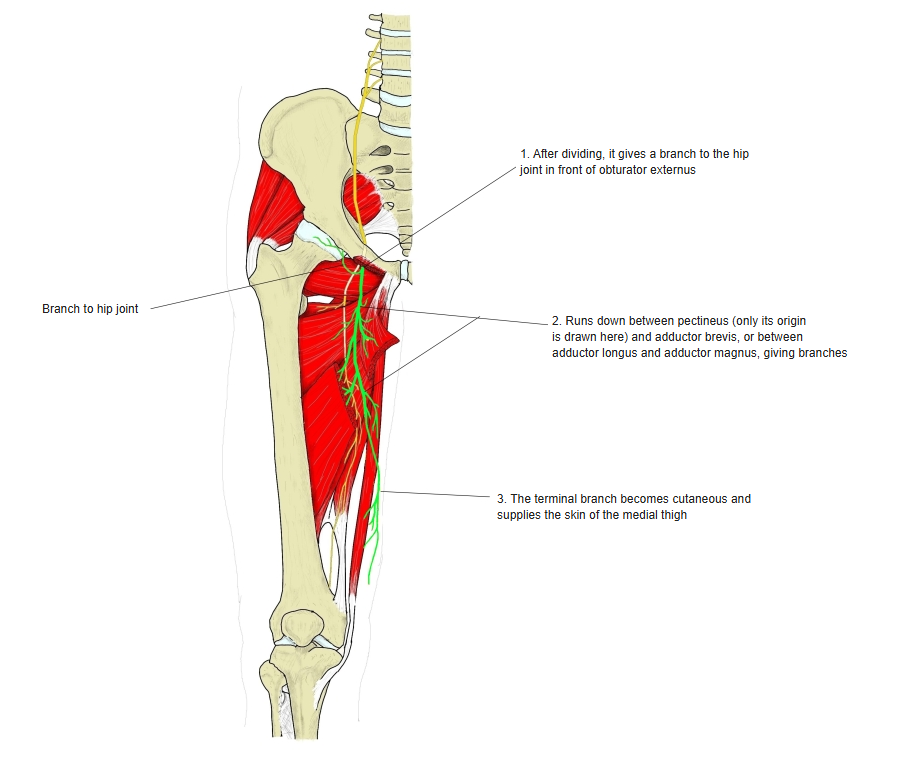
| Anterior branch | Gives a branch to the hip joint, then runs between pectineus and adductor brevis; supplies adductor longus, adductor brevis, gracilis (sometimes pectineus); ends as a cutaneous branch to the medial thigh |
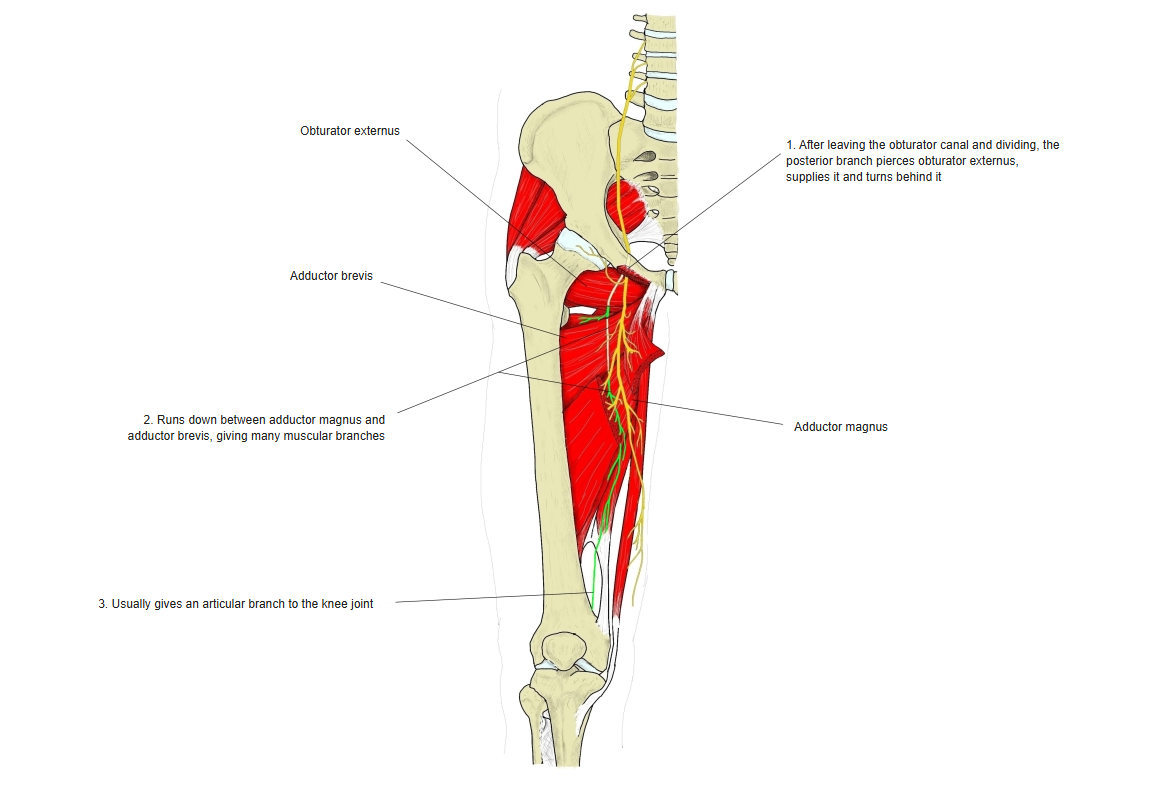
| Posterior branch | Pierces and supplies obturator externus, runs between adductor brevis and adductor magnus and supplies adductor magnus; usually gives an articular branch to the knee joint |
Anterior branch of the obturator nerve 
Posterior branch of the obturator nerve 
Cutaneous nerves of the lower limb (front) 
Cutaneous nerves of the lower limb (back)
Communications
- Communicates with the anterior cutaneous branches of the femoral nerve and with the saphenous nerve.
References and sources
- Further reading: Obturator nerve, Wikipedia.