Latin: nervus tympanicus
Overview
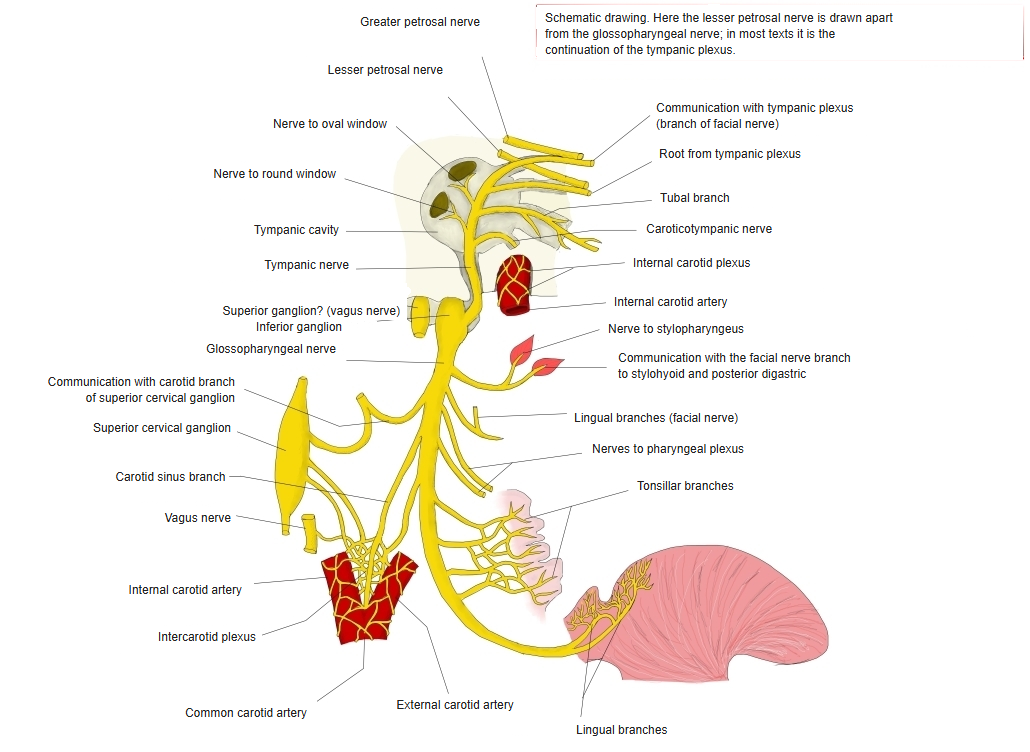
- A branch of the inferior ganglion of the glossopharyngeal nerve.
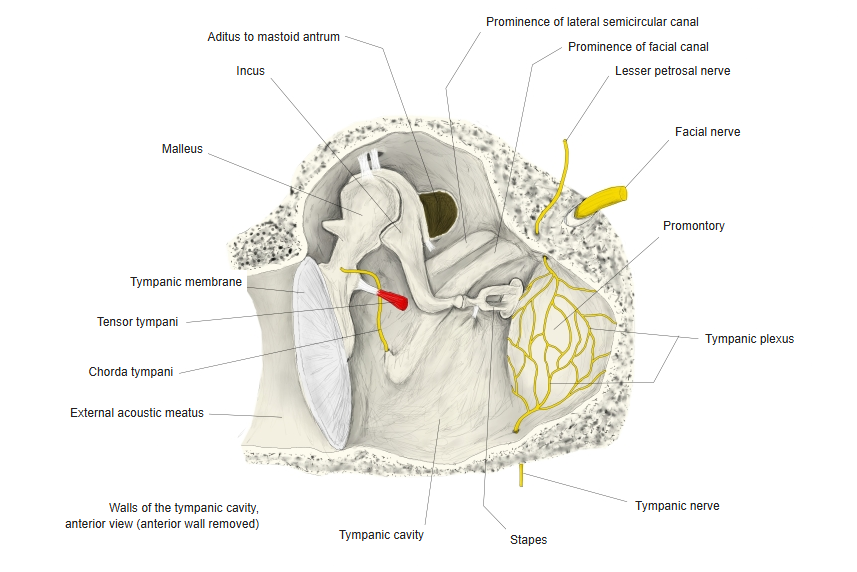
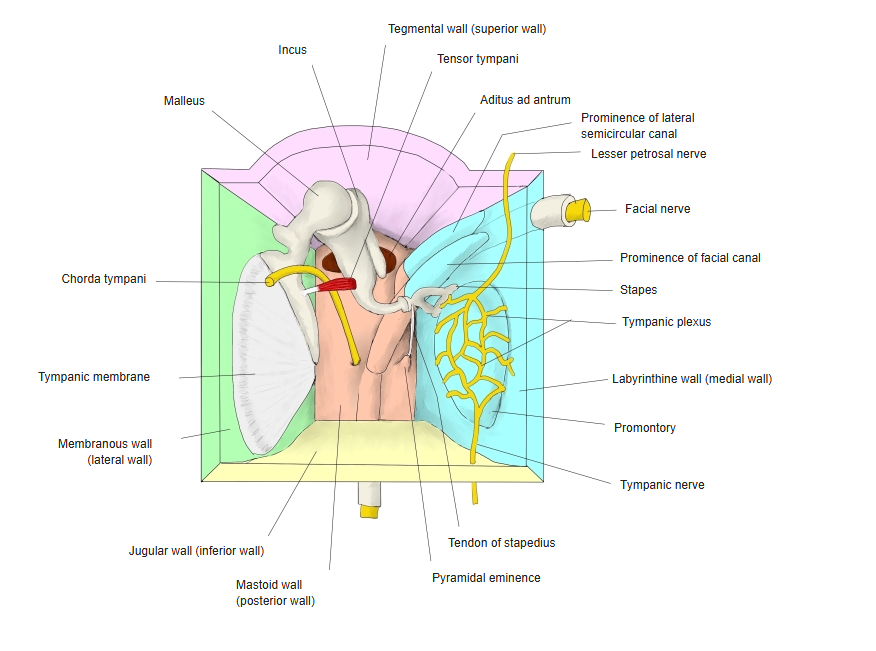
- Enters the middle ear through the tympanic canaliculus and runs in a groove on the medial wall (promontory).
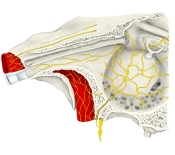
Tympanic plexus and glossopharyngeal nerve
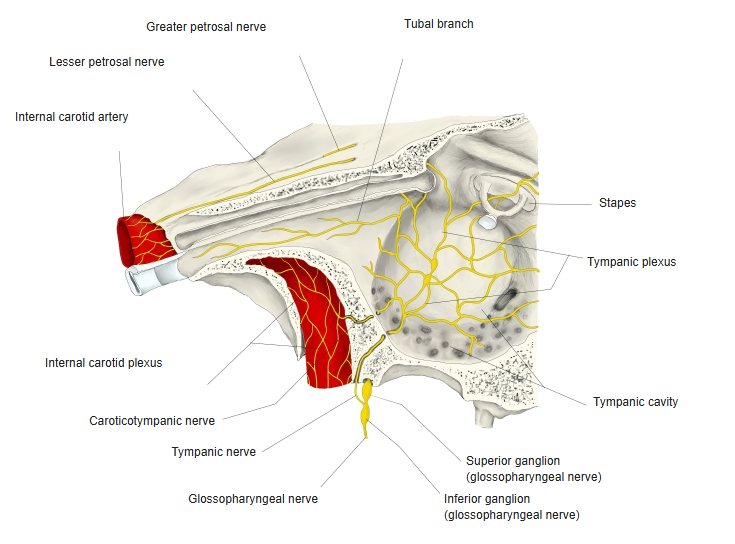
Course and tympanic plexus
- On the promontory it branches and joins other nerves to form the tympanic plexus: a communicating branch from the facial nerve and the caroticotympanic nerves from the internal carotid plexus.
- The plexus supplies the mucosa of the middle ear and the pharyngotympanic tube.
- Its upper part pierces the roof of the middle ear as the lesser petrosal nerve (parasympathetic fibres for the parotid gland via the otic ganglion).
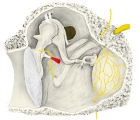
Walls of the tympanic cavity 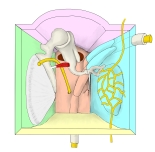
Walls of the tympanic cavity 
Glossopharyngeal nerve and its branches (schematic)
References and sources
- Further reading: Tympanic nerve, Wikipedia.