Latin: glandulae parathyroideae
Overview
- Small endocrine glands, usually four, on the back of the thyroid gland.
- Each is about the size of a grain of rice (about 5 × 3 × 1 mm, 30–50 mg).
- Secrete parathyroid hormone (PTH), which raises the blood calcium level.
- Number and position vary; extra glands may lie in the neck or upper mediastinum.
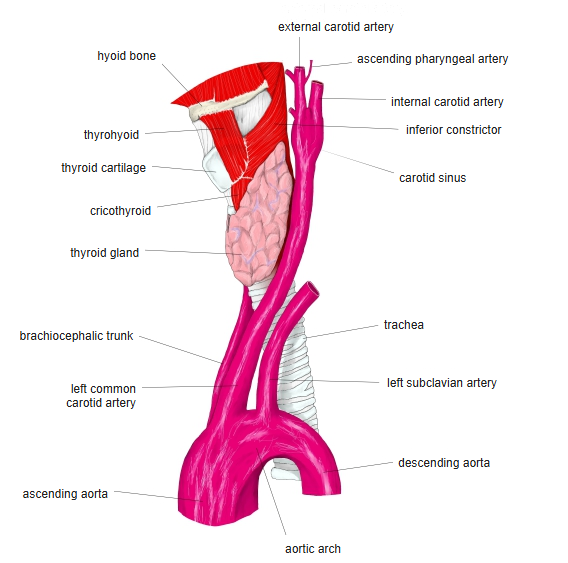
Thyroid gland and the great arteries
Position and function
| Gland | Usual position | Origin |
|---|---|---|
| Superior pair | Back of the upper part of each thyroid lobe – fairly constant | 4th pharyngeal pouch |
| Inferior pair | Back of the lower pole of each lobe – more variable | 3rd pharyngeal pouch (descends with the thymus) |
- PTH raises blood calcium by releasing calcium from bone, reducing its loss in urine and activating vitamin D in the kidney.
- Main (chief) cells produce PTH; oxyphil cells increase with age.
- Blood supply: mainly from the inferior thyroid artery.
- Damage during thyroid surgery can cause low blood calcium (tetany).
References and sources
- Further reading: Parathyroid glands, Wikipedia.