Latin: glandulae endocrinae
Overview
- Ductless glands that release hormones directly into the blood.
- Together with the nervous system they control growth, metabolism, reproduction and the internal balance of the body.
- Separate glands: pituitary, pineal, thyroid, parathyroid and suprarenal glands.
- Endocrine tissue in other organs: pancreatic islets, ovaries and testes, kidneys, stomach and intestine, heart, and the thymus.
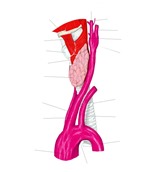
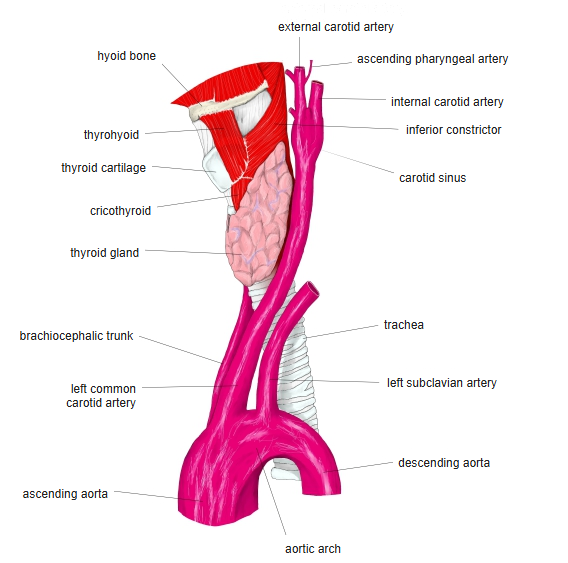
Thyroid gland and the great arteries 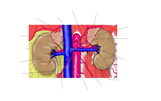
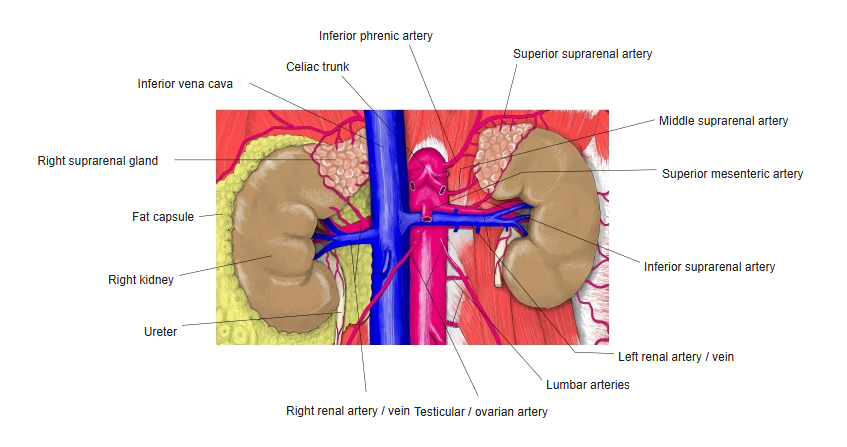
Kidneys, suprarenal glands and their arteries
Endocrine glands on this site
Main glands and hormones
| Gland | Location | Main hormones |
|---|---|---|
| Pituitary gland | Hypophysial fossa of the sphenoid | GH, TSH, ACTH, FSH, LH, prolactin; ADH and oxytocin (posterior lobe) |
| Pineal gland | Roof of the third ventricle | Melatonin |
| Thyroid gland | Front of the neck | Thyroxine (T4), triiodothyronine (T3), calcitonin |
| Parathyroid glands | Back of the thyroid gland | Parathyroid hormone |
| Suprarenal gland | Upper pole of the kidney | Aldosterone, cortisol, androgens; adrenaline, noradrenaline |
| Pancreatic islets | Pancreas | Insulin, glucagon, somatostatin |
| Ovary / testis | Pelvis / scrotum | Oestrogens, progesterone / testosterone |
References and sources
- Further reading: Endocrine glands, Wikipedia.