Latin: musculus levator labii superioris alaeque nasi
Overview
- A facial muscle (muscle of facial expression): one of the 12 muscles around the lips and cheeks.
- Its Latin name means “lifter of the upper lip and of the wing of the nose”; it is often cited as the muscle with the longest name.
- Also described as the angular head of the levator labii superioris (part of the former quadratus labii superioris).
- Its lip slip blends with the levator labii superioris, so the two can be hard to separate.
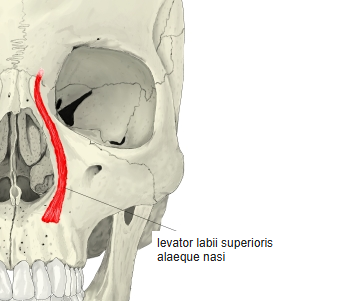
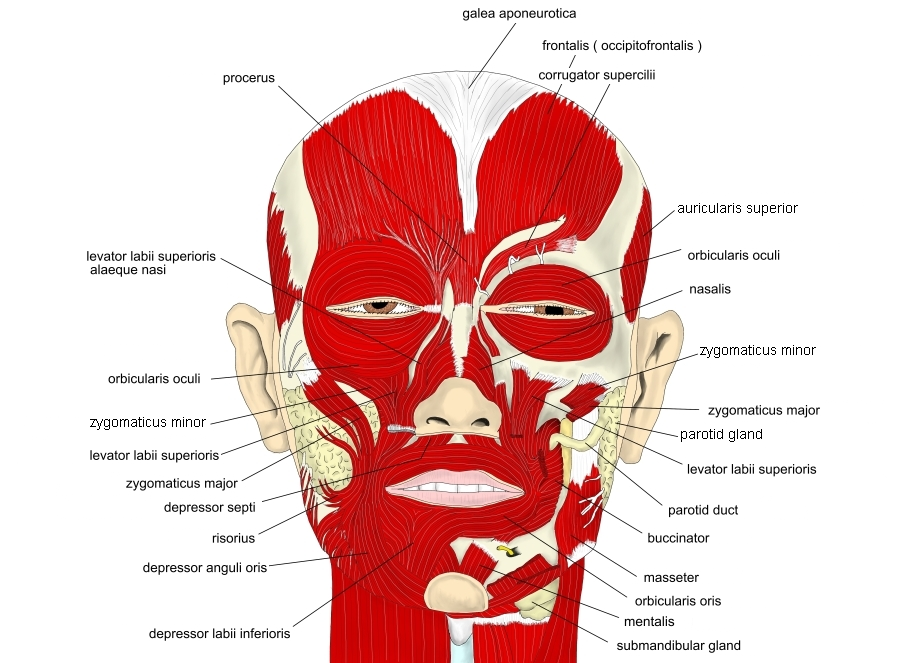
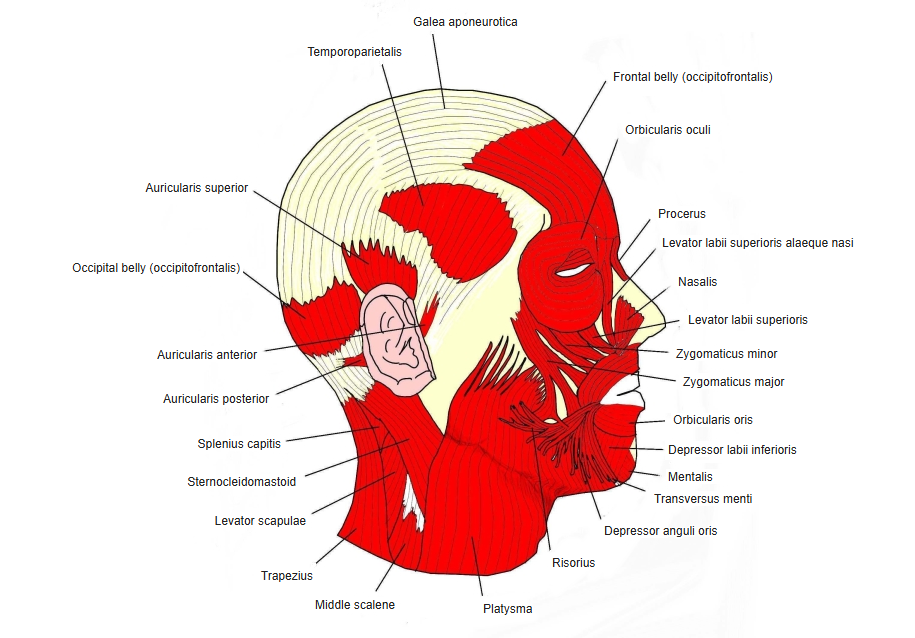
- Lies along the side of the nose, close to the medial angle of the eye.
Position in the classification
Head › Facial muscles › Muscles around the mouth and cheek
Illustrations
Origin / insertion
- Origin: upper part of the frontal process of the maxilla, near the medial angle of the eye
- Passes obliquely downward and laterally and divides into two slips.
- Insertion: one slip to the greater alar cartilage and skin of the nose; the other to the lateral part of the upper lip, blending with the levator labii superioris and orbicularis oris
Action
- Raises the upper lip
- Widens the nostril (raises the ala of the nose), as in a snarl
Innervation
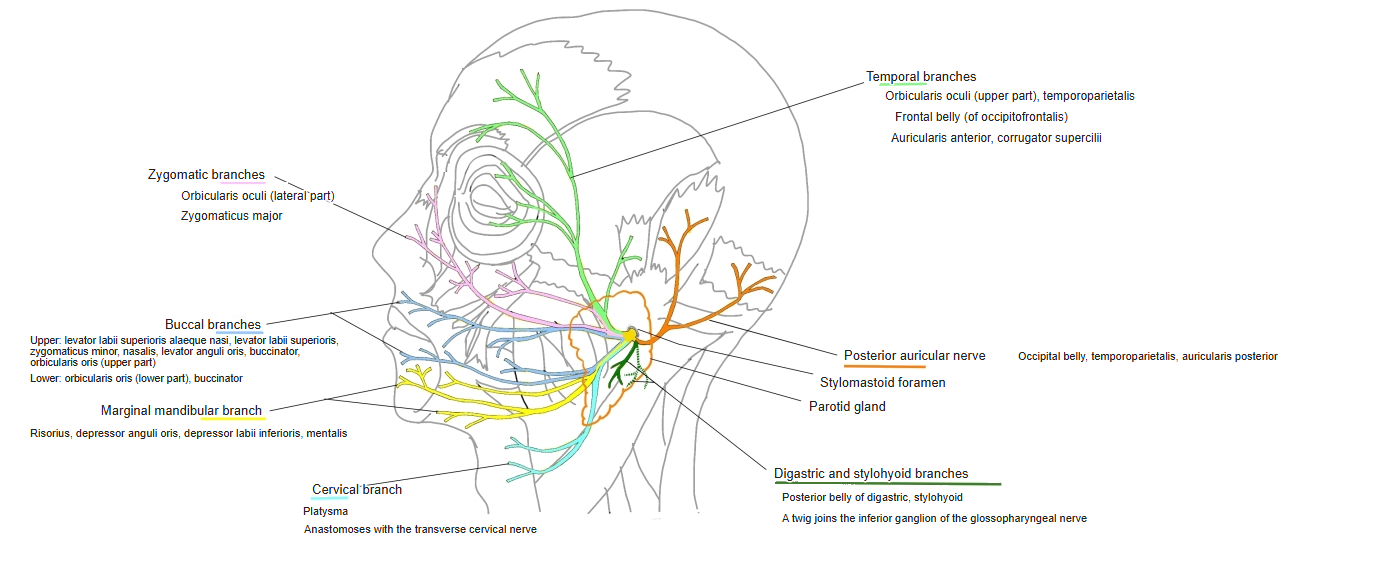
- Facial nerve (cranial nerve VII), zygomatic branches; some sources give the buccal branches
Blood supply
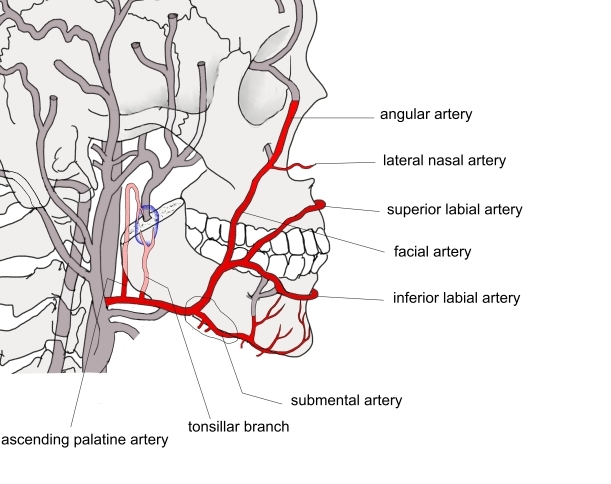
- Facial artery
Anatomical variations
- May be absent
- Its origin on the nasal bone is sometimes doubled
Related terms
- Facial muscles
- Levator labii superioris
- Zygomaticus minor
- Nasalis
- Frontal process of maxilla
- Facial nerve
References and sources
- Further reading: Levator labii superioris alaeque nasi muscle, Wikipedia.
- Gray H. Anatomy of the Human Body, 20th ed. (1918), “4d. The Muscles of the Mouth”, Bartleby.com.