Latin: musculus risorius
Overview
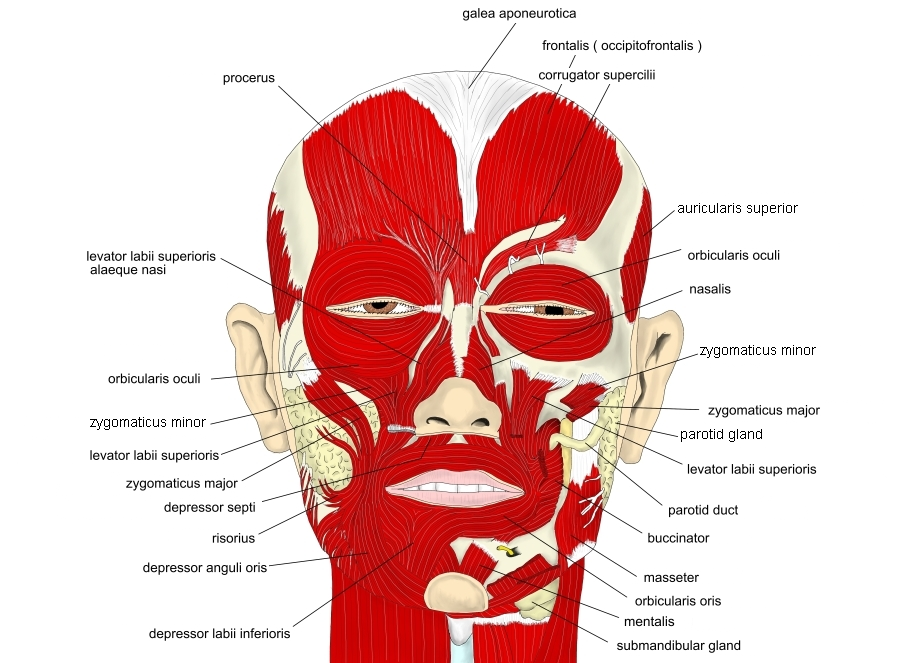
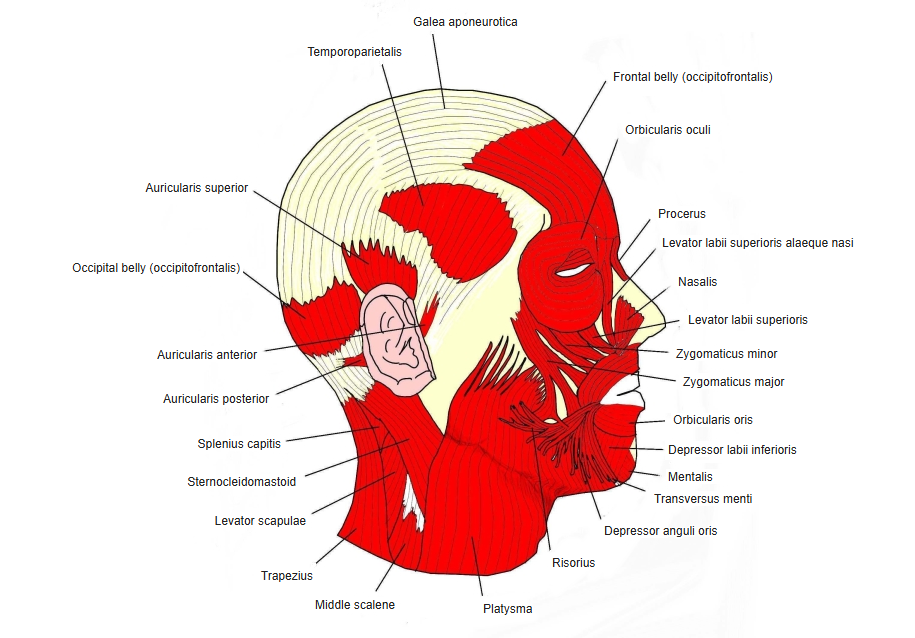
- A facial muscle (muscle of facial expression): one of the 12 muscles around the lips and cheeks.
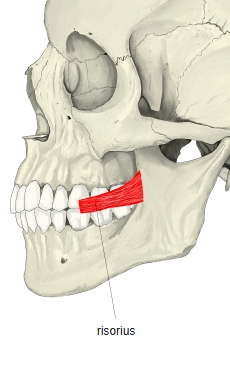
- A narrow bundle, broadest at its origin; its size and form vary greatly.
- Runs horizontally forward, superficial to the platysma.
- Pulling the corners of the mouth sideways alone gives a smile that looks forced; in a natural smile the corners are raised by the zygomaticus major and minor and the orbicularis oculi wrinkles the skin around the eyes.
- It has been suggested that the muscle is found only in African great apes and humans.
- In a study of 18 cadavers, 7 clearly lacked it, 2 were unclear and only 4 had it symmetrically on both sides.
Position in the classification
Head › Facial muscles › Muscles around the mouth and cheek
Illustrations
Origin / insertion
- Origin: fascia over the facial part of the platysma and partly the parotid fascia
- Insertion: skin at the angle of the mouth
Action
- Draws the angle of the mouth laterally
- Forms a dimple in the cheek
Innervation
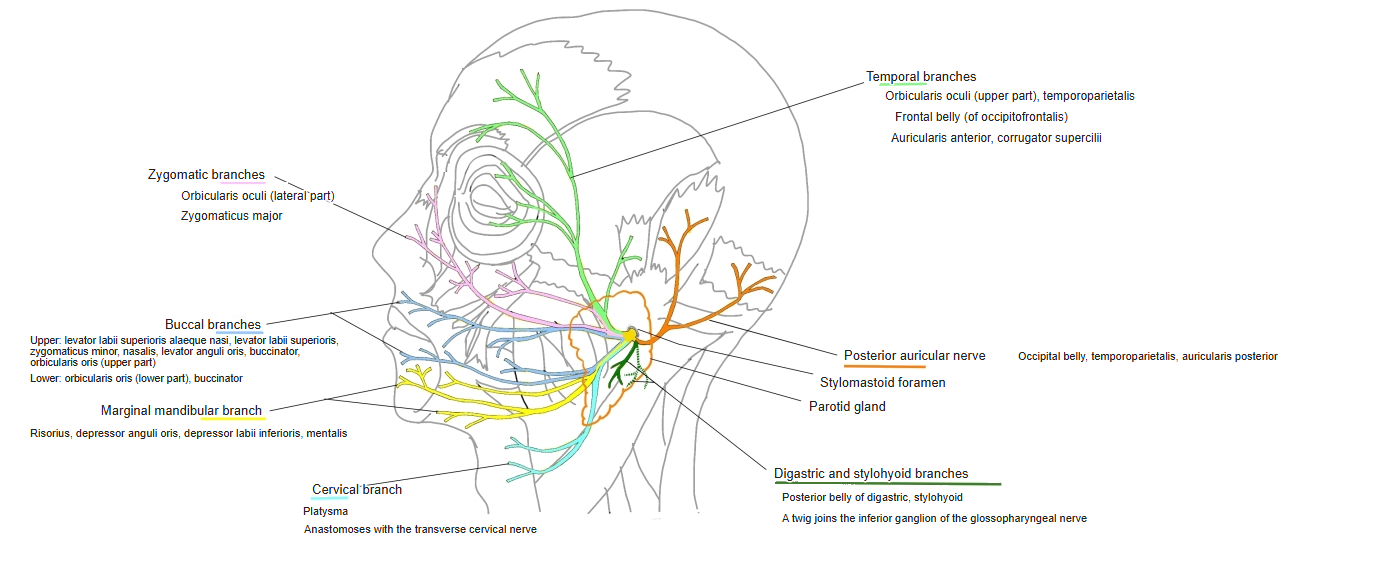
- Facial nerve (cranial nerve VII); sources differ on the branch: zygomatic, buccal or marginal mandibular
Blood supply
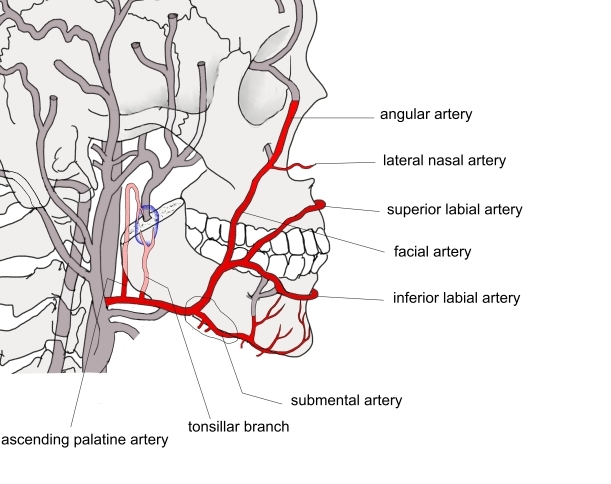
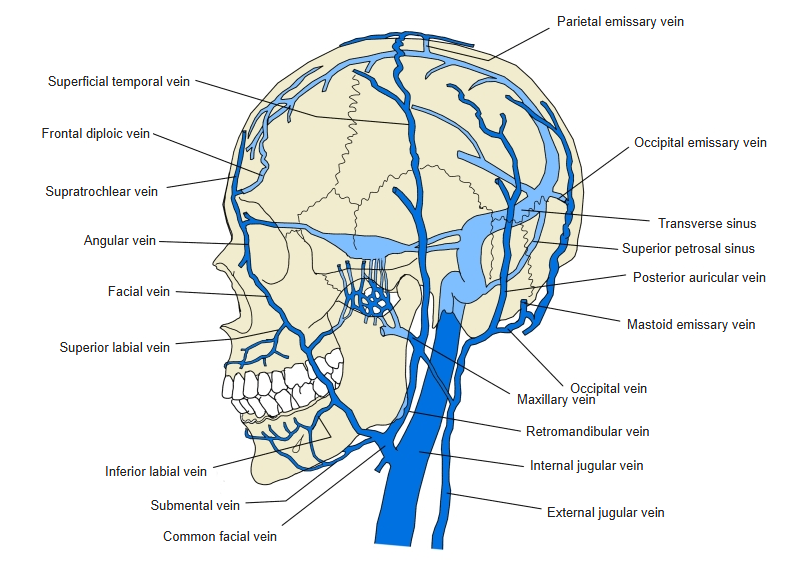
- Not described in the sources used; probably branches of the facial artery and facial vein.
Related terms
- Facial muscles
- Platysma
- Zygomaticus major
- Zygomaticus minor
- Orbicularis oculi
- Parotid gland
- Angle of the mouth
- Facial nerve
References and sources
- Further reading: Risorius, Wikipedia.