Latin: musculi levatores costarum breves
Overview
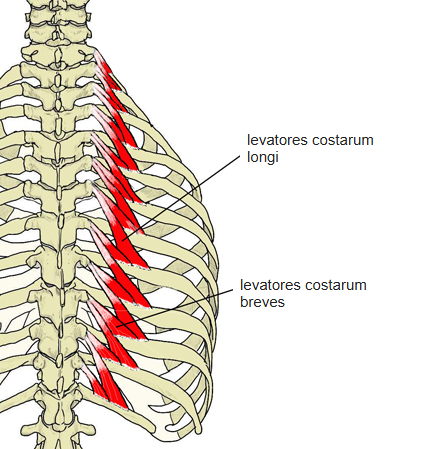
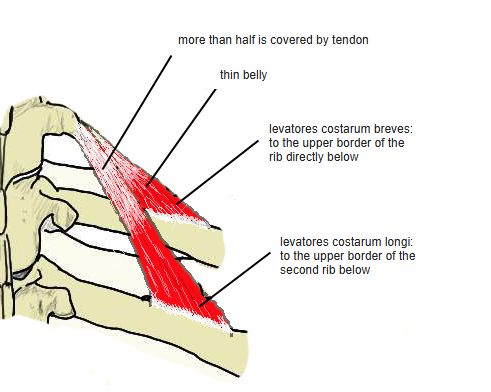
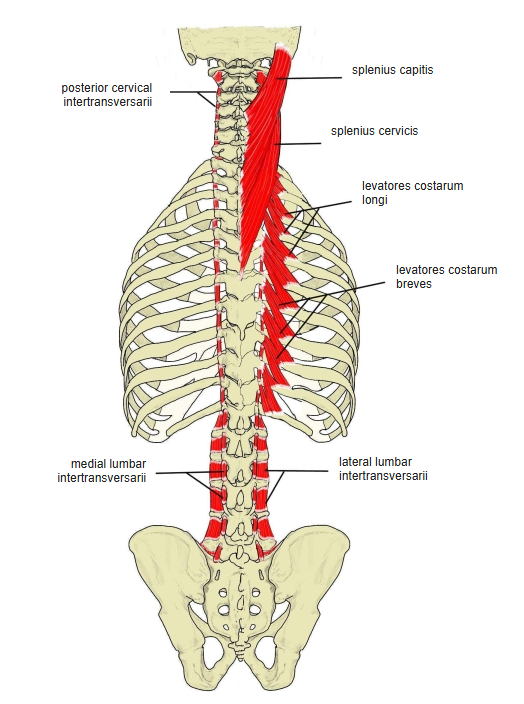
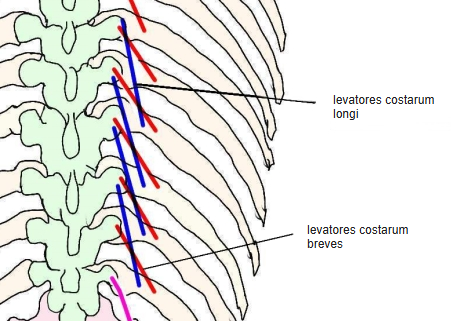
- The levatores costarum as a whole: the short ones (this entry) pass to the rib directly below, the long ones to the second rib below.
- Deep muscles, covered by the iliocostalis and longissimus.
- More than half of each muscle is tendinous; the fleshy belly is thin.
- Long regarded as derivatives of the external intercostal muscles.
- Because they insert close to the fulcra of the ribs, they have little action on the ribs and act mainly as rotators and lateral flexors of the vertebral column; some authors therefore count them as back muscles (transversocostal muscles).
Position in the classification
Trunk › Thorax › Deep muscles of the thorax
- External intercostal muscles
- Internal intercostal muscle
- Subcostal muscle
- Levatores costarum longi
- Levatores costarum breves
- Transversus thoracis
Illustrations
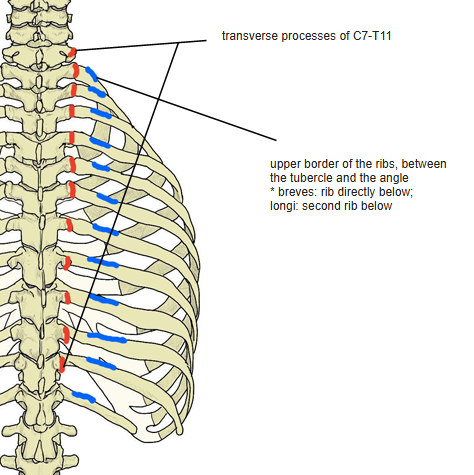
Origin / insertion
- Origin: transverse processes of C7–T11
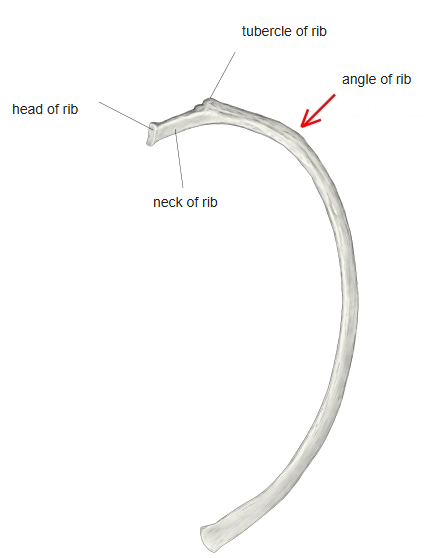
- Insertion: outer surface of the rib, between the tubercle and the angle
- Short: the rib directly below
- Long: the second rib below
Action
- Rotation and lateral flexion of the vertebral column
- Traditionally described as raising the ribs in forced inspiration, but their action on the ribs is small
Innervation
- Sources differ:
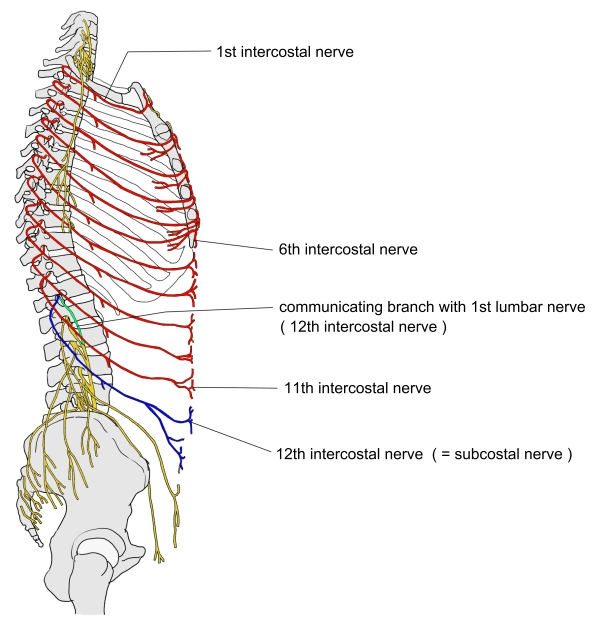
- Dorsal ramus of C8 and intercostal nerves (T1–T11)
- Dorsal (posterior) rami of the spinal nerves C8–T11
- Also given: ventral rami of the thoracic nerves
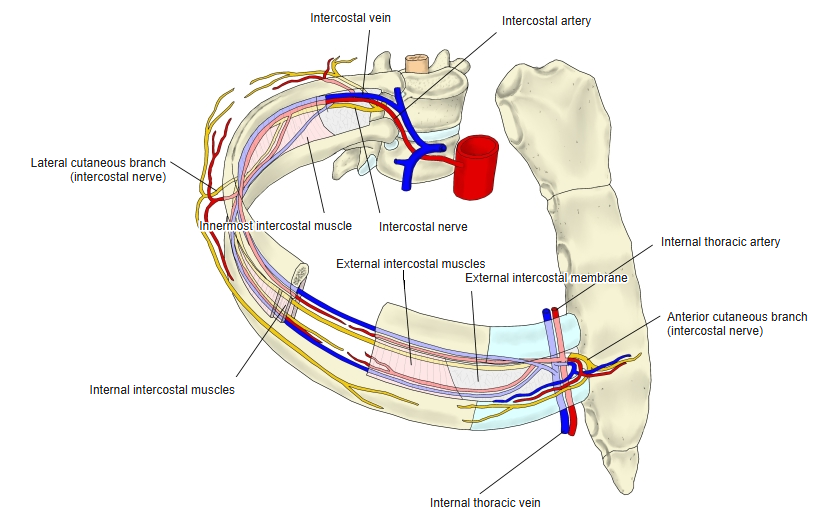
Blood supply
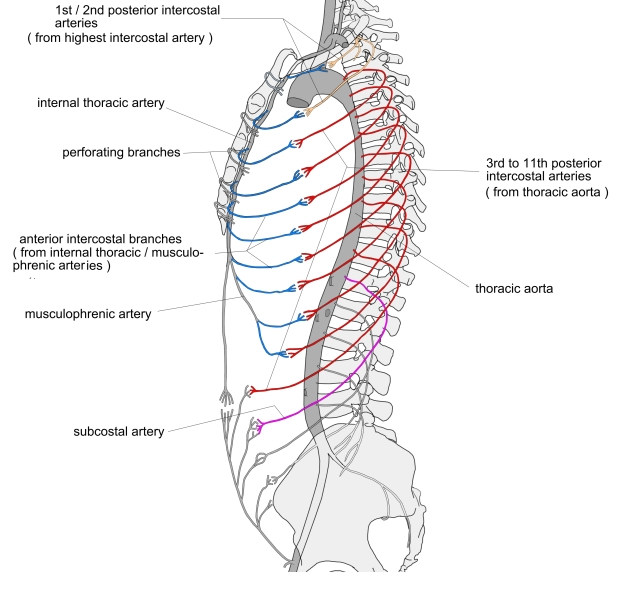
- Dorsal branches of the posterior intercostal arteries
Related terms
- External intercostal muscles
- Iliocostalis
- Longissimus
- Transverse process
- Rib
- Intercostal nerves
References and sources
- Further reading: Levatores costarum muscles, Wikipedia.
- Gray H. Anatomy of the Human Body, 20th ed. (1918), “6c. The Muscles of the Thorax”, Bartleby.com.