Vessel (Latin: vas)
A vessel is a tube that carries the blood or the lymph flowing through the body: the blood vessels and the lymphatic vessels.
· Together they form the transport system of the organs and tissues, bringing oxygen and nutrients and carrying away carbon dioxide and waste.
· Among the blood vessels, arteries carry blood away from the heart, capillaries are where exchange with the tissues takes place, and veins return the blood to the heart. Lymphatic vessels collect excess tissue fluid as lymph, pass it through lymph nodes and return it to the veins at the root of the neck, mainly through the thoracic duct.
· The study that describes the vessels systematically is called angiology.
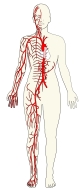 Main arteries (one side)
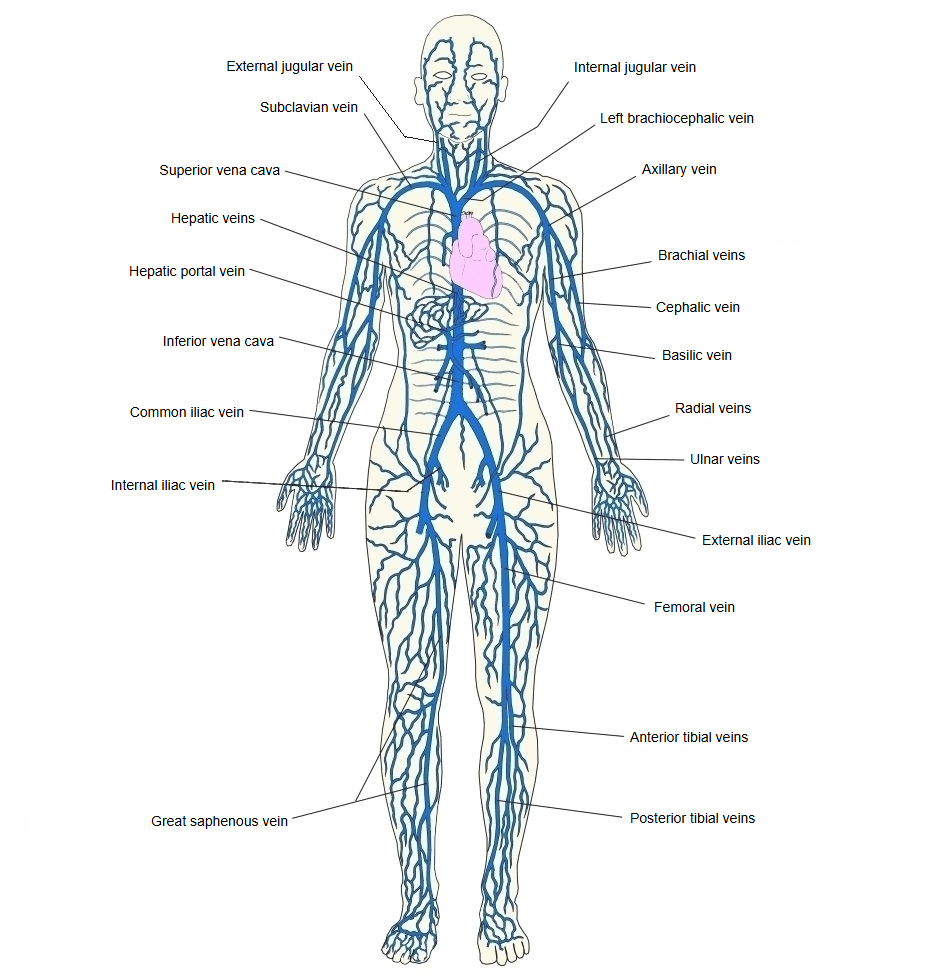
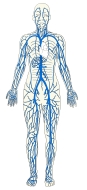 Main veins
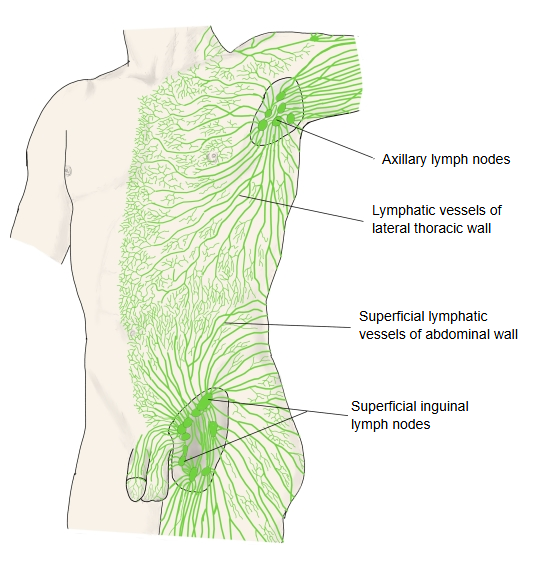
 Lymphatic vessels I (superficial, trunk)
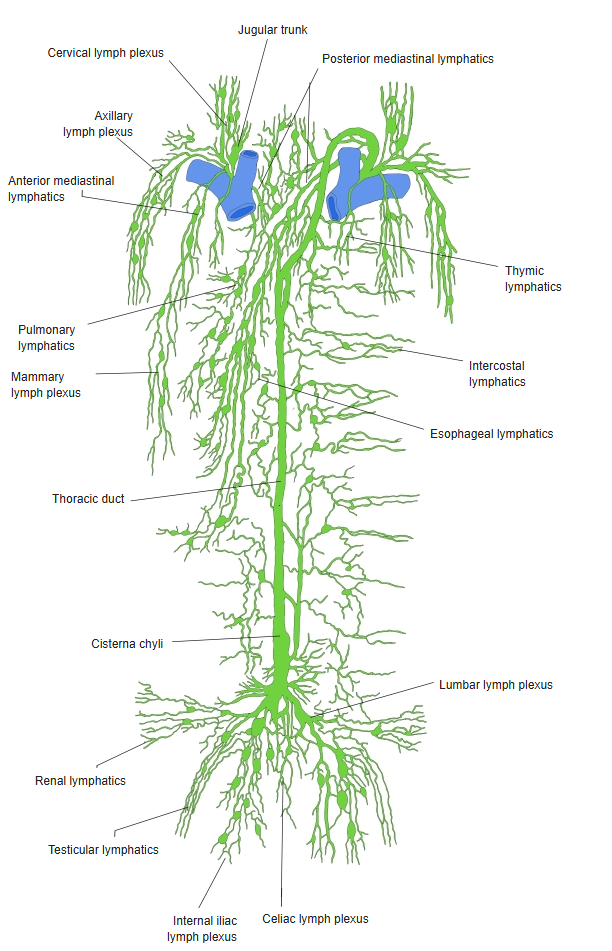
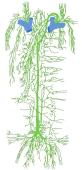 Lymphatic vessels II (deep, thoracic duct)
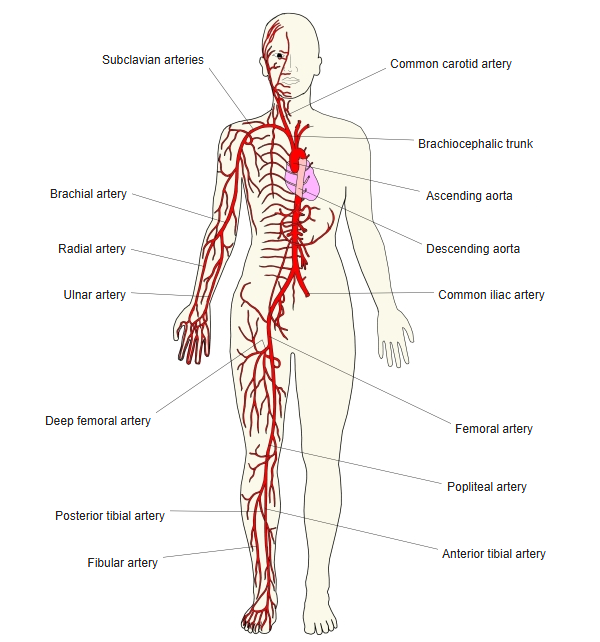
Related terms
References and sources
- Further reading: Blood vessel, Wikipedia.
- Further reading: Lymphatic vessel, Wikipedia.
- Federative International Programme for Anatomical Terminology (FIPAT). Terminologia Anatomica, 2nd ed. (TA2), 2019.