Fossa for gallbladder (Latin: fossa vesicae biliaris)
Also called Gallbladder fossa or the gallbladder bed
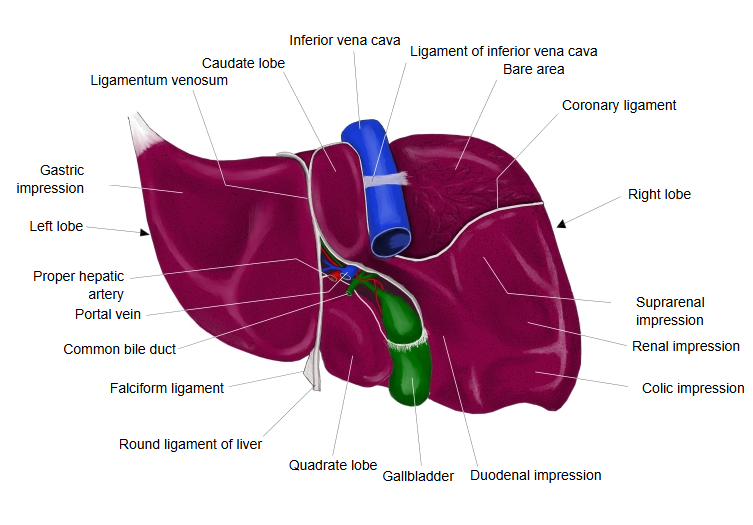
· The fossa itself has no distinct membrane of its own: the gallbladder is attached to the liver surface there by loose connective tissue, and peritoneum covers only its free lower surface. This connective tissue plane is the one separated during removal of the gallbladder (cholecystectomy).
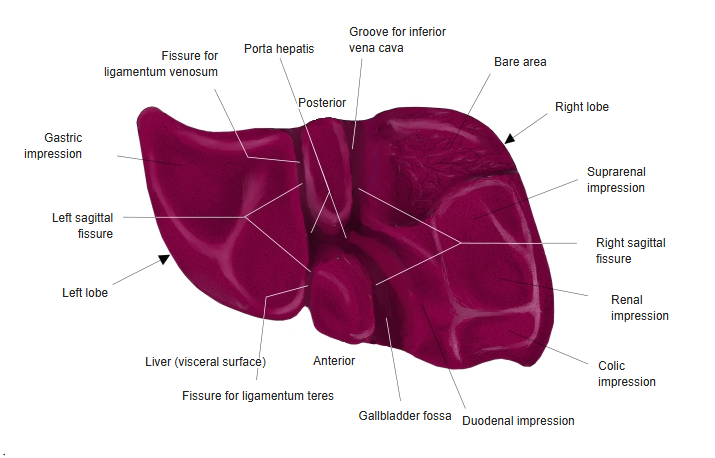
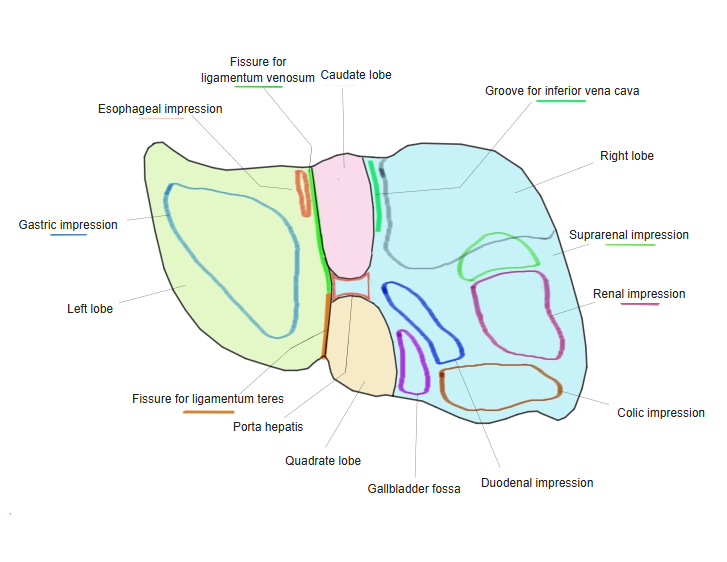
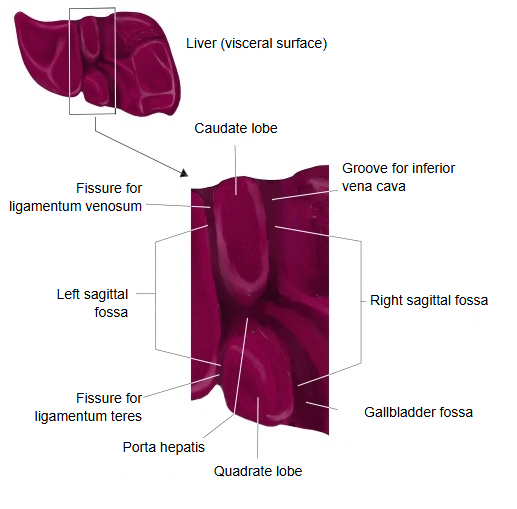
· The groove for the inferior vena cava forms the back part of the right sagittal fossa. The fossa for the gallbladder separates the quadrate lobe on its left from the right lobe on its right, and lies roughly on the line (Cantlie's line) that divides the liver into functional right and left halves. The fundus of the gallbladder usually projects beyond the inferior border of the liver at the front end of the fossa.
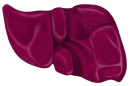 Liver (visceral surface)
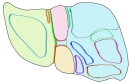 Features of the visceral surface
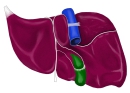 Liver (visceral surface)
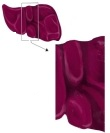 Left and right sagittal fossae
Reference websites
[Wikipedia]
· Gallbladder, Wikipedia.
· Liver, Wikipedia.
[Websites with illustrations]
· Fossa for gallbladder (IMAIOS e-Anatomy)
· Liver, posterior and visceral view (Kenhub)

Related terms
- Bile duct
- Right sagittal fossa
- Left sagittal fossa
- Porta hepatis
- Quadrate lobe
- Fundus of gallbladder
- Gallbladder
- Liver
References and sources
- Further reading: Gallbladder, Wikipedia.
- Further reading: Liver, Wikipedia.
- Federative International Programme for Anatomical Terminology (FIPAT). Terminologia Anatomica, 2nd ed. (TA2), 2019.