Stratum disjunctum
Also called the desquamating layer or shedding layer
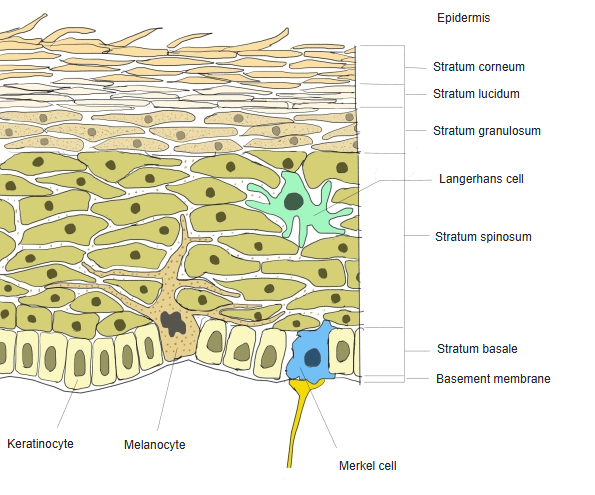
The stratum disjunctum is the surface of the stratum corneum, the outermost layer of the epidermis: the layer in which dead keratinocytes are continually flaking off.
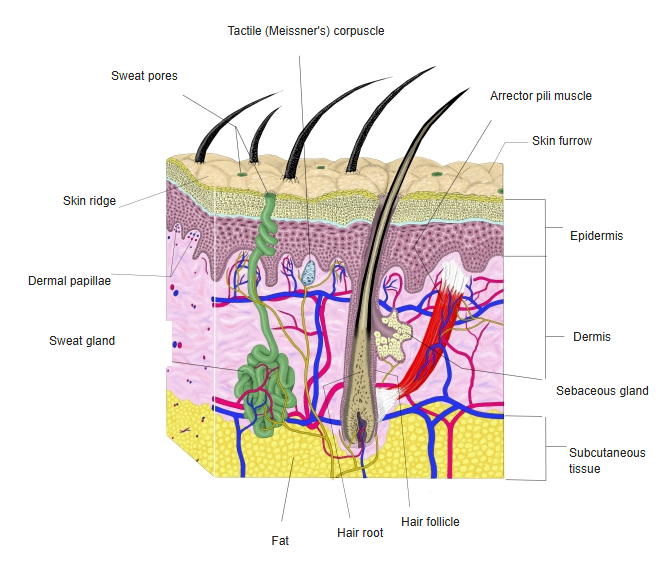
Skin = epidermis + dermis + subcutaneous tissueStratum corneum: about 10-20 layers of cells, about 0.02 mm thick on most of the body (much thicker on the palms and soles)
The surface of the stratum corneum is constantly flaking off, so its outer part is also called the stratum disjunctum; one classic figure for the loss is 6-14 g a day, and figures differ between sources. The cells of the stratum corneum are dead, flattened keratinocytes filled with keratin. In the deeper part of the stratum corneum (stratum compactum) the cells stay tightly joined; in the stratum disjunctum the connections between them break down and the cells come away as scales. The shedding is balanced by new cells coming up from the basal layer, so the thickness of the epidermis stays about the same.
Related terms
References and sources
- Further reading: Stratum corneum, Wikipedia.
- Further reading: Epidermis, Wikipedia.
- Federative International Programme for Anatomical Terminology (FIPAT). Terminologia Anatomica, 2nd ed. (TA2), 2019.