Hepatic cell plate
Also called Hepatic plate or the liver cell plate or the hepatic lamina
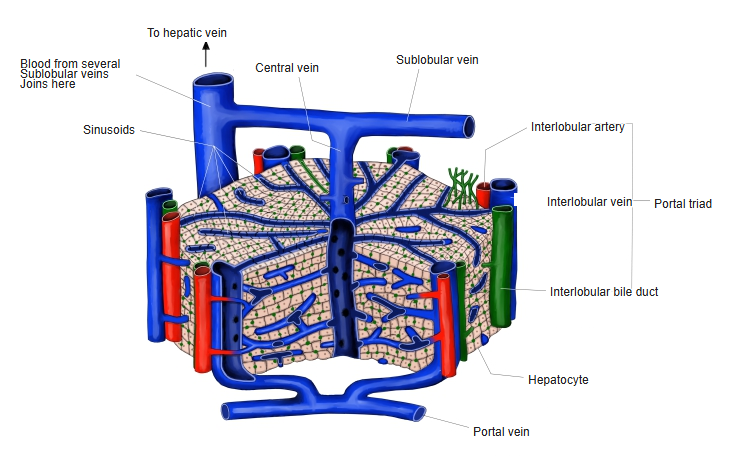
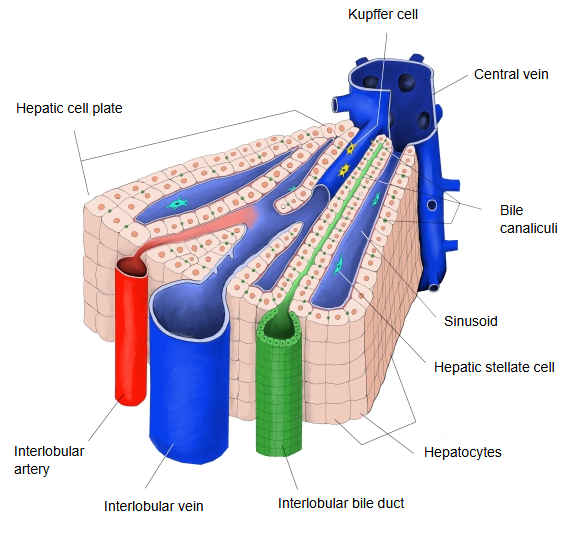
A hepatic cell plate is a sheet of hepatocytes, one cell thick in adults, running in a hepatic lobule towards the central vein.
The hepatic lobule: the unit of hepatocytesIn young children the plates are two cells thick
· The hepatic cell plates branch, join with one another and have openings in them, forming a sponge-like network; the spaces between the plates are filled by the sinusoids, so each hepatocyte faces blood across the narrow space of Disse. Bile canaliculi run inside each plate between neighbouring hepatocytes and carry bile outward, opposite to the flow of blood towards the central vein.
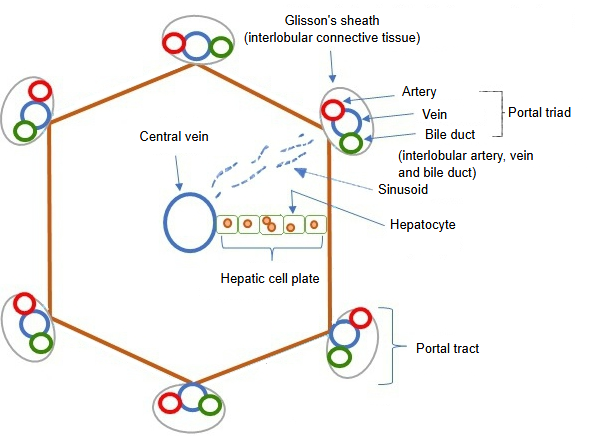
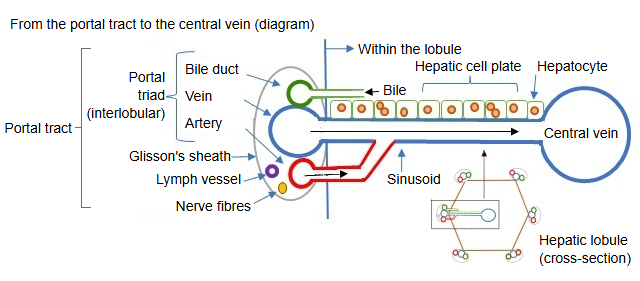
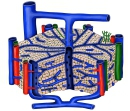 Structure of a hepatic lobule
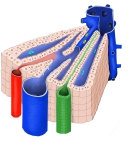 Hepatic cell plates and sinusoids
Reference websites
[Wikipedia]
· Lobules of liver, Wikipedia.
· Hepatocyte, Wikipedia.
[Websites with illustrations]
· Liver lobule and hepatic plates (figure) (Anesthesia Key)

· Plates of hepatocytes (IMAIOS e-Anatomy)
Related terms
- Hepatocyte
- Hepatic lobule
- Sinusoid
- Portal triad
- Central vein of the liver
- Canal of Hering
- Hepatic parenchyma
- Liver
References and sources
- Further reading: Lobules of liver, Wikipedia.
- Further reading: Hepatocyte, Wikipedia.
- Federative International Programme for Anatomical Terminology (FIPAT). Terminologia Anatomica, 2nd ed. (TA2), 2019.