Intervertebral surface (Latin: facies intervertebralis)
The intervertebral surface is the upper or lower, roughly circular or oval face of the vertebral body that meets the intervertebral disc.
The term is not listed in the index of every anatomy textbookMost of the surface is covered by hyaline cartilage, the cartilage endplateIts raised bony rim is called the anular epiphysis (ring apophysis)
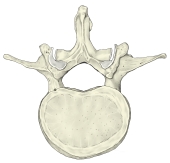 Lumbar vertebra (superior view)
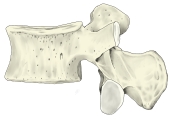 Lumbar vertebra (lateral view)
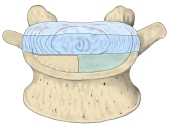 Vertebral body and intervertebral disc
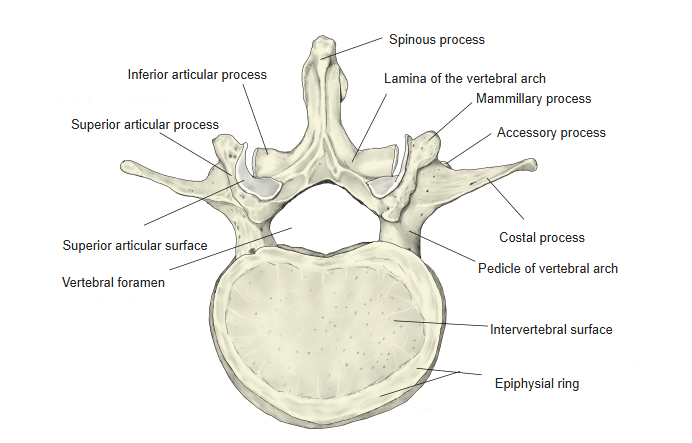
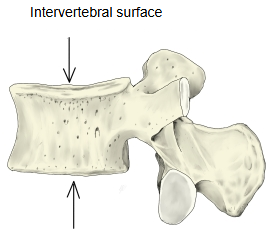
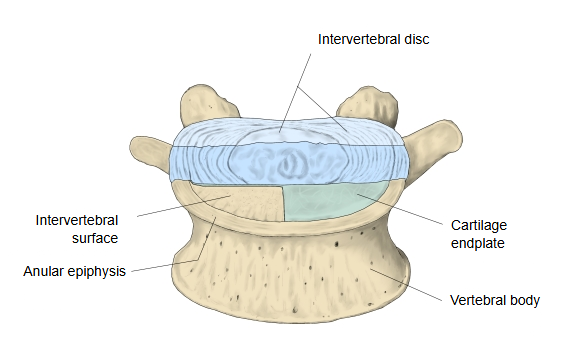
The vertebral bodies above the sacrum have a superior and an inferior intervertebral surface, with two exceptions at the top: the atlas has no body, and the body of the axis has only an inferior one, since the dens rises from its upper side and there is no disc between C1 and C2. Each surface faces the corresponding surface of the neighbouring vertebra; the intervertebral disc lies between the two facing surfaces and joins them at the intervertebral symphysis.
Related terms
- Vertebral body
- Intervertebral disc
- Cartilage endplate
- Anular epiphysis
- Intervertebral symphysis
- Lumbar vertebrae
References and sources
- Further reading: Vertebra, Wikipedia.
- Federative International Programme for Anatomical Terminology (FIPAT). Terminologia Anatomica, 2nd ed. (TA2), 2019.