Pelvic diameters (Latin: diametri pelvis)
The table below lists the standard measurements (diameters) used to describe the size of the pelvis.
| Greater pelvis | 1 | Intercristal distance (descriptive name, not an official term) | Greatest distance between the right and left iliac crests | 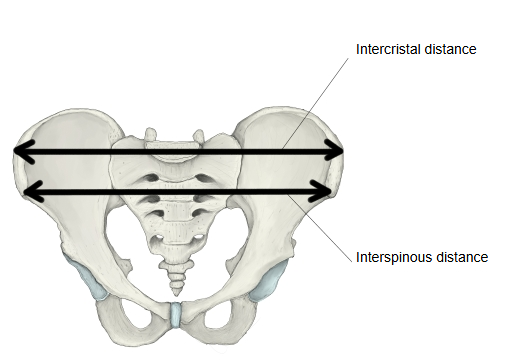 | |
| 2 | Interspinous distance (descriptive name, not an official term) | Distance between the right and left anterior superior iliac spines | |||
| Lesser pelvis | Pelvic inlet | 3 | Anatomical conjugate | From the promontory to the midpoint of the upper border of the pubic symphysis | 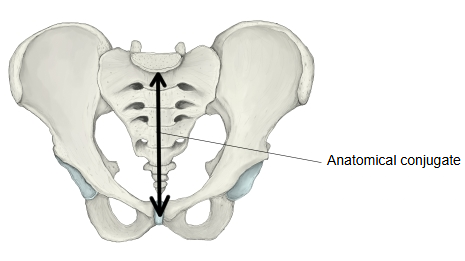 |
| 4 | Obstetric conjugate (true conjugate) | Shortest distance from the promontory to the back of the pubic symphysis | 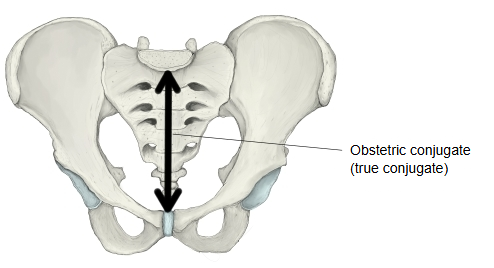 | ||
| 5 | Diagonal conjugate | From the promontory to the lower border of the pubic symphysis | 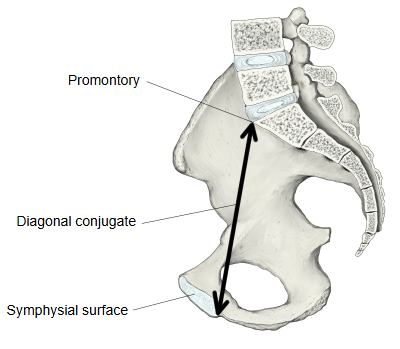 | ||
| 6 | External conjugate | From the front of the pubic symphysis to the tip of the spinous process of the fifth lumbar vertebra (measured on the body surface) | 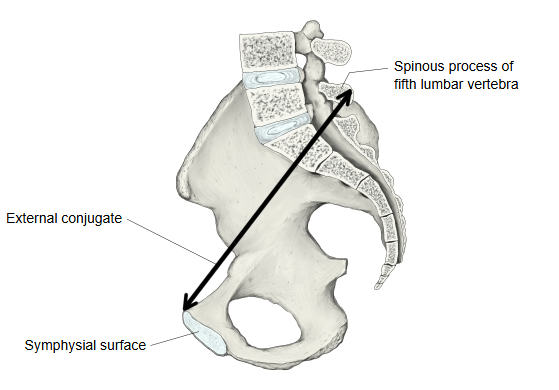 | ||
| 7 | Transverse diameter | Greatest distance between the right and left terminal lines (pelvic brim) | 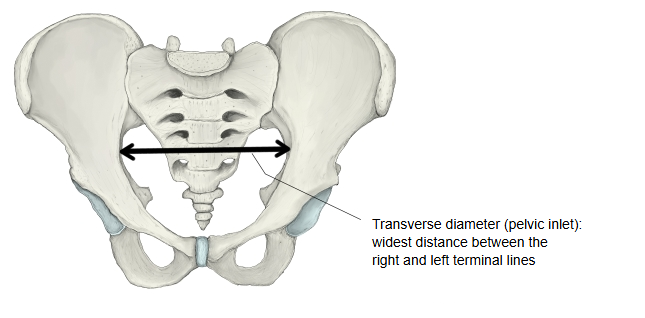 | ||
| 8 | Oblique diameter | From the point where the sacroiliac joint meets the terminal line on one side to the iliopubic eminence of the other side | 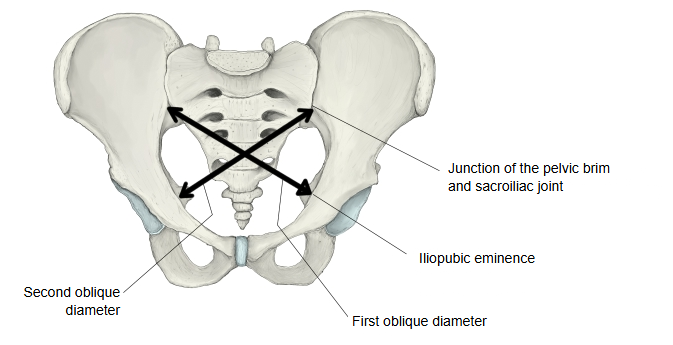 | ||
| Pelvic cavity | 9 | Median diameter (of the wide part of the cavity) | From the middle of the back of the pubic symphysis to the junction of the second and third sacral vertebrae | 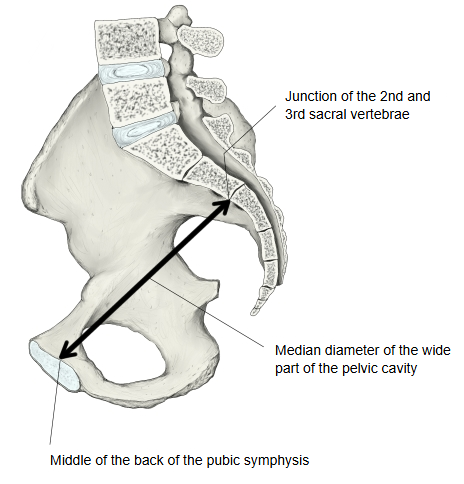 | |
| 10 | Transverse diameter | Distance between the midpoints of the right and left acetabula | 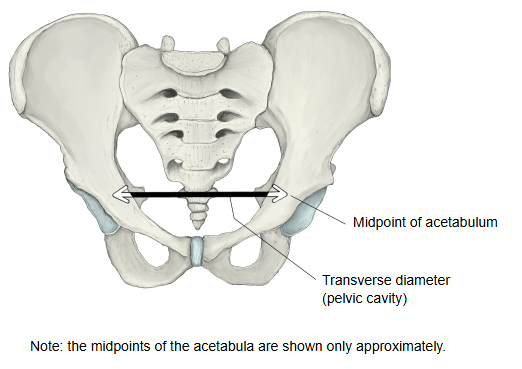 | ||
| 11 | Oblique diameter | From the midpoint of the upper border of the greater sciatic notch on one side to the middle of the obturator foramen of the other side | 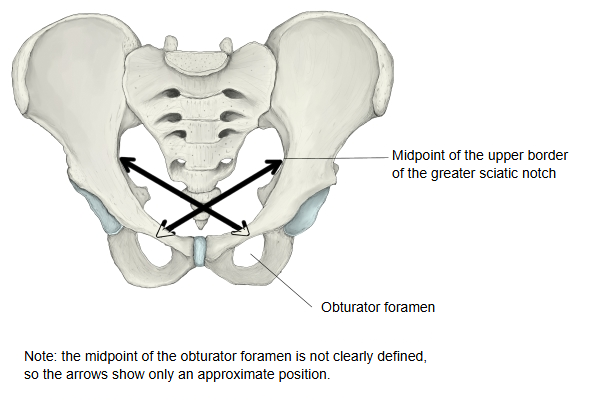 | ||
| Pelvic outlet | 12 | Longitudinal diameter | From the tip of the coccyx to the lower border of the pubic symphysis | 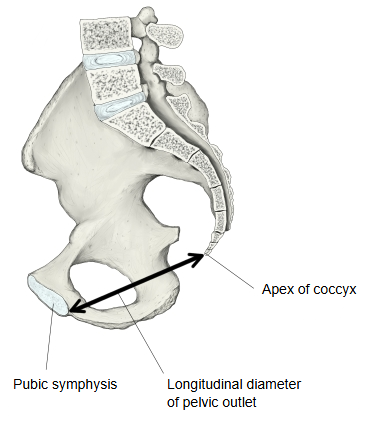 | |
| 13 | Transverse diameter | Distance between the right and left ischial tuberosities | 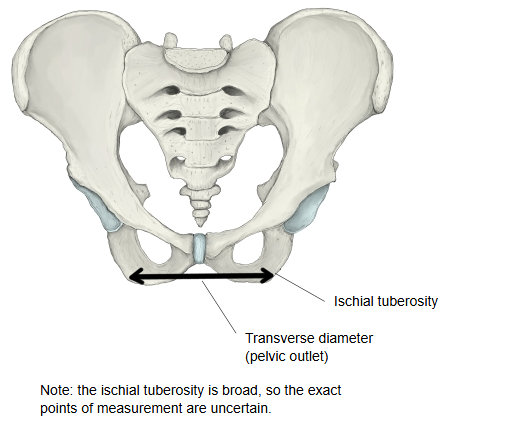 | ||
| 14 | Oblique diameter | No fixed end points; some texts measure it from the sacrotuberous ligament | - | ||
Names and end points differ between textbooks. In particular, "true conjugate" is used for the anatomical conjugate in some texts and for the obstetric conjugate in others, and the diameters of the cavity and outlet are not measured in the same way by all authors. Together the conjugates and other median diameters, the transverse diameters and the oblique diameters describe the size and shape of the birth canal.
Related terms
- Anatomical conjugate
- Diagonal conjugate
- External conjugate
- Median diameter (pelvis)
- Transverse diameter (pelvis)
- Oblique diameter (pelvis)
- Longitudinal diameter (pelvis)
References and sources
- Further reading: Pelvic inlet, Wikipedia.
- Further reading: Pelvic outlet, Wikipedia.
- Federative International Programme for Anatomical Terminology (FIPAT). Terminologia Anatomica, 2nd ed. (TA2), 2019.