Ischial tuberosity (Latin: tuber ischiadicum)
Also called the sitting bone
The ischial tuberosity is
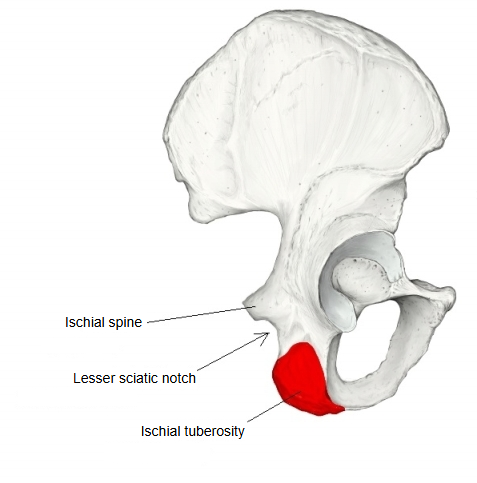
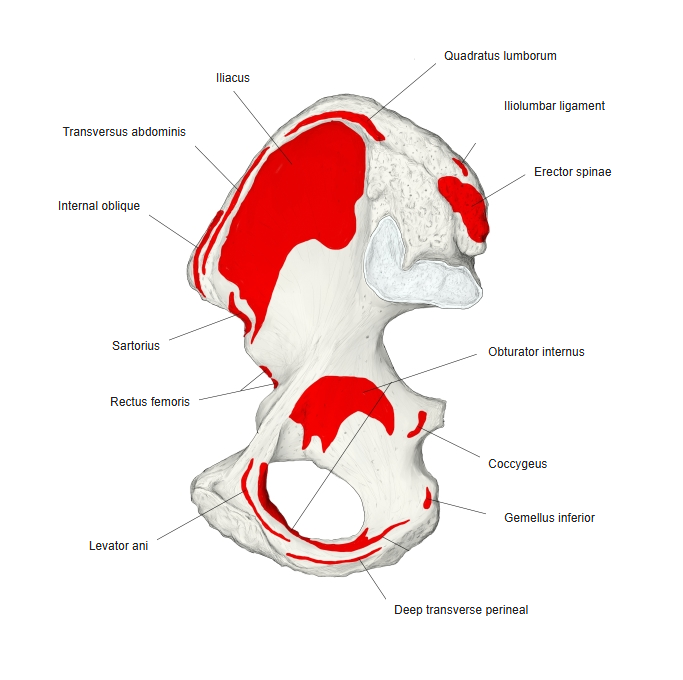
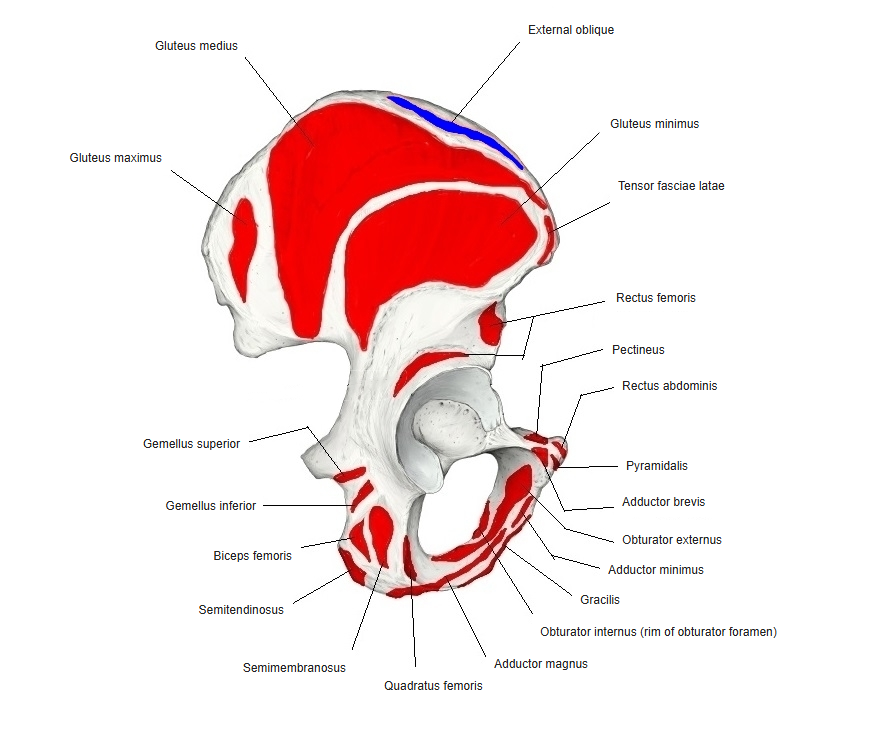
Below the lesser sciatic notch, the body of the ischium forms on its back the large oval ischial tuberosity, where the ramus of the ischium begins. Its surface is very rough because it gives origin to the muscles of the back of the thigh: the hamstrings (semimembranosus, semitendinosus and the long head of biceps femoris) and the hamstring part of the adductor magnus. The quadratus femoris and gemellus inferior attach along its upper lateral border, and the sacrotuberous ligament is attached to its medial margin. The ischial tuberosity is the part that rests on the seat and carries the body weight when sitting: when standing, the gluteus maximus covers it; when sitting, the muscle slides upwards and the tuberosity takes the weight through fat and a bursa. The two tuberosities mark the side limits of the pelvic outlet.
· Upper part: smooth and roughly four-sided, divided by an oblique ridge. The upper lateral area is the origin of the semimembranosus; the lower medial area is the common origin of the semitendinosus and the long head of biceps femoris.
· Lower part: rough and roughly triangular, divided by a lengthwise ridge. The lateral area is the origin of the hamstring part of the adductor magnus; the medial area gives attachment to the sacrotuberous ligament.
· The hamstring origin can be pulled off the tuberosity in sports injuries, especially in adolescents. Inflammation of the bursa over it (ischial bursitis) causes pain on sitting.
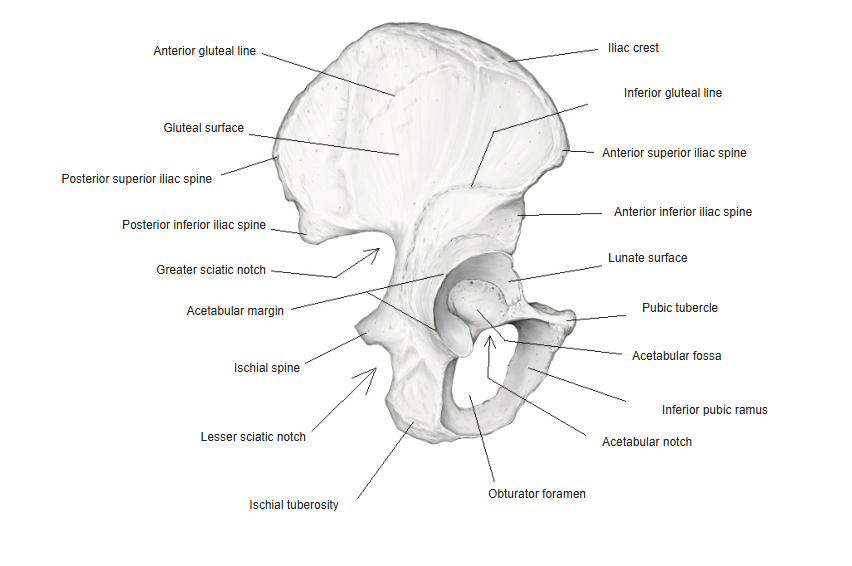
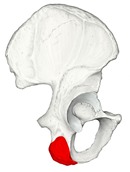 Right hip bone (lateral)
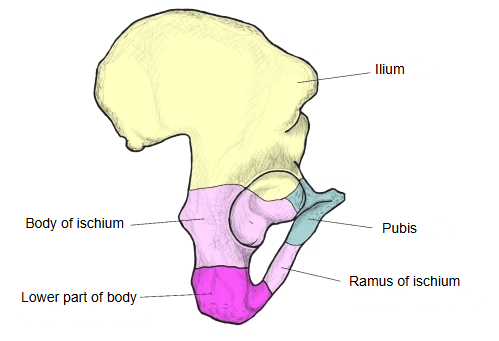
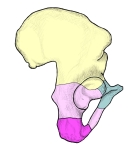 Parts of the ischium
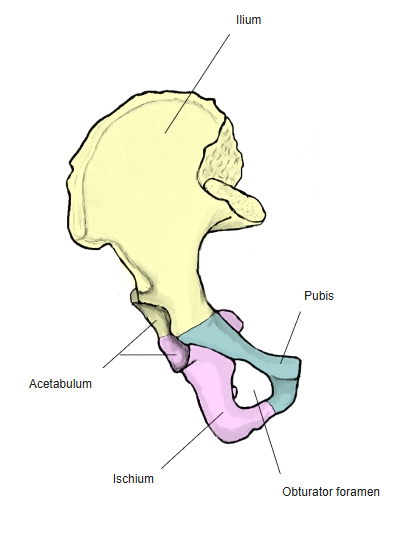
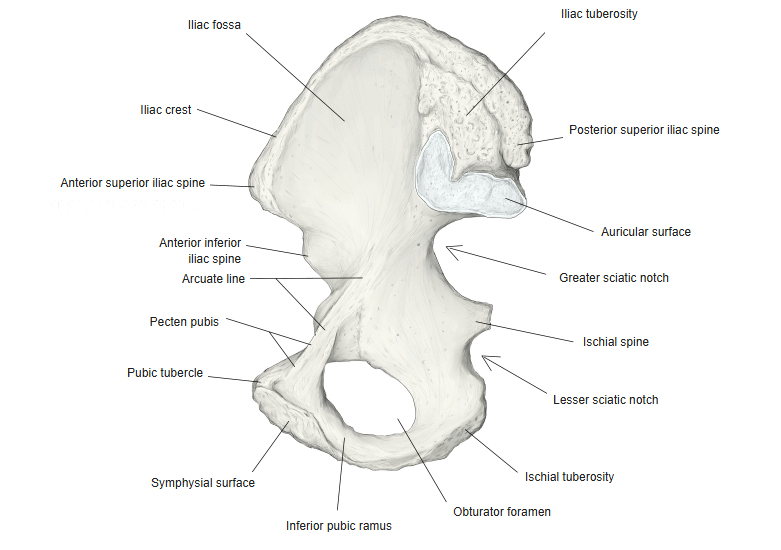
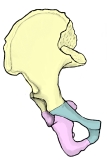 Parts of the hip bone (medial)
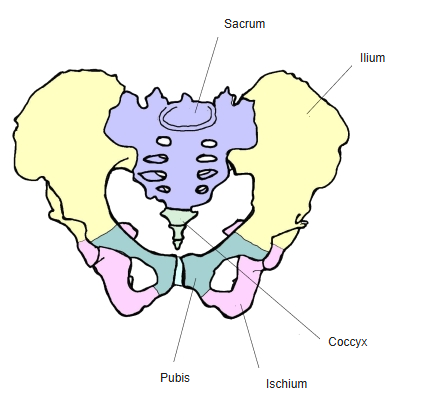
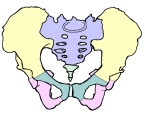 Bones of the pelvis
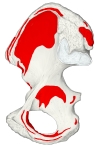 Muscle attachments (medial)
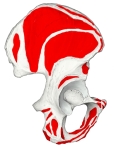 Muscle attachments (lateral)
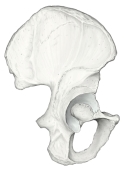 Hip bone (lateral view)
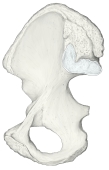 Hip bone (medial view)
Reference websites
[Wikipedia]
· Ischial tuberosity, Wikipedia.
· Ischium, Wikipedia.
[Websites with illustrations]
· Ischial tuberosity shown in red (posterior view, BodyParts3D) (Wikimedia Commons)

Where it is found
Related terms
References and sources
- Further reading: Ischial tuberosity, Wikipedia.
- Further reading: Ischium, Wikipedia.
- Federative International Programme for Anatomical Terminology (FIPAT). Terminologia Anatomica, 2nd ed. (TA2), 2019.