Cholesterol
- Overview
- Biosynthesis
- Roles in the body
- "Bad" and "good" cholesterol
- Reference websites
- (Wikipedia)
- Related terms
Overview
in the
body
- Neutral fat : ≈ triglyceride; stored in fat cells as a reserve of energy.
- Fatty acids : stored mainly as part of neutral fat in adipose tissue; used as a source of energy, especially by muscle.
- Cholesterol : an essential component of the cell membrane; also the raw material of some hormones and of bile acids.
- Phospholipids : the main building units of the cell membrane; also take part in signalling.
· It is a sterol, a kind of steroid.
· It was first found in gallstones in the 18th century; its name comes from the Greek words for bile (chole) and solid (stereos).
· Pure cholesterol is a white or pale yellow solid at room temperature.
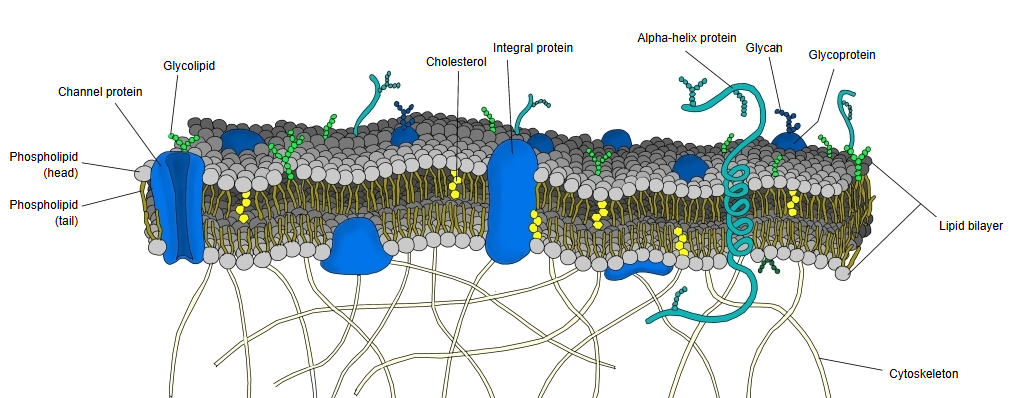
· In animal cells it is an essential component of the cell membrane, where it regulates the fluidity of the membrane.
· It is found in the cell membranes of all human tissues.
· In mammals most of the cholesterol is made in the body rather than taken in with food. Because it does not dissolve in water, it is carried in the blood plasma in lipoproteins.
Biosynthesis
When much cholesterol is taken in with food, the body makes less; when little is taken in, it makes more from other fats and sugars. In this way the amount of cholesterol in the body is kept fairly constant (homeostasis).
Roles in the body
[1. Component of cell membranes]
In animal cells it is an important component of the cell membrane and of the other membranes with a lipid bilayer.
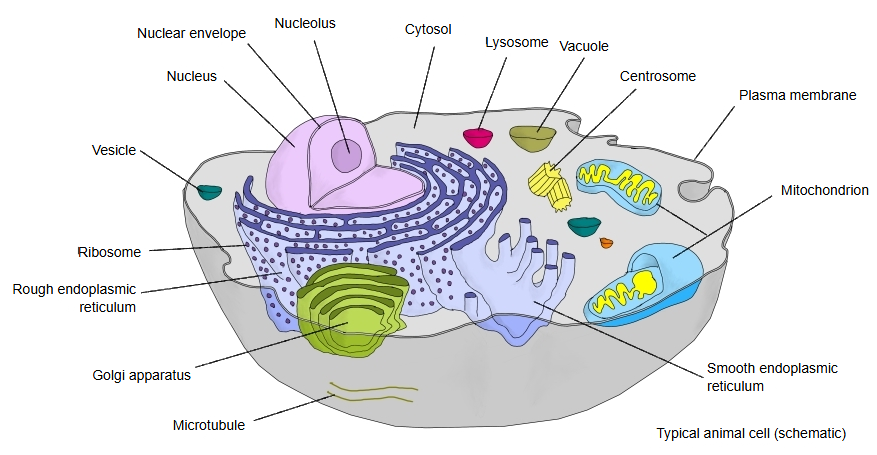
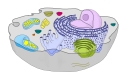 Typical animal cell
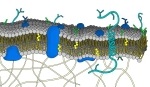 Structure of the cell membrane
[2. Raw material of hormones]
Cholesterol is the raw material of the steroid hormones: the adrenocortical hormones and the sex hormones.
[3. Raw material of vitamin D]
In the skin, 7-dehydrocholesterol, the direct precursor of cholesterol, is changed by ultraviolet light (UV-B) into vitamin D3. Vitamin D3 is then hydroxylated in the liver to 25-hydroxyvitamin D and in the kidney to the active form.
[4. Raw material of bile acids]
In the liver cholesterol is converted into bile acids, important components of bile. Excretion in the bile is the main route by which cholesterol leaves the body.
"Bad" and "good" cholesterol
· HDL (high-density lipoprotein, "good" cholesterol): collects surplus cholesterol from the tissues and carries it back to the liver.
· LDL (low-density lipoprotein, "bad" cholesterol): carries cholesterol from the liver to the tissues of the whole body.
A raised level of LDL cholesterol in the blood is associated with the deposition of cholesterol in the walls of arteries (atherosclerosis).
Foods: cholesterol in food comes from animal products; egg yolk and liver are particularly rich in it.
Reference websites
[Wikipedia]
· Cholesterol, Wikipedia.
Related terms
References and sources
- Further reading: Cholesterol, Wikipedia.
- Federative International Programme for Anatomical Terminology (FIPAT). Terminologia Anatomica, 2nd ed. (TA2), 2019.