Latin: musculus orbicularis oris
Overview
- One of the facial muscles (a skin muscle) in the group of the muscles around the mouth.
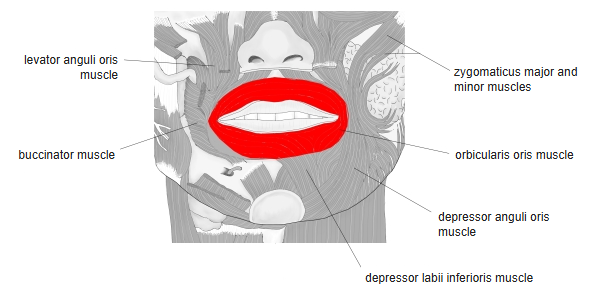
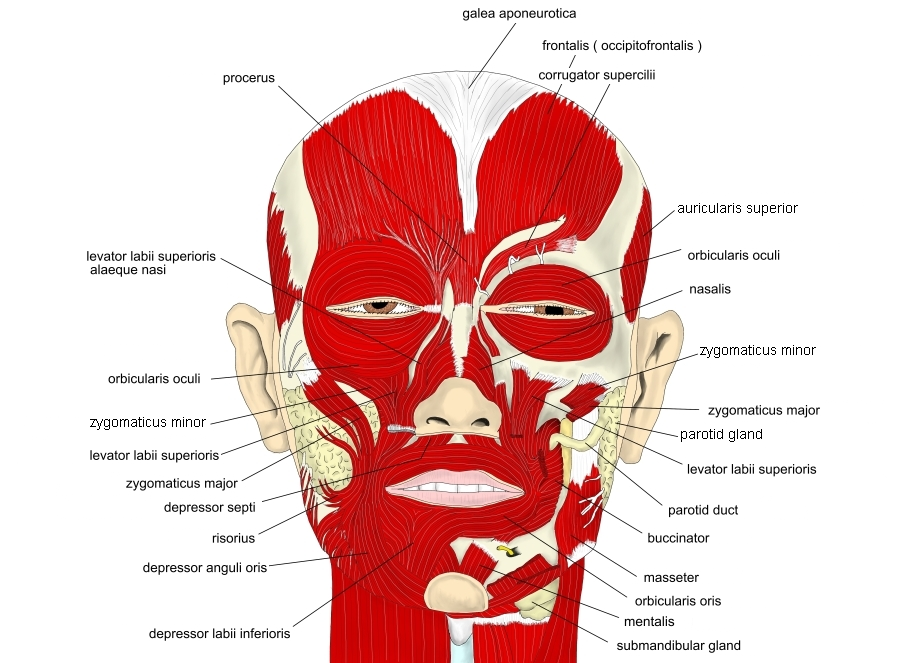
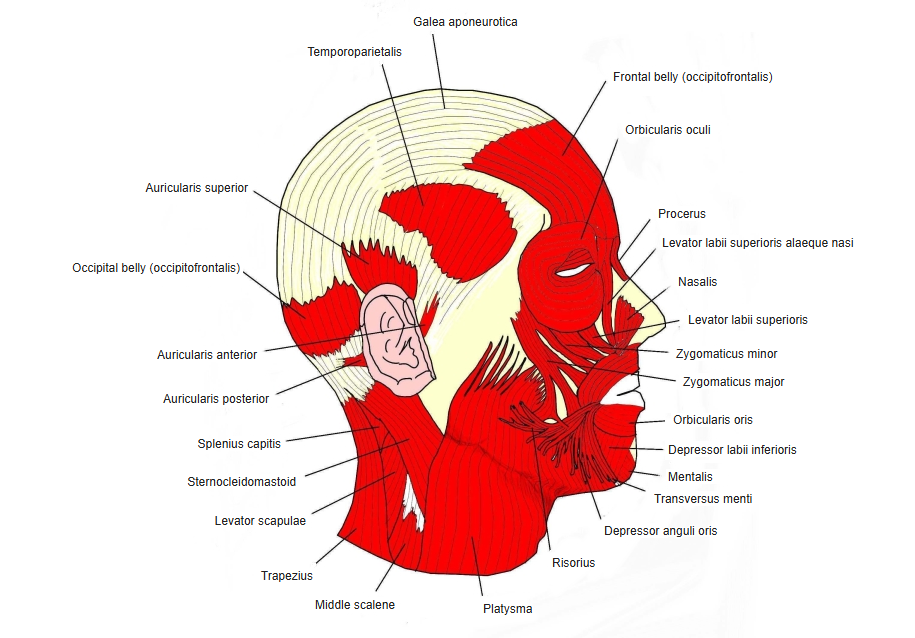
- Encircles the mouth like a sphincter; it has an inner marginal part and an outer labial part.
- Not a simple ring: it is made of several layers of fibres in different directions, partly its own and partly from other facial muscles.
- Accessory bundles join from the zygomaticus major and minor, levator anguli oris, depressor anguli oris and buccinator.
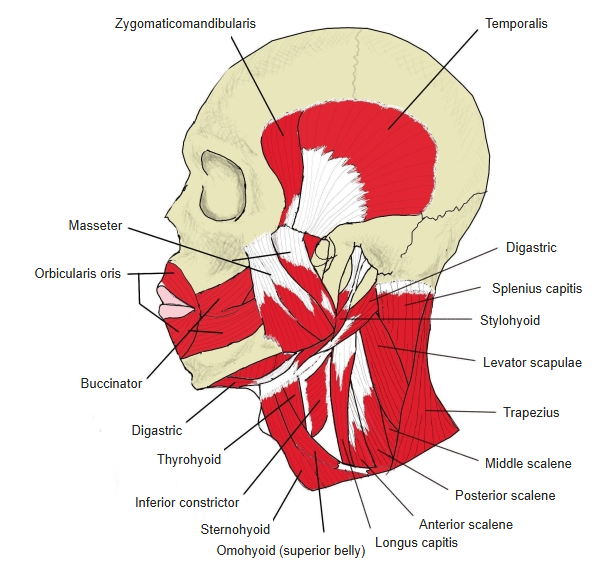
- The buccinator forms the deepest layer; its middle fibres cross at the angle of the mouth.
Position in the classification
Head › Facial muscles › Muscles around the mouth and cheek
Illustrations
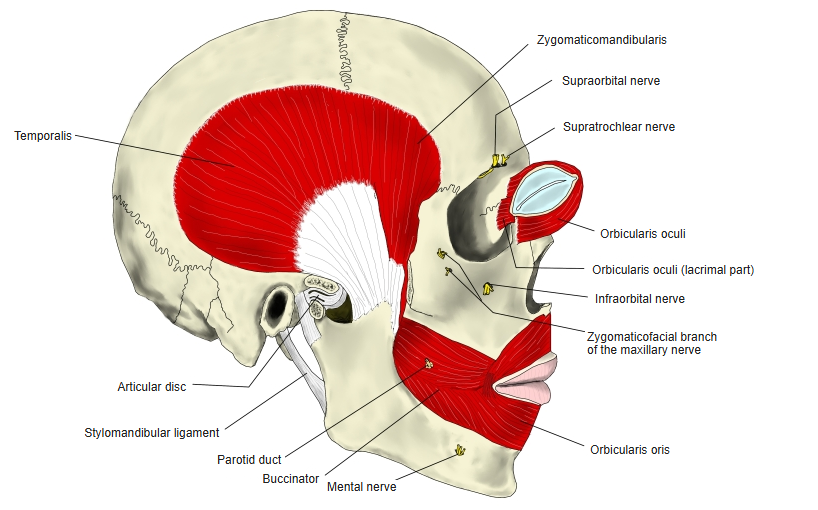
Origin / insertion
- Origin: alveolar juga of the lateral incisors of the maxilla and mandible, and the nasal septum. Rauber-Kopsch divides it into three:
- Nasal origin: skin at the back of the nostril
- Maxillary origin: maxilla, next to the origin of the nasalis
- Mandibular origin: next to the origin of the buccinator
- Some fibres arise from connective tissue bands fixed almost vertically in the mucosa lateral to the angle of the mouth, others through small intermediate tendons from the fibre bundles of neighbouring muscles (especially the buccinator) that form the modiolus.
- Insertion: skin of the lips
Action
- Main action: closes the mouth (sphincter)
- Marginal part closes the lips lightly; labial part closes them firmly.
- The parts arising from the maxilla and mandible purse the lips (whistling, kissing, playing wind instruments).
Innervation
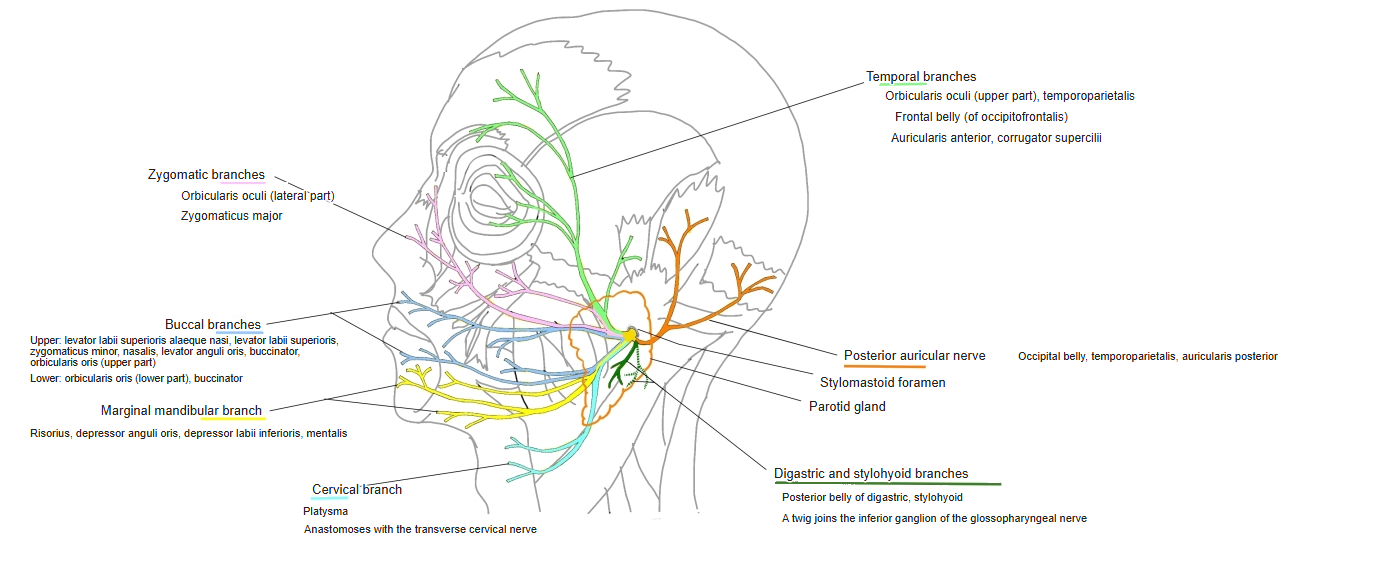
- Facial nerve: marginal mandibular branch and zygomatic branch
Blood supply
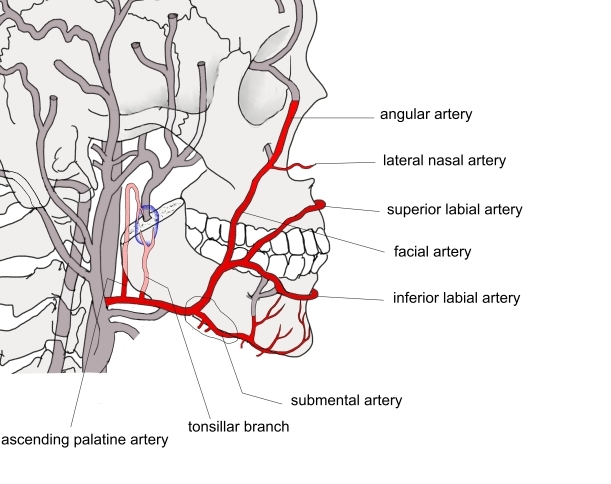
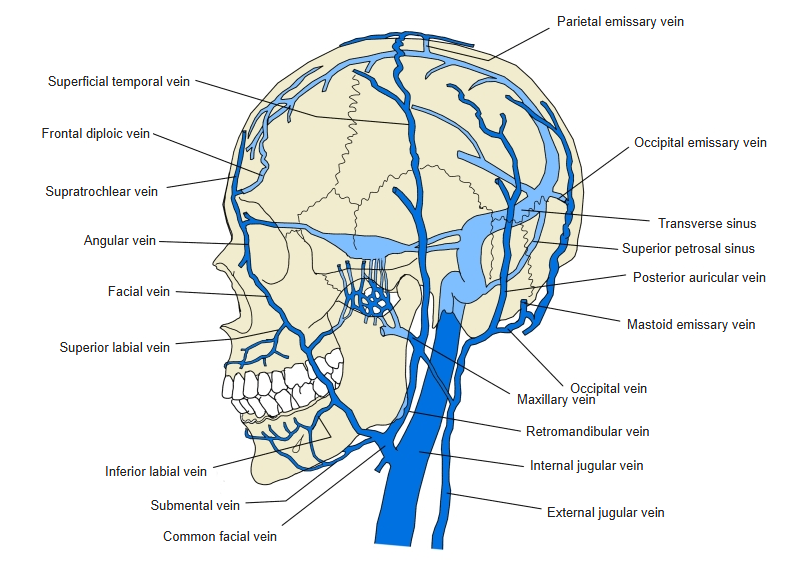
- Probably the superior and inferior labial arteries and veins (branches of the facial artery and vein); no source describing it in detail was found.
Anatomical variations
- The nasal, maxillary and mandibular origins may be absent, wholly or partly
Related terms
- Muscles around the mouth
- Facial muscles
- Buccinator
- Levator anguli oris
- Depressor anguli oris
- Orbicularis oculi
- Facial nerve
References and sources
- Further reading: Orbicularis oris muscle, Wikipedia.