Latin: musculus uvulae · also: uvular muscle, muscle of the uvula
Overview
- One of the five muscles of the soft palate and fauces; a small, thin muscle that reaches the uvula.
- Some textbooks describe it as an unpaired muscle that often splits into right and left halves; others count it as a paired muscle.
- It runs into the tip of the uvula.
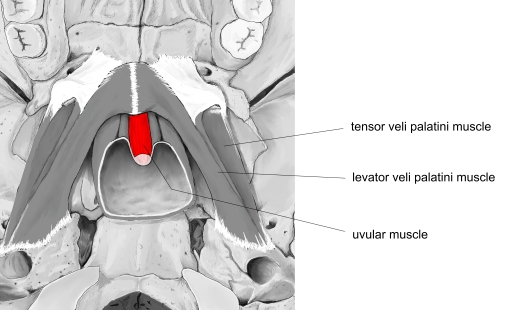
Position in the classification
Head › Muscles of the soft palate and fauces
Illustrations
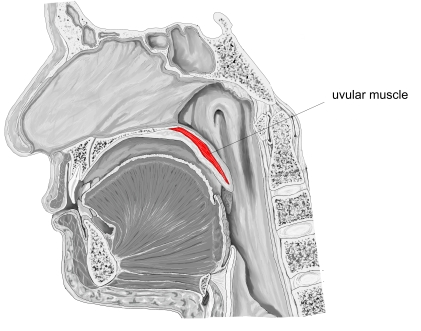
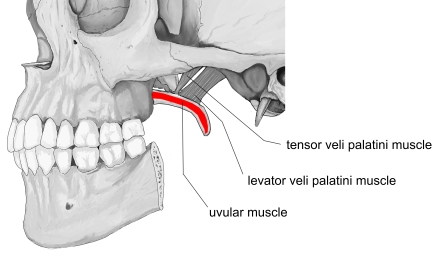
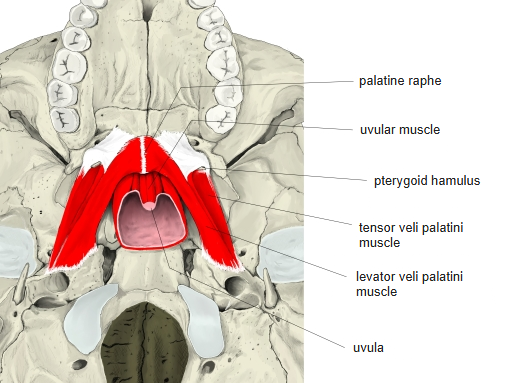
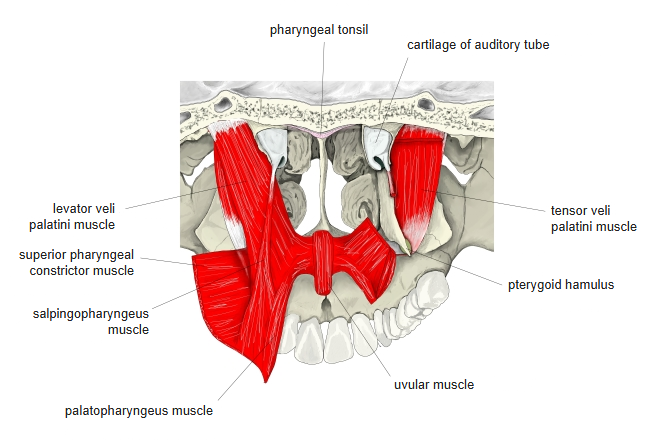
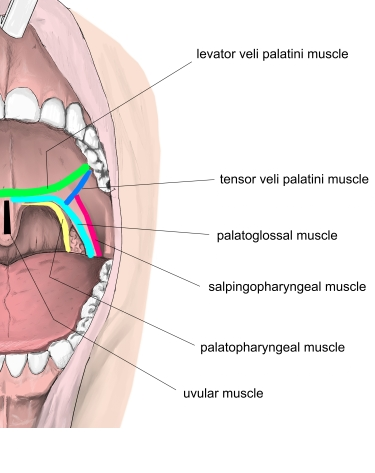
Origin / insertion
- Origin: posterior nasal spine (horizontal plate of the palatine bone) and the upper surface of the palatine aponeurosis
- Insertion: mucous membrane of the tip of the uvula
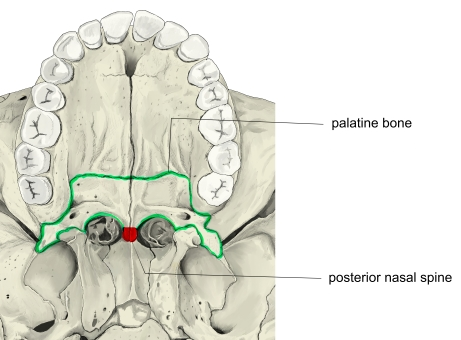
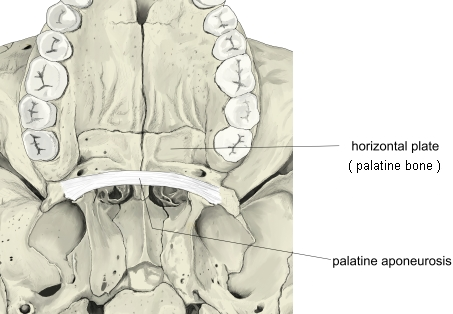
Action
- Raises the uvula and at the same time shortens it
Innervation
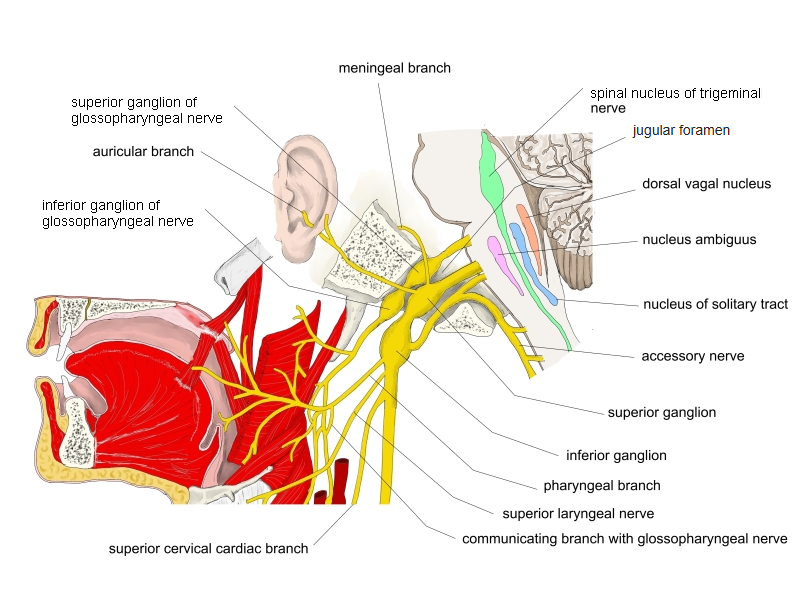
- Pharyngeal branch of the vagus nerve through the pharyngeal plexus
Blood supply
- Ascending palatine artery
- Descending palatine artery
Compiled from standard anatomy references.
Related terms
- Muscles of the soft palate and fauces
- Uvula
- Soft palate
- Palatine aponeurosis
- Levator veli palatini
- Tensor veli palatini
- Palatopharyngeus
- Palatoglossus
- Pharyngeal plexus
References and sources
- Further reading: Musculus uvulae, Wikipedia — also the source for the blood supply.