Latin: musculus teres minor
Overview
- One of the six muscles of the shoulder girdle and one of the four rotator cuff muscles.
- A narrow, elongated, cylindrical muscle (Latin teres = rounded); thin near its origin and thicker near its insertion.
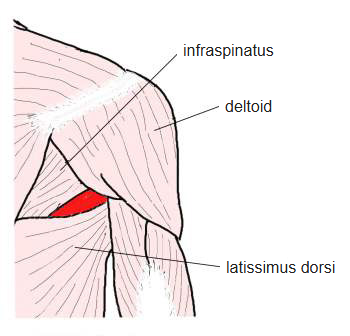
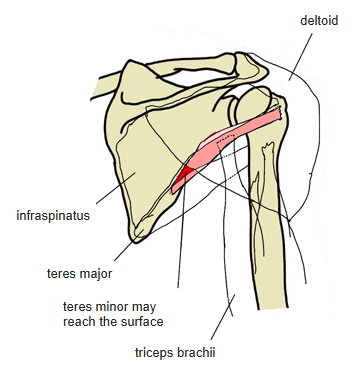
- Mostly covered by the deltoid and teres major; in some people a finger-thick part can be felt under the skin.
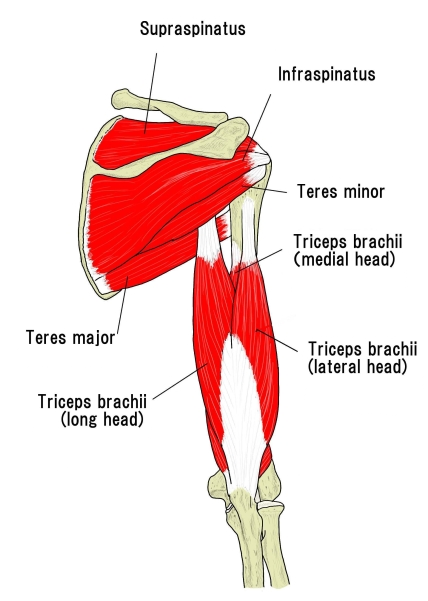
- Continuous in places with the triceps brachii, teres major and infraspinatus.
Position in the classification
Upper Limb › Shoulder girdle
Illustrations
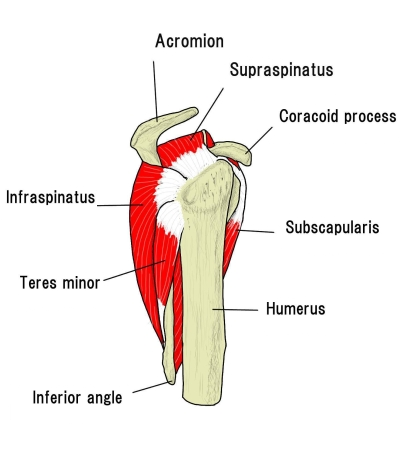
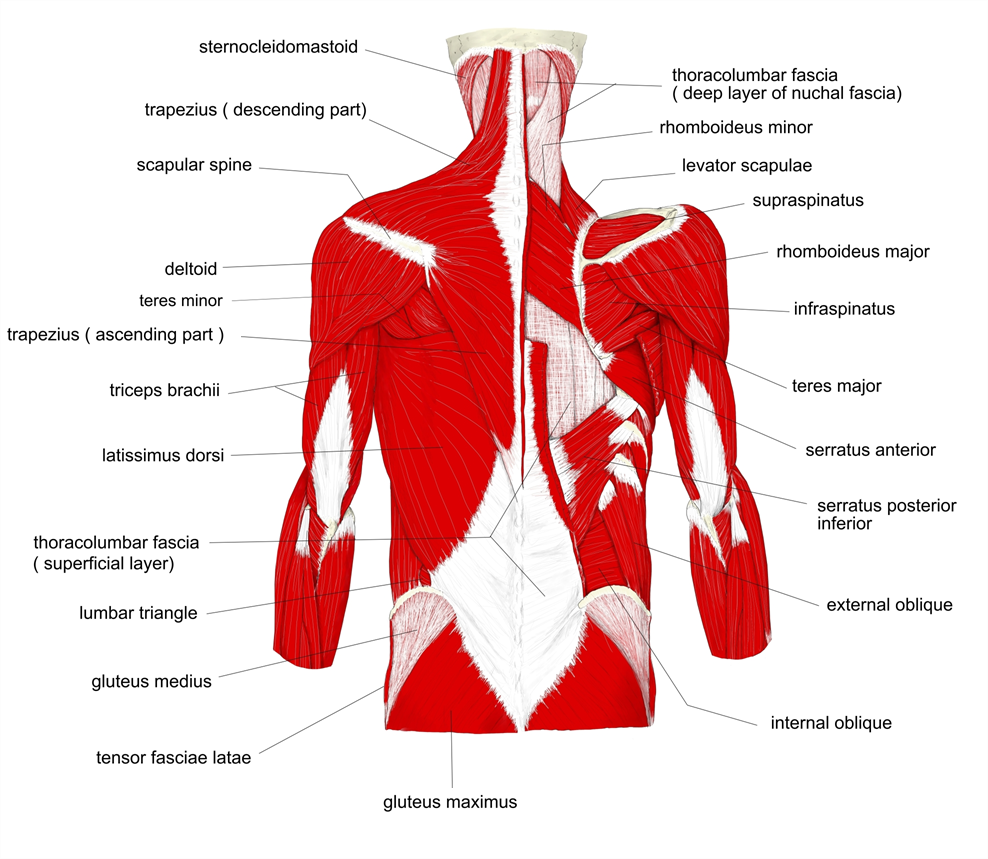
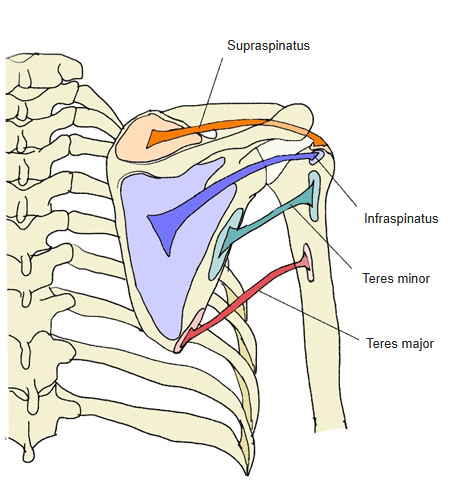
Origin / insertion
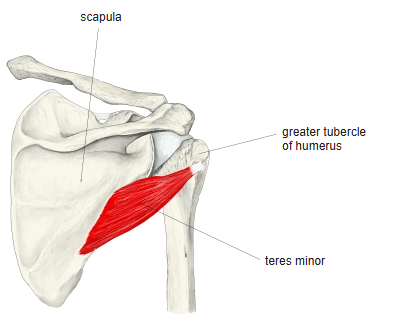
- Origin: posterior surface of the scapula along its lateral border (upper two-thirds), and the infraspinous fascia
- Thin tendinous sheets separate it from the infraspinatus above and the teres major below.
- The fibres run upward and laterally.
- Insertion: lowest facet of the greater tubercle of the humerus (lowest fibres just below it), and the capsule of the shoulder joint
- The tendon crosses and blends with the back of the shoulder-joint capsule.
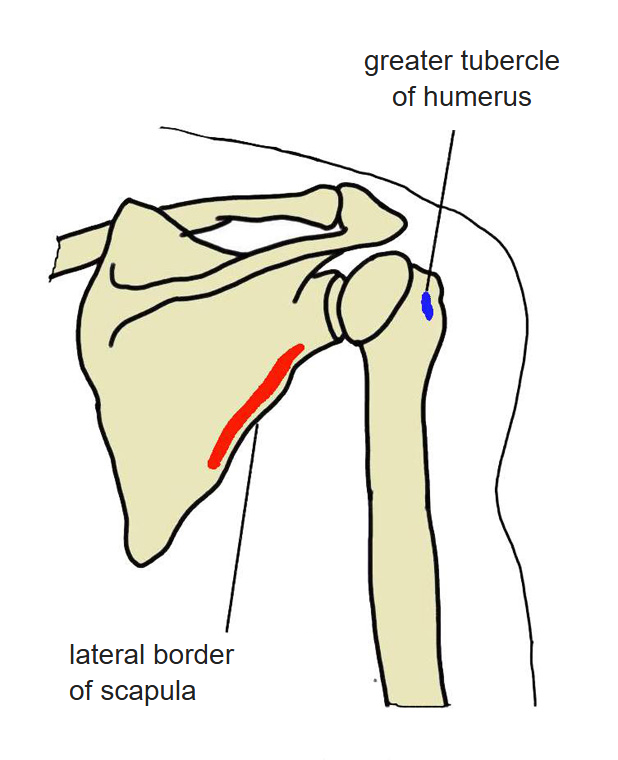
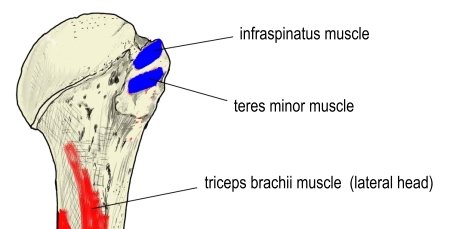
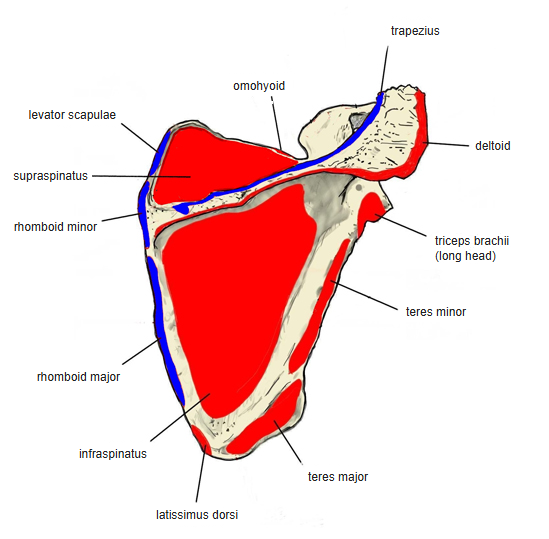
Action
- Rotates the arm laterally (external rotation of the humerus), together with the infraspinatus and the posterior deltoid
- As part of the rotator cuff, holds the head of the humerus in the glenoid cavity and keeps it from sliding upward when the deltoid abducts the arm
- Only a very weak adductor
Innervation
- Axillary nerve (C5–C6), posterior branch
- The nerve branch often shows a swelling (pseudoganglion) that contains nerve fibres but no nerve cells.
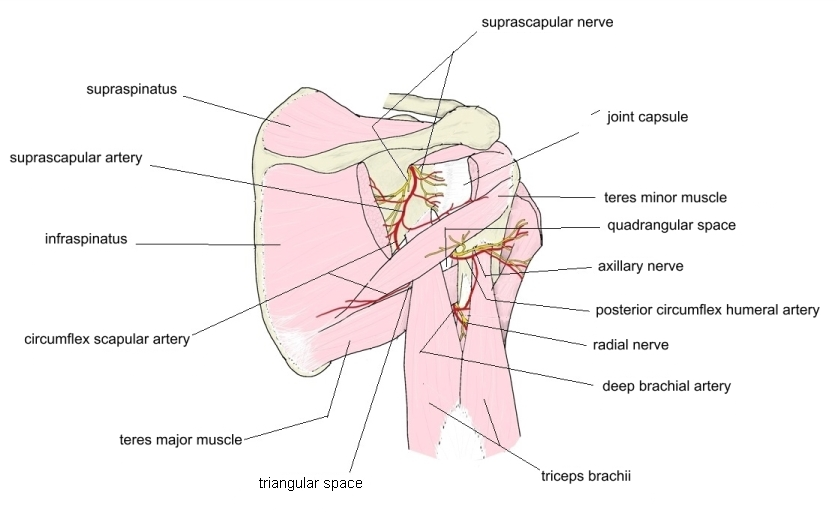
Blood supply
- Circumflex scapular artery
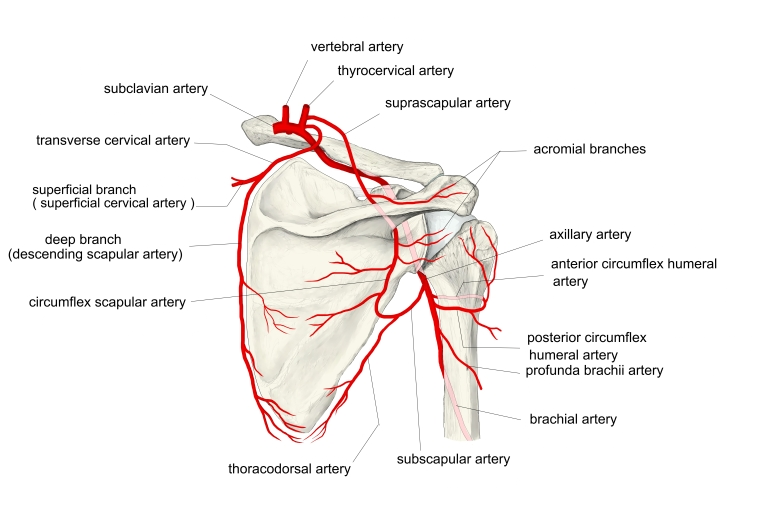
Anatomical variations
- Often fused with the infraspinatus: incompletely separated in about 13–20% and completely fused in about 7–11% in some series
- The part inserting on the neck of the humerus may form a separate muscle, the teres minimus
Related terms
- Rotator cuff
- Infraspinatus
- Teres major
- Deltoid
- Scapula
- Infraspinous fascia
- Greater tubercle
- Shoulder joint
- Glenoid cavity
- Axillary nerve
- Circumflex scapular artery
References and sources
- Further reading: Teres minor muscle, Wikipedia.