Costal groove (Latin: sulcus costae)
Medical dictionaries describe it as the groove along the lower margin of a rib that houses the intercostal nerve and the main intercostal artery and vein.
It lies just above the sharp inferior border of the body of the rib, on its inner side, and is deepest at the back of the rib.
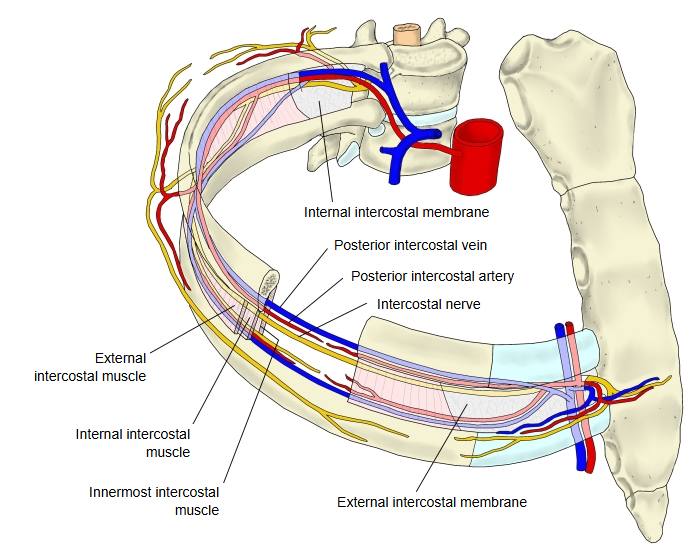
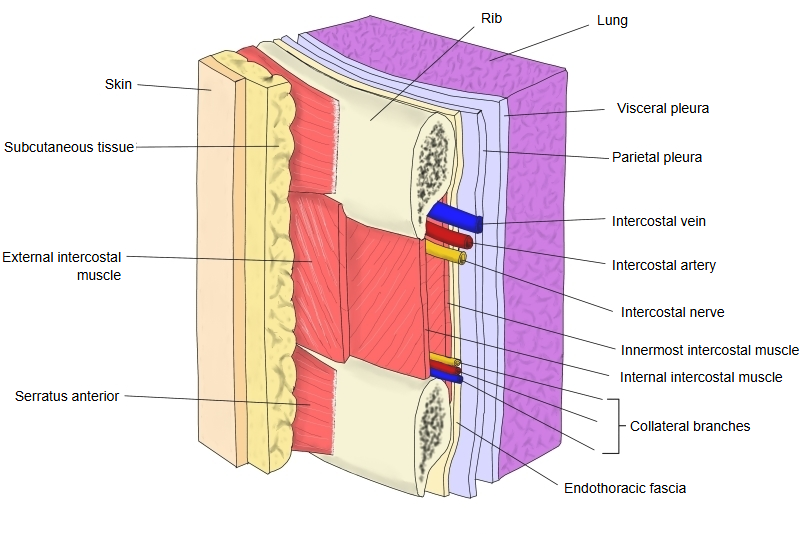
From above downwards it holds the posterior intercostal vein, the posterior intercostal artery and the intercostal nerve. Smaller collateral branches of these vessels and the nerve run along the upper border of the rib below.
Needles and chest drains are therefore passed just above the upper border of a rib, to avoid the vessels and nerve in the costal groove of the rib above.
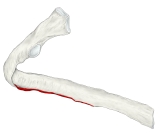 Typical rib (inferior view)
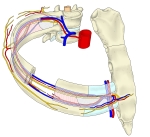 Intercostal space
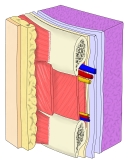 Layers of the thoracic wall (section)
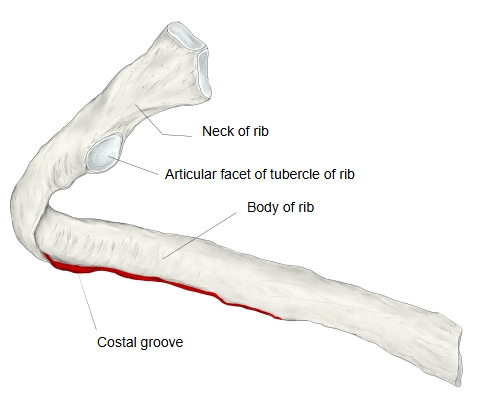
· Video (English): Ribs - typical and atypical, true and false ribs (the costal groove is explained from about 5:07).
Where it is found
Related terms
References and sources
- Further reading: Rib, Wikipedia.
- Further reading: Intercostal space, Wikipedia.
- Federative International Programme for Anatomical Terminology (FIPAT). Terminologia Anatomica, 2nd ed. (TA2), 2019.