Latin: Vena axillaris
Overview
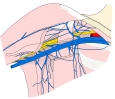
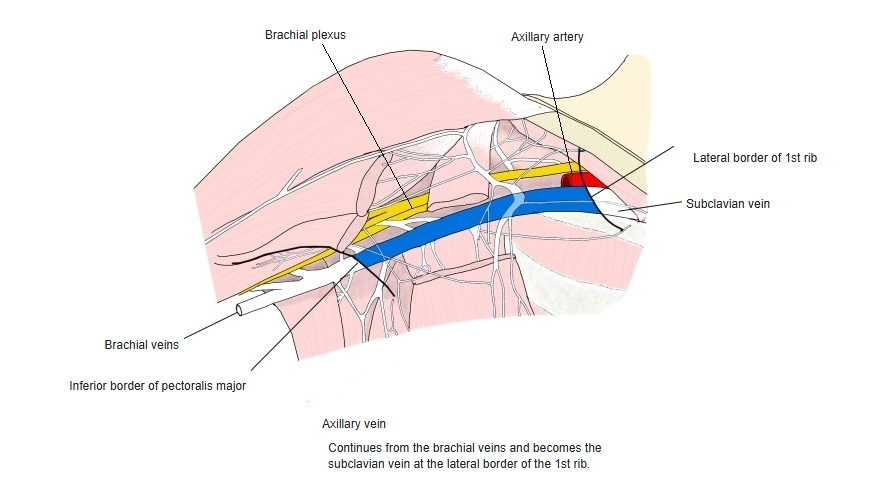
- The main vein of the axilla; it carries blood from the upper limb, the side of the chest wall and the shoulder.
- Begins at the lower border of the teres major where the brachial veins join the basilic vein.
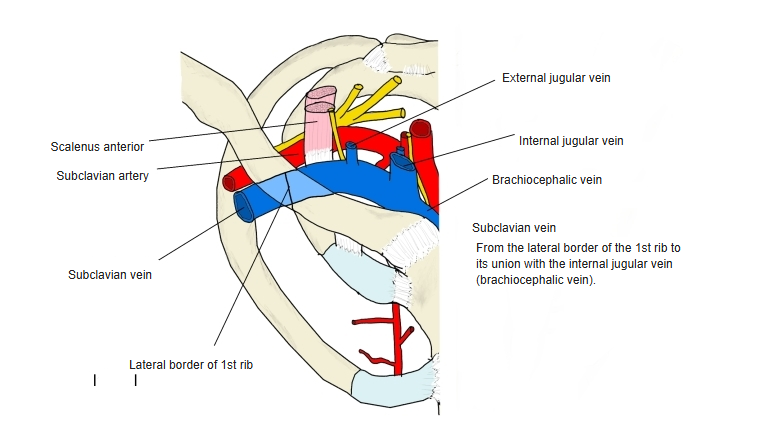
- Ends at the outer border of the 1st rib, where it becomes the subclavian vein.
Axillary vein 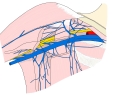
Veins of the shoulder and axilla
Tributaries
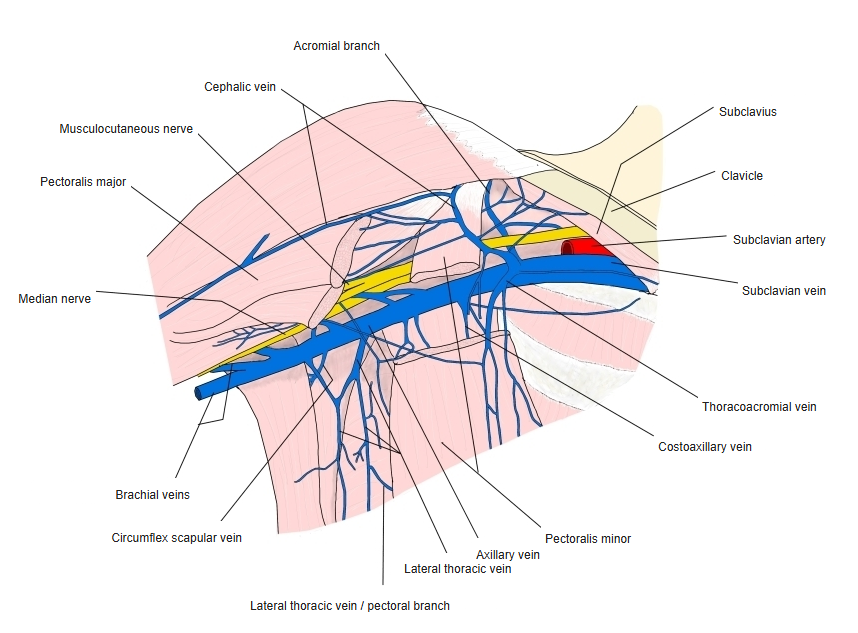
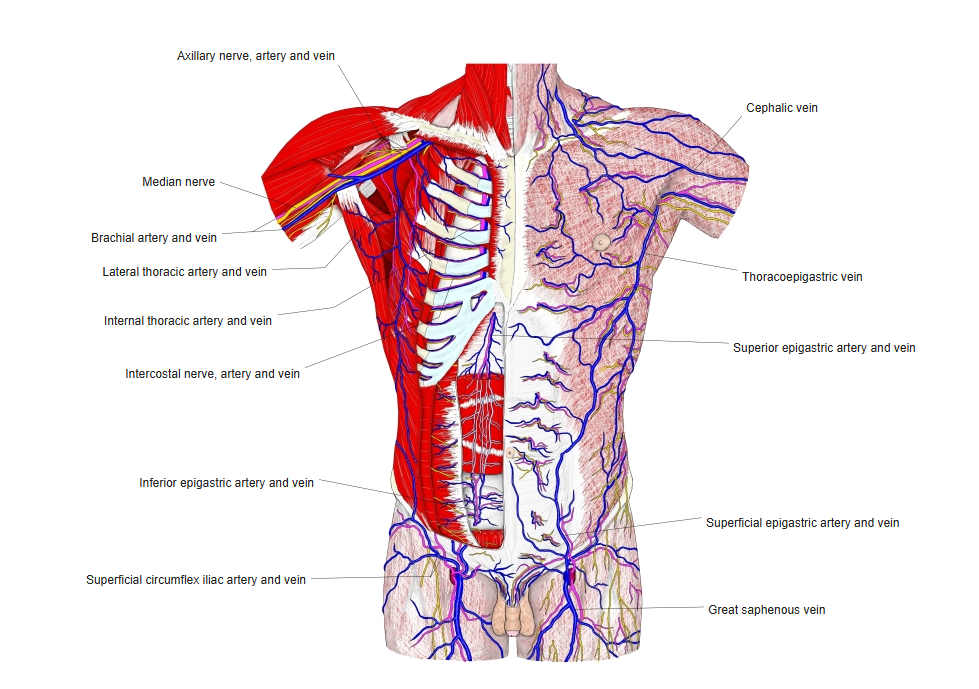
- Veins that match the branches of the axillary artery: lateral thoracic, thoracoacromial and subscapular veins, and the circumflex humeral veins.
- The cephalic vein joins its last part after passing through the deltopectoral groove.
- The thoracoepigastric veins link it with the veins of the abdominal wall.
Veins of the front and side of the trunk
Relations
- Lies on the medial (front) side of the axillary artery.
- The medial cord of the brachial plexus and the medial pectoral nerve lie between the vein and the artery.
- Like the artery, it is divided into three parts by the pectoralis minor.
Subclavian vein
Clinical notes
- Blood clots in the axillary and subclavian veins (upper-limb deep vein thrombosis) can follow central venous catheters or repeated strenuous arm movement.
References and sources
- Further reading: Axillary vein, Wikipedia.