Latin: Arteria axillaris
Overview
- The main artery of the axilla; the continuation of the subclavian artery.
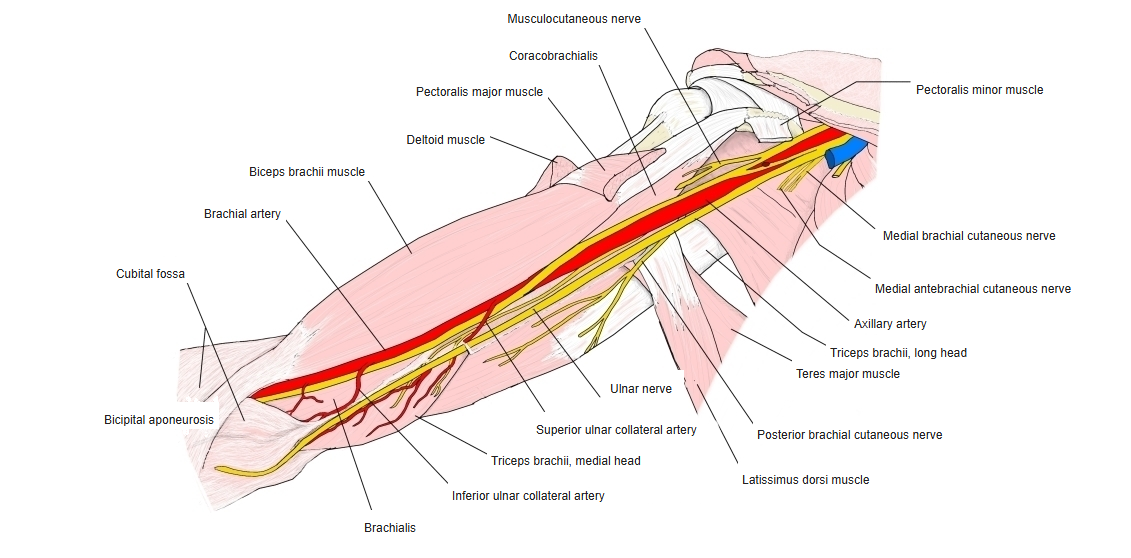
- Begins at the outer border of the 1st rib and ends at the lower border of the teres major, where it becomes the brachial artery.
- Divided into three parts by the pectoralis minor, which crosses in front of it.
Arteries of the upper limb 
Arteries of the upper limb and their branches
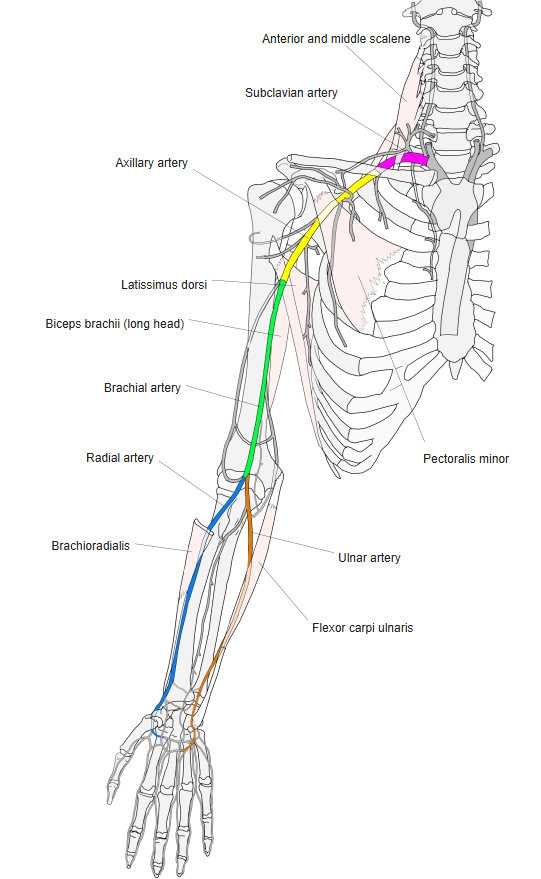
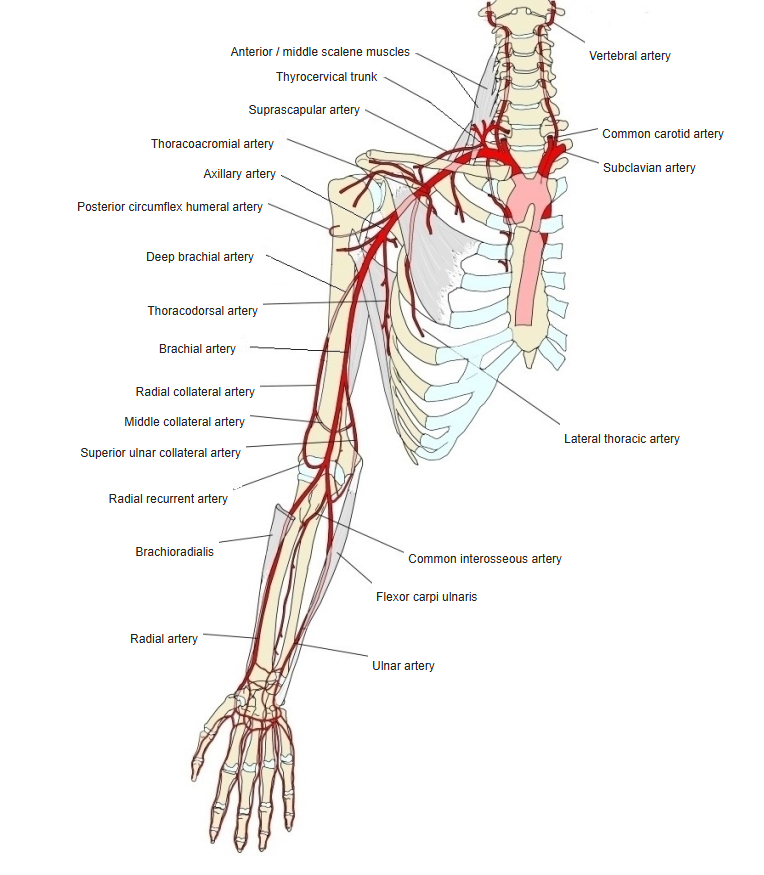
Parts and branches
| Part | Position | Branches |
|---|---|---|
| 1st part | Between the 1st rib and the upper border of the pectoralis minor | Superior (highest) thoracic artery |
| 2nd part | Behind the pectoralis minor | Thoracoacromial artery (acromial, clavicular, deltoid and pectoral branches); lateral thoracic artery |
| 3rd part | Between the lower border of the pectoralis minor and the lower border of the teres major | Subscapular artery (thoracodorsal and circumflex scapular arteries); anterior and posterior circumflex humeral arteries |
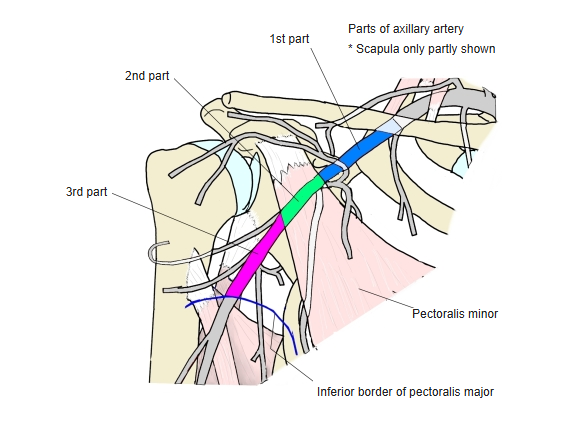
Three parts of the axillary artery 
Branches of the axillary artery
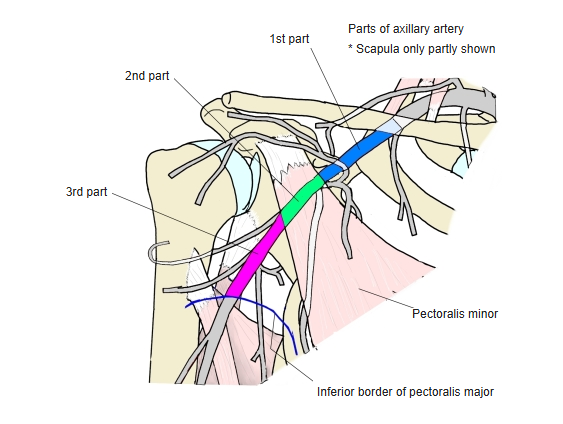
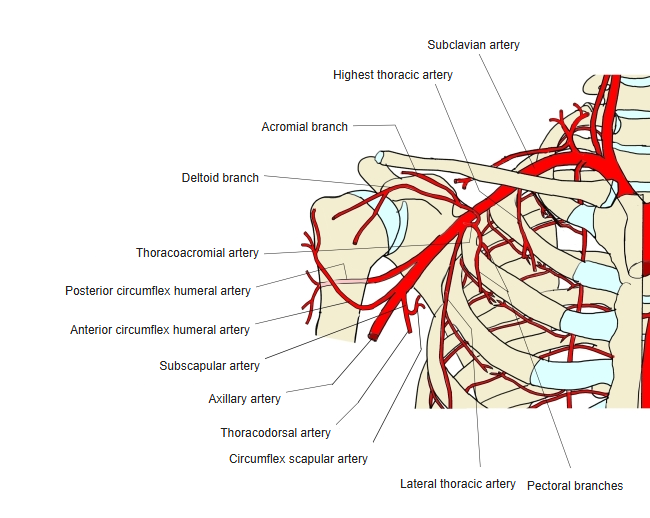
Relations
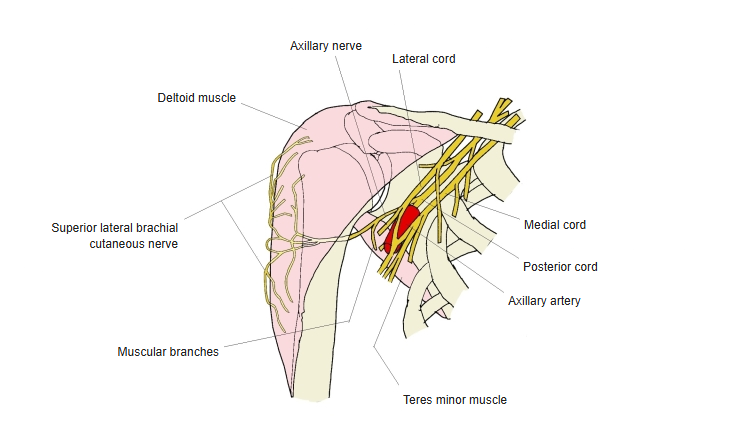
- The cords of the brachial plexus are named by their position around the 2nd part of the artery: lateral, medial and posterior.
- The axillary vein lies on its medial side.
- The axillary nerve and the posterior circumflex humeral artery pass backward together through the quadrangular space.
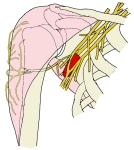
Axillary artery and the brachial plexus 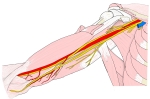
Brachial artery in the arm 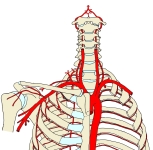
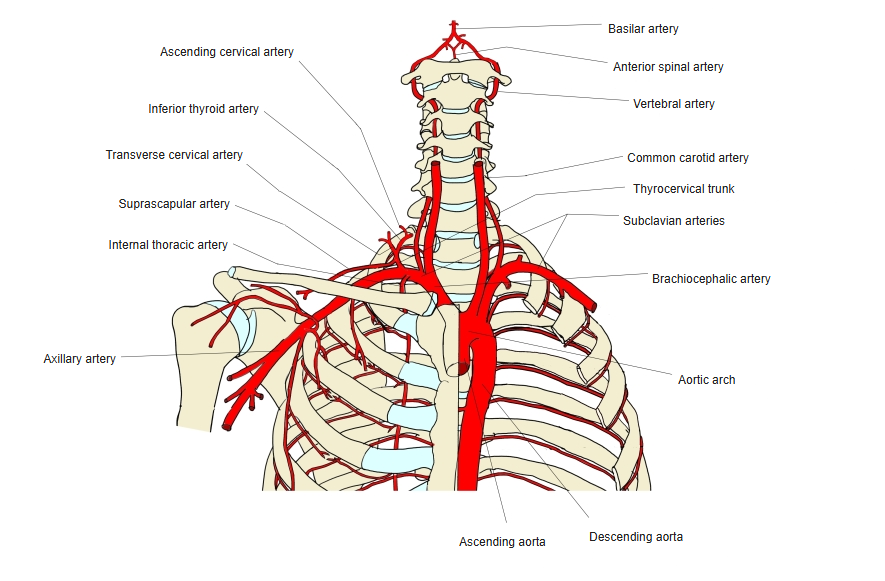
Subclavian arteries and their branches
Clinical notes
- Branches of the subclavian and axillary arteries join around the scapula (scapular anastomosis), so blood can still reach the arm if the axillary artery is blocked above the subscapular artery.
References and sources
- Further reading: Axillary artery, Wikipedia.