Alveolar cavity
Also called the alveolar space or the alveolar lumen
of an
alveolus
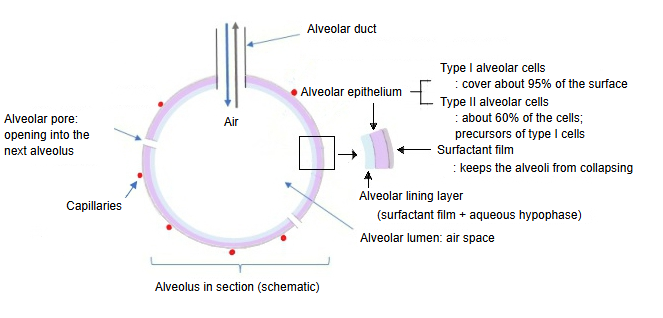
- Alveolar cavity : the space where air is held.
- Parts that form the cavity
- Alveolar lining layer : the innermost layer; a protective layer that keeps the epithelial cells from touching the air directly.
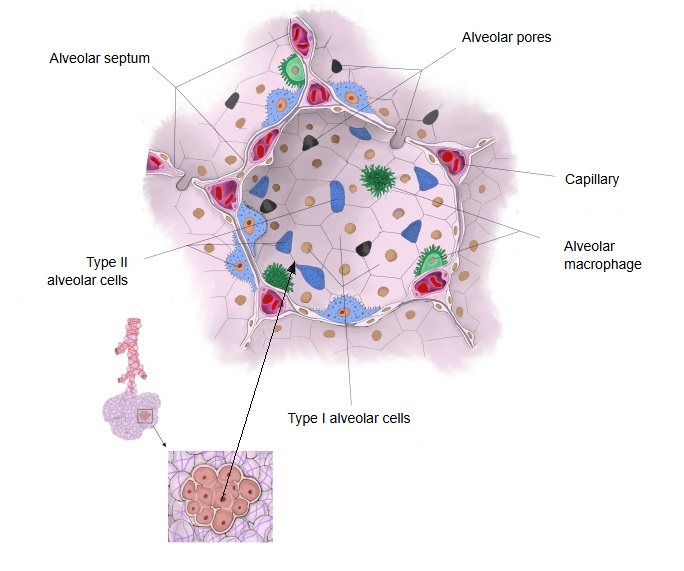
- Alveolar epithelial cells : type I cells (the main gas-exchange surface, about 95% of the surface) and type II cells.
- Surface film : surfactant: a single layer of mainly saturated phospholipids at the air surface; it keeps the alveoli from collapsing.
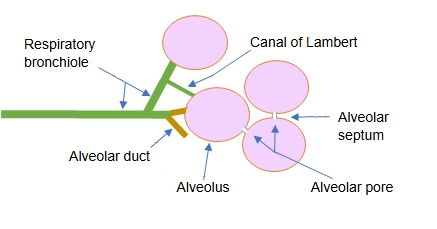
· The cavities of neighbouring alveoli are connected with each other through the alveolar pores in the alveolar septum.
· Some are also connected with respiratory bronchioles by the canals of Lambert.
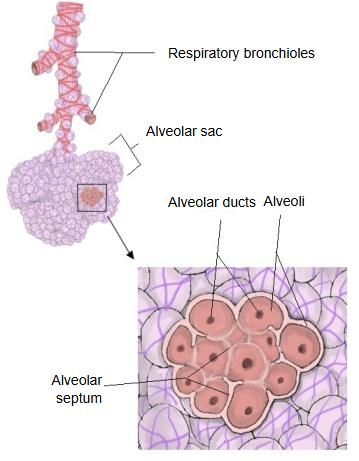
· The cavity of each alveolus opens into an alveolar sac, an alveolar duct or a respiratory bronchiole. The cells of the wall do not touch the air in the cavity directly: the thin alveolar lining layer with its surfactant film lies between them.
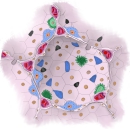 Alveolus (section)
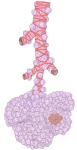 Alveolar sac
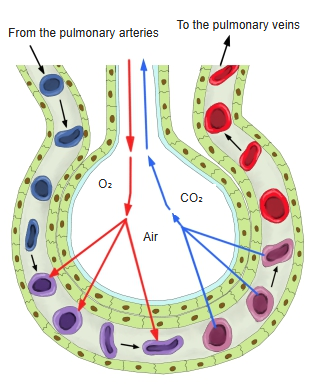
 Gas exchange
Reference websites
[Wikipedia]
· Pulmonary alveolus, Wikipedia.
[Websites with illustrations]
· Structure of the intrapulmonary airways down to the alveoli (Netter illustration) (Elsevier)

· Alveoli: anatomy, function and clinical points (Kenhub)
· Lung anatomy (TeachMeAnatomy)
Related terms
- Alveolar septum
- Blood
- Alveolar pores
- Canals of Lambert
- Alveolar lining layer
- Alveolar sac
- Respiratory bronchiole
- Lung
References and sources
- Further reading: Pulmonary alveolus, Wikipedia.
- Federative International Programme for Anatomical Terminology (FIPAT). Terminologia Anatomica, 2nd ed. (TA2), 2019.