Aqueduct of cochlea
The aqueduct of the cochlea (cochlear aqueduct) can be taken as almost the same as the perilymphatic duct.
A narrow channel that runs from the perilymphatic space to the subarachnoid space
The name perilymphatic duct means a duct of the bony labyrinth that contains perilymph, but in practice it refers especially to the aqueduct of the cochlea, the narrow channel that links the perilymphatic space of the cochlea with the subarachnoid space. The name aqueduct of the cochlea is used both for this duct and for the bony canal that contains it, the cochlear canaliculus. It is described in detail under Perilymphatic duct.
- Internal acoustic meatus : not a part of the labyrinth but the canal for its nerves: from the internal acoustic opening to the fundus (four areas: upper front, upper back, lower back, lower front).
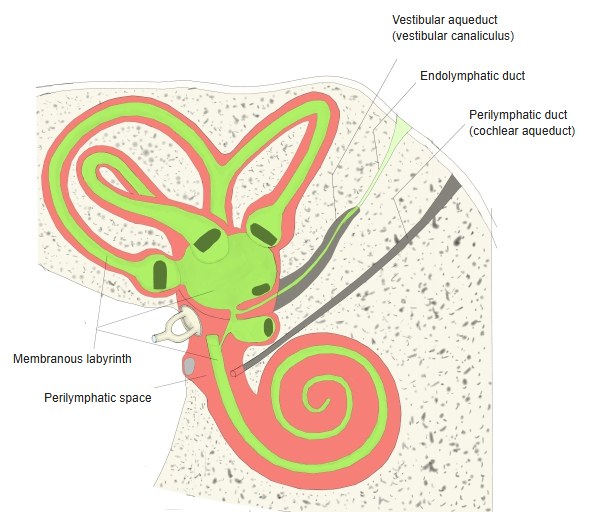
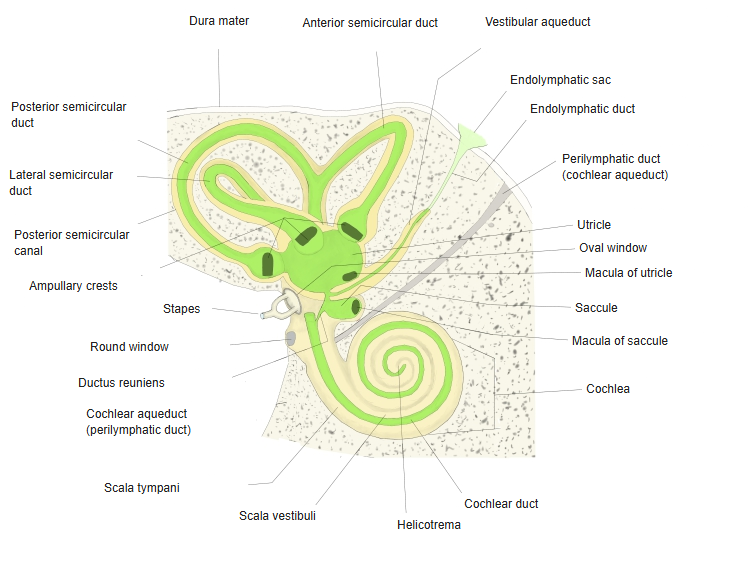
- Bony labyrinth : three parts: the cochlea, the vestibule and the semicircular canals. Between it and the membranous labyrinth lies the perilymphatic space, filled with perilymph; it gives off the perilymphatic duct, which communicates with the subarachnoid space.
- Membranous labyrinth : organ of hearing: the cochlear duct; organ of balance: the saccule, the utricle and the semicircular ducts. Its inside (the endolymphatic space) is filled with endolymph.
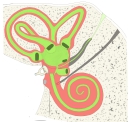 Perilymphatic space and membranous labyrinth
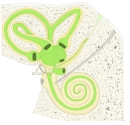 Bony and membranous labyrinth
Reference websites
[Wikipedia]
· Cochlear aqueduct, Wikipedia.
· Perilymphatic duct, Wikipedia.
[Websites with illustrations]
· The inner ear (TeachMeAnatomy)
· Longitudinal section of the cochlea (Gray's Anatomy, fig. 928) (Wikimedia Commons)
