Bronchomediastinal trunk (Latin: truncus bronchomediastinalis)
Also called Bronchomediastinal lymphatic trunk
- Overview
- Why is it drawn so long?
- Reference websites
- (Wikipedia, websites with illustrations)
- Related terms
Overview
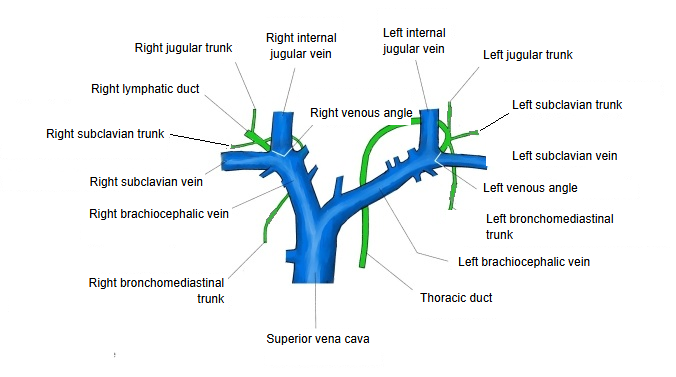
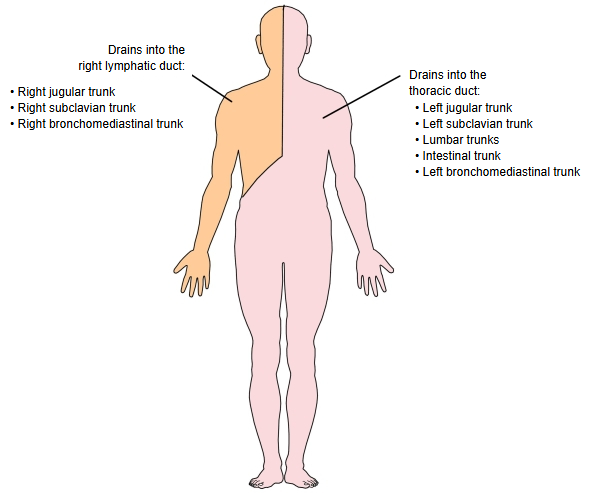
Right trunk: ends in the right lymphatic duct, or opens on its own into the right venous angle. Left trunk: usually joins the end of the thoracic duct, or opens into the left venous angle. See also right bronchomediastinal trunk and left bronchomediastinal trunk.
Besides the lungs and bronchi, it drains much of the heart and mediastinum and the deeper parts of the chest wall. Sources differ on how the trunks end: each may join its duct, open separately into the internal jugular, subclavian or brachiocephalic vein, or split into several channels.
Note on length: many illustrations draw the bronchomediastinal trunk (like the other lymphatic trunks) as a long vessel, and sources differ on its real length: some describe it as only a few centimetres long, others give a much longer course up through the mediastinum.
 Lymph vessels of the trunk
 Thoracic duct and the azygos system
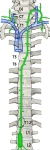 Thoracic duct on the spine
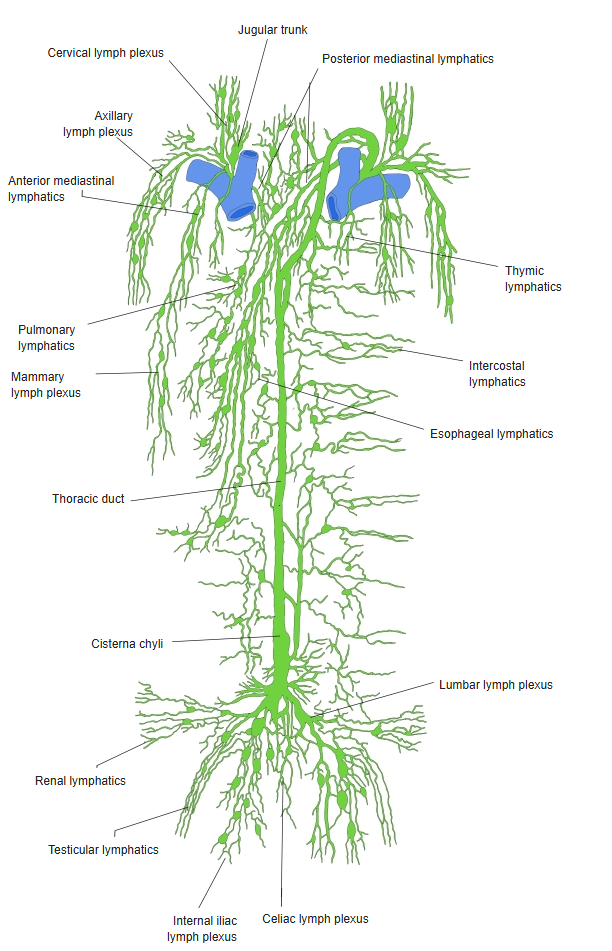
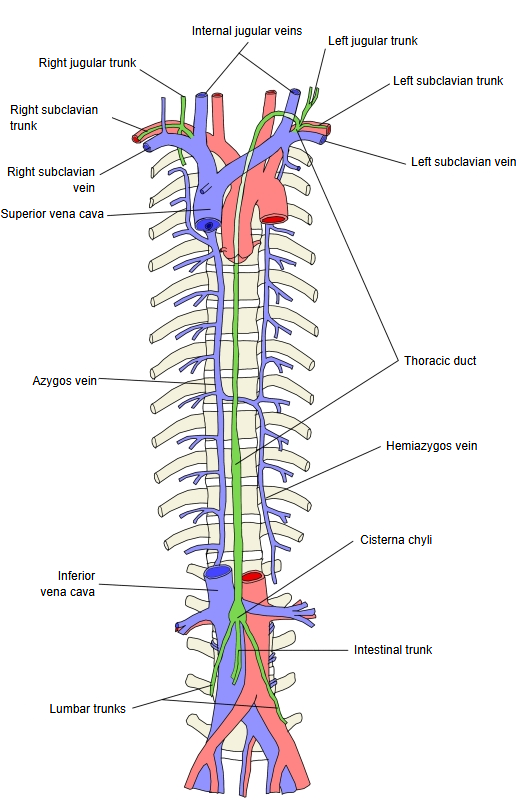
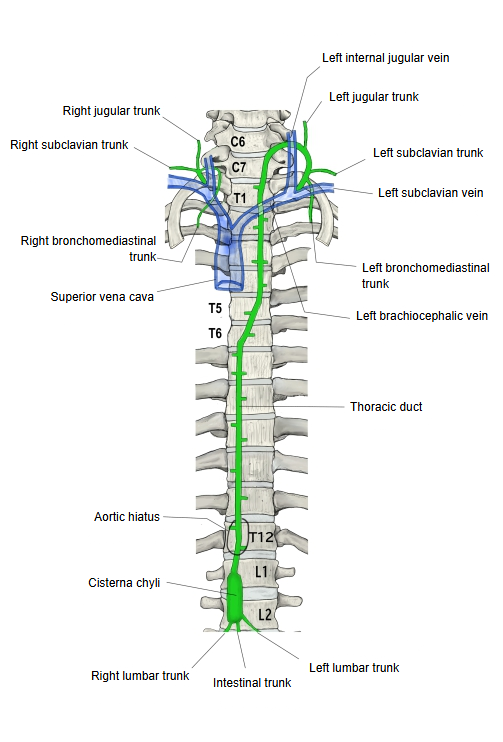
Why is it drawn so long?
Q: Illustrations found online draw the bronchomediastinal trunk very long. How long is it really?
A: 1. The real length
Many sources describe the bronchomediastinal trunk as a relatively short vessel; sources differ on the exact length.
The subclavian trunk has some distance to cover to the subclavian vein and may be longer than the bronchomediastinal trunk.
The jugular trunk also runs down the neck to the veins at its root, so it is of similar length or a little longer.
2. 2. Why illustrations draw it long
· For clarity
To make the small structures in the chest easy to see, even short lymph vessels are drawn enlarged and stretched.
· To show the flow of lymph through the whole mediastinum
The bronchomediastinal trunk runs up through the mediastinum, so it is often drawn long to give an overview.
· To show its relation to the other lymphatic trunks
It looks long because it is drawn to show its connections with the subclavian trunk, the jugular trunk and the thoracic duct.
3. 3. Points to keep in mind
Illustrations are often not drawn to scale.
Even in medical textbooks, schematic diagrams show positions and connections rather than true proportions of length.
Real lymph vessels are very thin, and illustrations can easily give the impression that they are longer than they are.
Reference websites
[Wikipedia]
· Bronchomediastinal trunk, Wikipedia.
· Lymph duct, Wikipedia.
[Websites with illustrations]
· Thoracic duct and lymph trunks (medicoapps)

· Lymph trunks at the root of the neck (figure) (Elsevier)

· Thoracic duct and right lymphatic duct (figure) (Jaypee)

Related terms
- Lymphatic trunk
- Right bronchomediastinal trunk
- Left bronchomediastinal trunk
- Thoracic duct
- Right lymphatic duct
- Venous angle
- Mediastinum
References and sources
- Further reading: Bronchomediastinal trunk, Wikipedia.
- Further reading: Lymph duct, Wikipedia.
- Federative International Programme for Anatomical Terminology (FIPAT). Terminologia Anatomica, 2nd ed. (TA2), 2019.