Groove for vena cava (Latin: sulcus venae cavae)
Also called the groove for inferior vena cava
In the liver
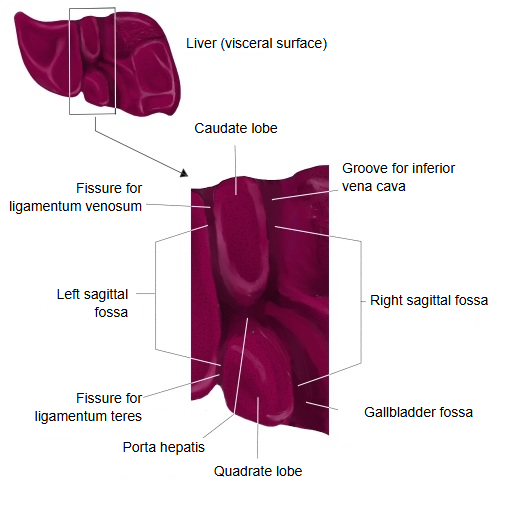
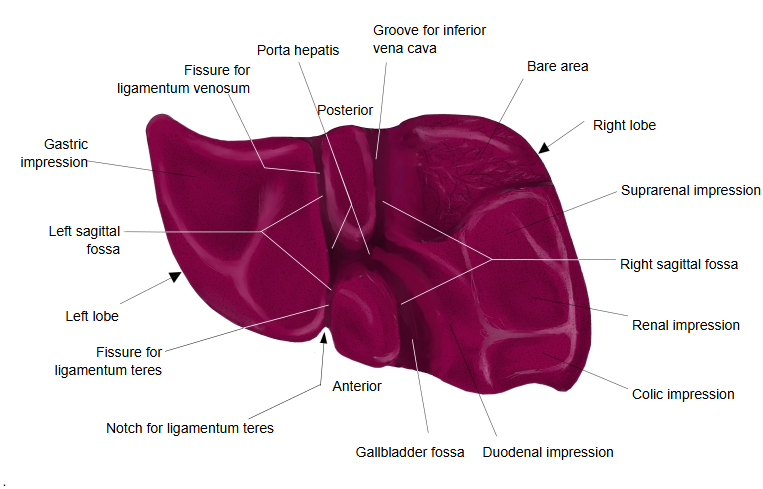
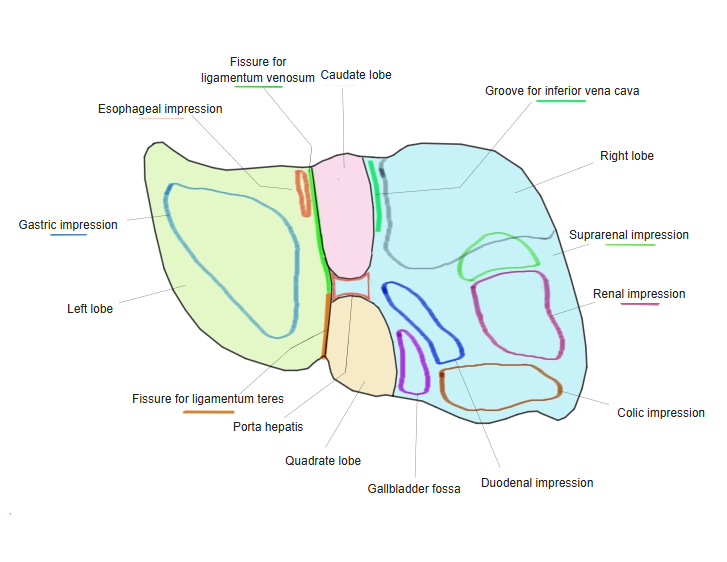
· It forms the back part of the right sagittal fossa; the gallbladder fossa forms the front part. The porta hepatis lies between the two sagittal fossae.
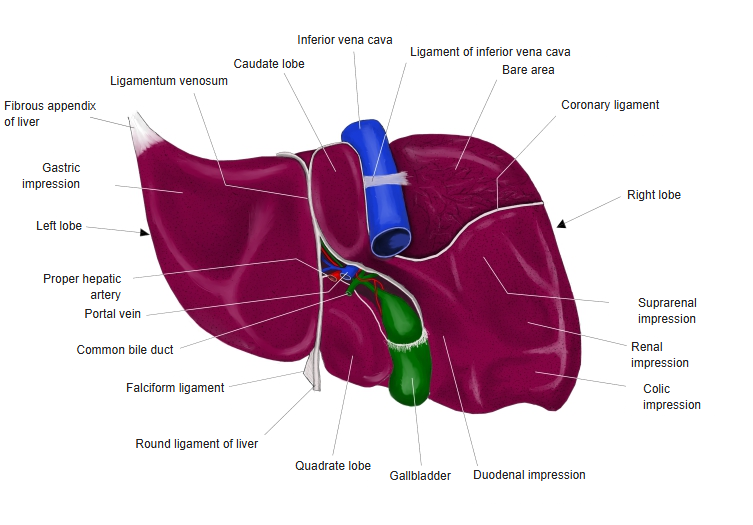
· It lies within the bare area, so the vena cava is in direct contact with the liver without peritoneum between them.
· The hepatic veins open straight into the vena cava in the groove: usually three large veins (right, middle and left) near the top, and several small veins lower down.
· The groove is often closed into a tunnel behind the vena cava by a fibrous band, the ligament of the inferior vena cava, or by a bridge of liver tissue.
· The caudate process passes to the right below the lower end of the groove, joining the caudate lobe to the right lobe.
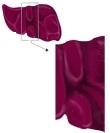 Left and right sagittal fossae
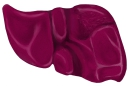 Liver (visceral surface)
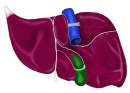 Liver (visceral surface)
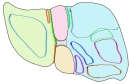 Features of the visceral surface
In the right lung
· An internet image search shows many websites whose illustrations call it the "groove for superior vena cava".
venous grooves
at the apex
of the lung
- Right lung
- Groove for subclavian artery
- Groove for vena cava
- Left lung
- Groove for subclavian artery
- Groove for left brachiocephalic vein
The apex of the lung is its rounded upper end. It rises about 2–3 cm above the upper border of the clavicle and is covered by the cervical pleura.
On the inner side of both apices the subclavian artery makes a groove (the groove for subclavian artery). In addition, the left lung has a groove made by the left brachiocephalic vein, and the right lung the groove for vena cava, made by the superior vena cava.
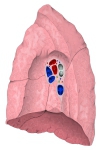 Right lung (medial surface)
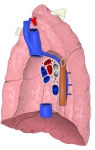 Right lung with nearby vessels (medial view)
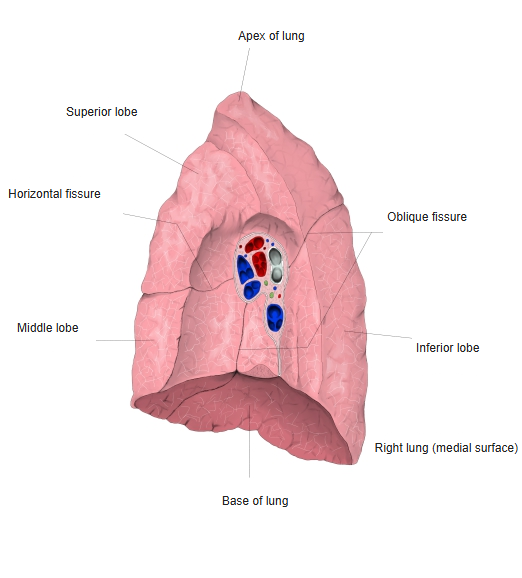
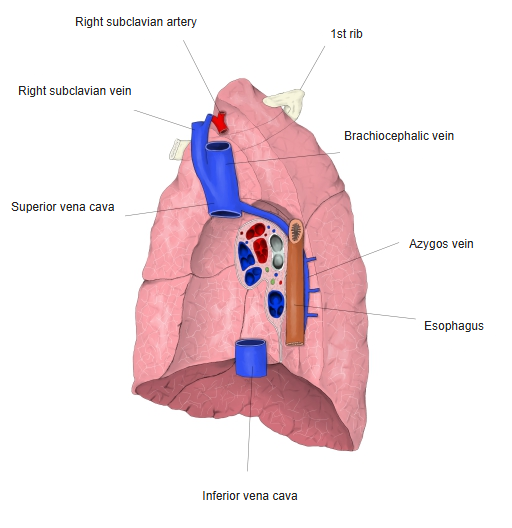
Reference websites
[Wikipedia]
· Liver, Wikipedia.
· Inferior vena cava, Wikipedia.
· Lung, Wikipedia.
[Websites with illustrations]
· Inferior vena cava (Radiopaedia)
· Sectional anatomy figure (doctorlib.info)

· Mediastinal surface of the right lung (Cunningham's Text-book of Anatomy) (Alamy)

Where it is found
Related terms
References and sources
- Further reading: Liver, Wikipedia.
- Further reading: Inferior vena cava, Wikipedia.
- Federative International Programme for Anatomical Terminology (FIPAT). Terminologia Anatomica, 2nd ed. (TA2), 2019.