Interalveolar septa (Latin: septa interalveolaria)
Also called the interdental septa
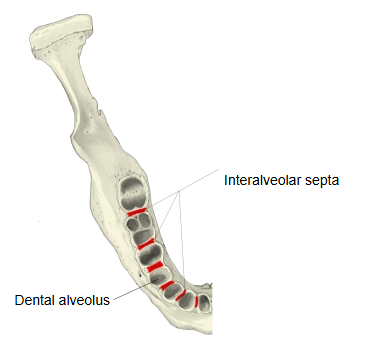
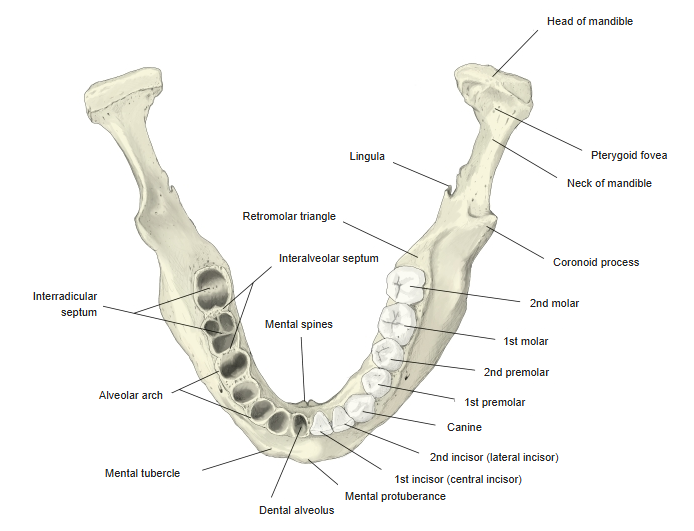
Each septum is a thin plate of bone between the sockets of two neighbouring teeth, in the alveolar part of the mandible and the alveolar process of the maxilla. The septa between the roots of a single multi-rooted tooth are a different structure, the interradicular septa. Their free top edge is the alveolar crest, which lies just below the necks of the teeth. The periodontal ligament attaches each tooth root to the walls of its socket, including the septa. With 16 sockets in a jaw there are 15 interalveolar septa in the dental arch (13 when the third molars are absent). The septa are part of the alveolar bone: they form with the teeth and are slowly absorbed after a tooth is lost.
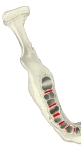 Interalveolar septa of mandible
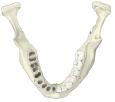 Mandible (superior view)
Related terms
- Dental alveoli
- Interradicular septa
- Alveolar process
- Alveolar crest
- Alveolar arch
- Periodontal ligament
- Mandible
References and sources
- Further reading: Dental alveolus, Wikipedia.
- Further reading: Alveolar process, Wikipedia.
- Federative International Programme for Anatomical Terminology (FIPAT). Terminologia Anatomica, 2nd ed. (TA2), 2019.