Neck of mandible (Latin: collum mandibulae)
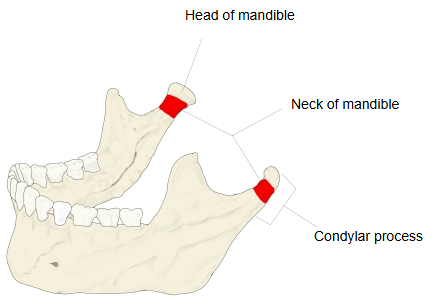
The neck of the mandible is the constricted part just below the head of the mandible; on its front it has a small hollow, the pterygoid fovea.
Condylar process: the upper part of the back of the ramus of the mandible; the neck lies below its rounded headPterygoid fovea: where the lateral pterygoid is inserted
- Head of mandible : the rounded upper end of the condylar process. Its articular surface is oval and articulates with the mandibular fossa of the temporal bone through the articular disc, forming the temporomandibular joint.
- Neck of mandible : the constricted part below the head. In front of the head and neck lies the mandibular notch.
- Pterygoid fovea : a small hollow on the front of the neck, where the lateral pterygoid is inserted.
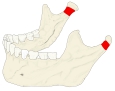 Neck of mandible
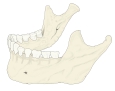 Mandible (lateral)
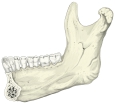 Mandible (medial surface)
 Skull (lateral)
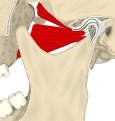 Temporomandibular joint and lateral pterygoid
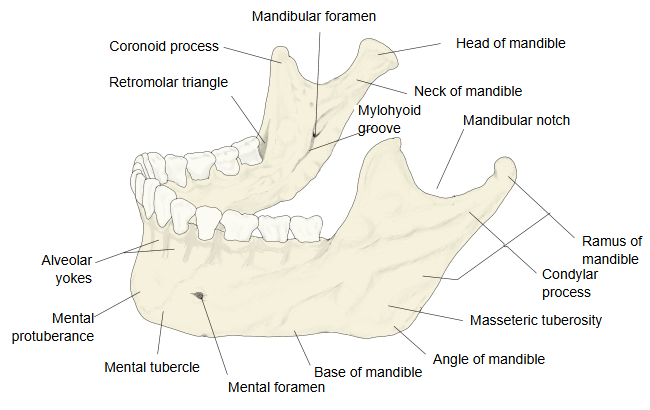
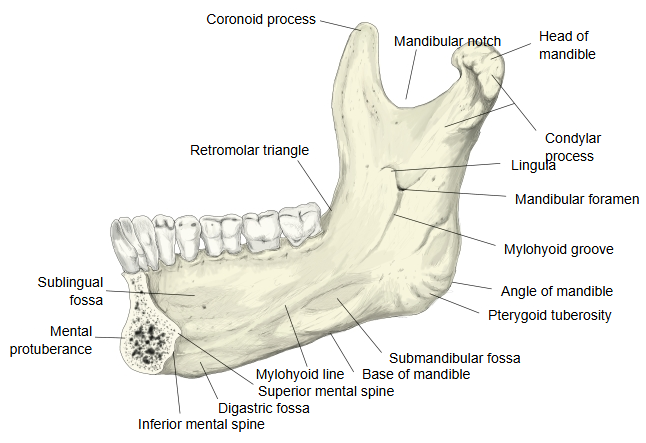
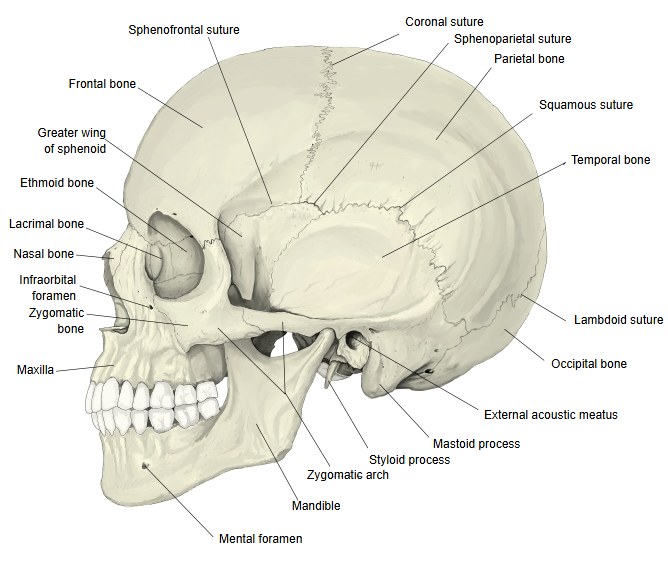
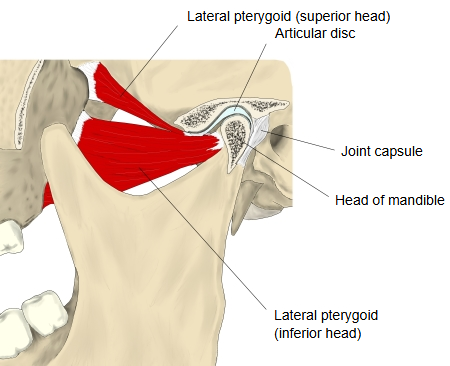
The neck is flattened from front to back and widens downwards into the back part of the ramus. Ridges run down onto it from the front and sides of the head and strengthen it. Its back surface is convex; its front surface carries the pterygoid fovea for the lateral pterygoid. In front of it, the mandibular notch separates the condylar process from the coronoid process.
· Above the neck, the head articulates with the temporal bone through the articular disc at the temporomandibular joint. The neck is a common site of fracture of the mandible, for example after a blow to the chin.
Related terms
- Condylar process
- Temporomandibular joint
- Ramus of mandible
- Coronoid process
- Lateral pterygoid
- Mandible
References and sources
- Further reading: Mandible, Wikipedia.
- Further reading: Condyloid process, Wikipedia.
- Federative International Programme for Anatomical Terminology (FIPAT). Terminologia Anatomica, 2nd ed. (TA2), 2019.