Physiologically active substances
Also called the bioactive substances (in part)
Physiologically active substances are substances that are originally present in the body and that, even in very small amounts, take part in various physiological activities (for example the synthesis of substances and energy metabolism): they regulate them, influence them or activate them.
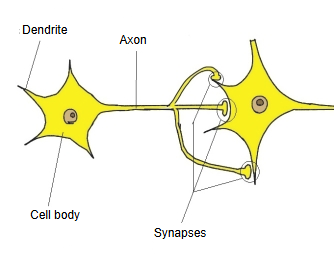
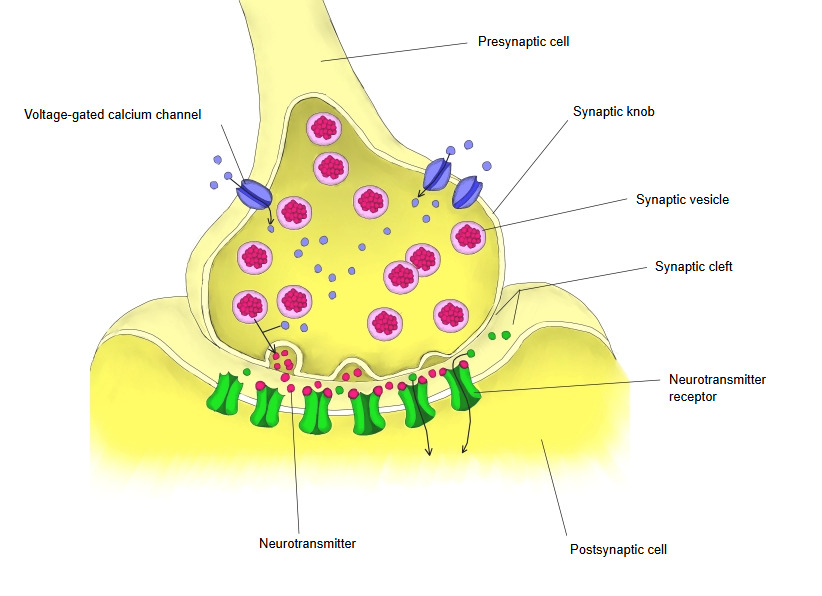
Representative examples are hormones and neurotransmitters, which are produced in various places in the body. Neurotransmitters work mainly at the synapses between nerve cells. They are made from materials such as amino acids and cholesterol.
Strictly speaking, the term covers only substances that are originally present in the body; it does not include poisons or drugs. When these are included, the wider term biologically active substances is used.
- Physiologically active substances : hormones, neurotransmitters and others
- Substances from outside the body
- Drugs
- Substances in food : caffeine, capsaicin and others
- Substances from microorganisms : penicillin and others
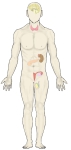 Main endocrine organs and their hormones
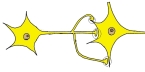 Synapses (whole)
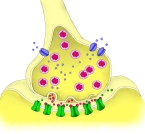 Synapse (enlarged)
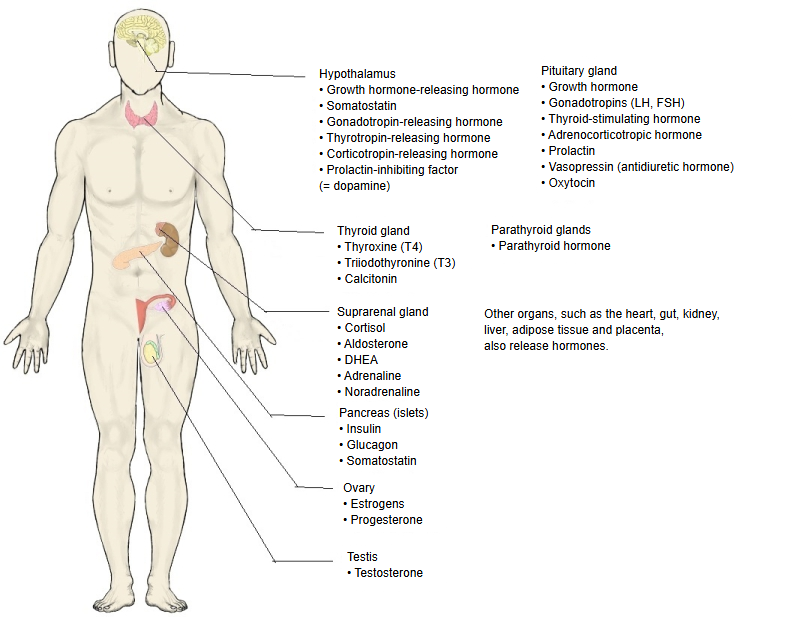
Related terms
References and sources
- Further reading: Biological activity, Wikipedia.
- Federative International Programme for Anatomical Terminology (FIPAT). Terminologia Anatomica, 2nd ed. (TA2), 2019.