Round ligament of liver (Latin: ligamentum teres hepatis)
Also called the ligamentum teres
· It is roughly 3–5 mm thick (a rough estimate).
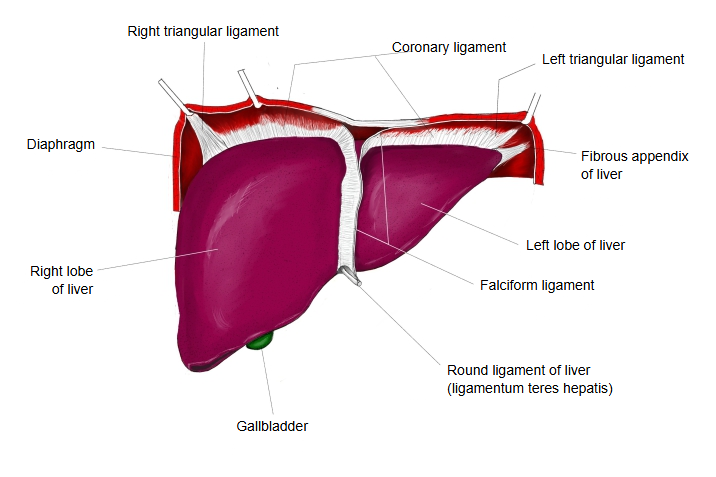
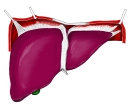 Liver (anterior)
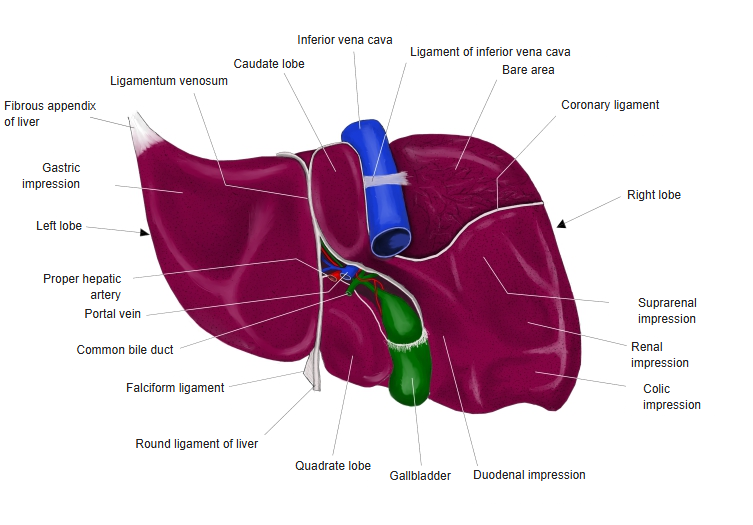
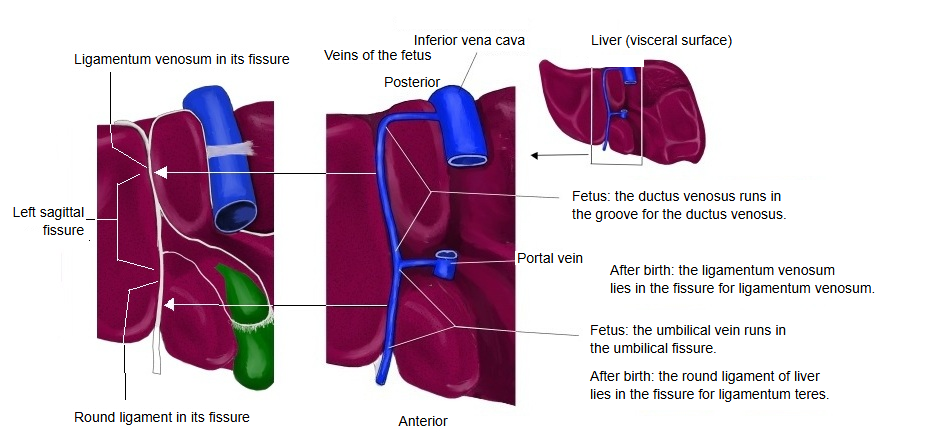
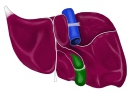 Liver (visceral surface)
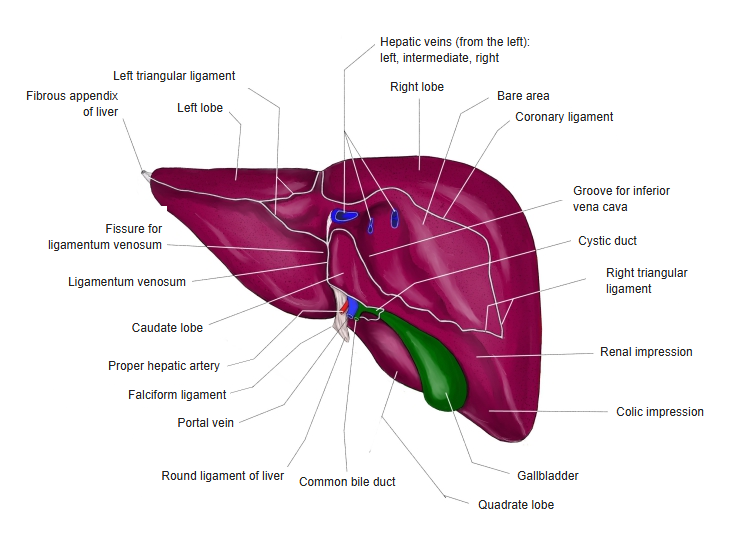
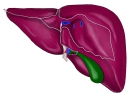 Liver (inferior view)
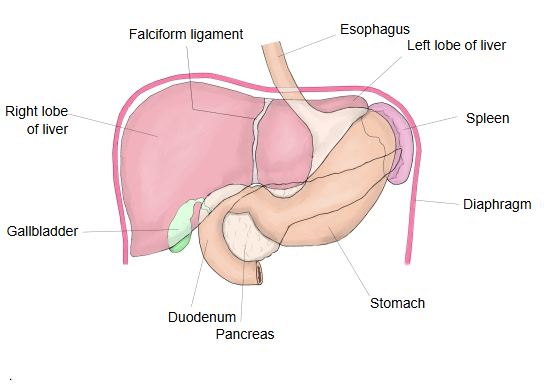
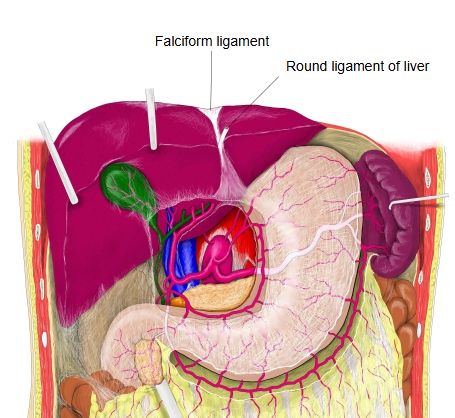
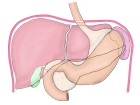 Upper abdominal organs (anterior)
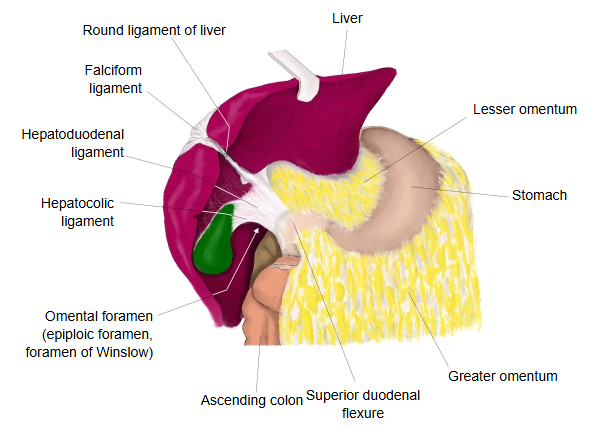
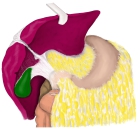 Liver, lesser and greater omenta
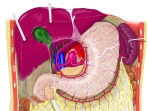 Opened upper abdomen
⇩
after
birth
- Umbilical vein ⇒ round ligament of liver : the umbilical vein (carrying oxygen-rich blood from the umbilicus to the liver) becomes a fibrous cord after birth: the round ligament of liver.
- Umbilical groove ⇒ fissure for ligamentum teres : the groove in which the umbilical vein ran becomes the fissure for the ligamentum teres.
- Ductus venosus ⇒ ligamentum venosum : the ductus venosus, the continuation of the umbilical vein, becomes a fibrous cord after birth: the ligamentum venosum.
- Groove for ductus venosus ⇒ fissure for ligamentum venosum : the groove in which the ductus venosus ran becomes the fissure for the ligamentum venosum.
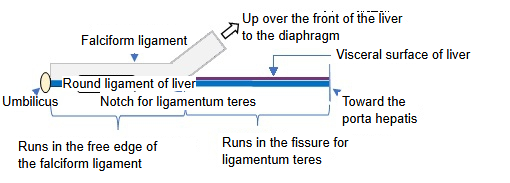
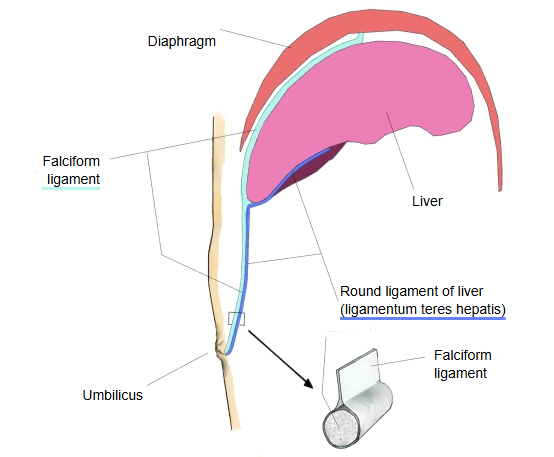
The round ligament of liver is the fibrous cord left by the fetal umbilical vein, which carried blood from the placenta through the umbilical cord to the liver, most of it then passing through the ductus venosus into the inferior vena cava. From the umbilicus it runs up the inside of the anterior abdominal wall in the lower edge of the falciform ligament, through the notch for the ligamentum teres in the inferior border of the liver, and then in the fissure for the ligamentum teres on the visceral surface, to the left of the porta hepatis. At the left end of the porta hepatis it joins the left branch of the portal vein and is continuous with the ligamentum venosum. The fissure marks the boundary between the left lateral part of the liver and the quadrate lobe. Small paraumbilical veins run with the round ligament; they link the portal vein with the veins of the anterior abdominal wall around the umbilicus, so when portal blood flow is blocked (in cirrhosis or portal vein obstruction) they become a collateral route, enlarge and can produce dilated veins around the umbilicus (caput medusae).
Reference websites
[Wikipedia]
· Round ligament of liver, Wikipedia.
· Falciform ligament, Wikipedia.
[Websites with illustrations]
· Falciform ligament with the round ligament (Kenhub)

· Round ligament of liver (illustration) (Pinterest (image))

Where it is found
Related terms
- Liver
- Umbilical vein
- Ductus venosus
- Ligamentum venosum
- Fissure for ligamentum teres
- Paraumbilical veins
- Portal vein
References and sources
- Further reading: Round ligament of liver, Wikipedia.
- Further reading: Falciform ligament, Wikipedia.
- Federative International Programme for Anatomical Terminology (FIPAT). Terminologia Anatomica, 2nd ed. (TA2), 2019.