Latin: musculus adductor magnus
Overview
- The strongest of the adductors and one of the largest muscles of the body.
- Covered in front by the adductor longus and gracilis and behind by the semimembranosus, so only part of it is visible under the skin; with these removed, a belly about 6 cm thick appears.
- Two parts:
- Adductor part: from the ischiopubic ramus
- Hamstring part: from the ischial tuberosity; often counted with the hamstrings
- The femoral artery and vein pass through the adductor hiatus in its tendon.
- Continuous in places with the three vasti, adductor longus, brevis and minimus, gracilis, quadratus femoris, short head of the biceps femoris, semitendinosus, semimembranosus and gastrocnemius.
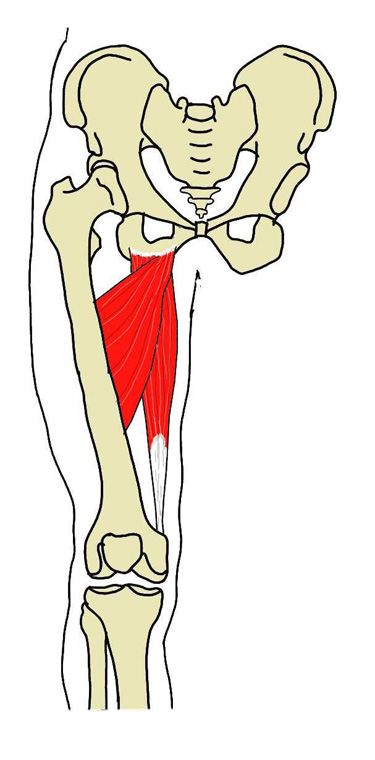
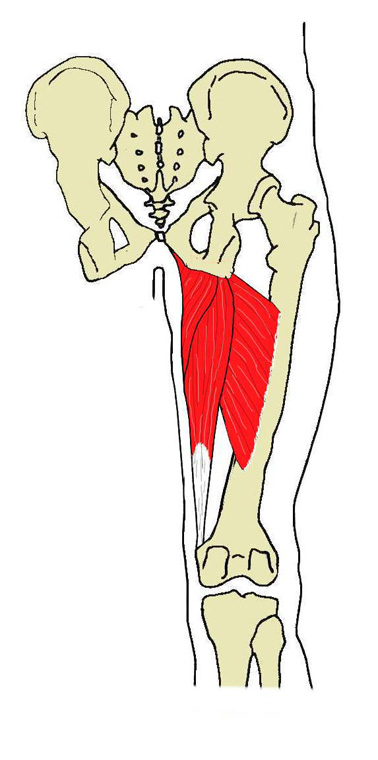
Position in the classification
Lower Limb › Thigh › Adductor group
Illustrations
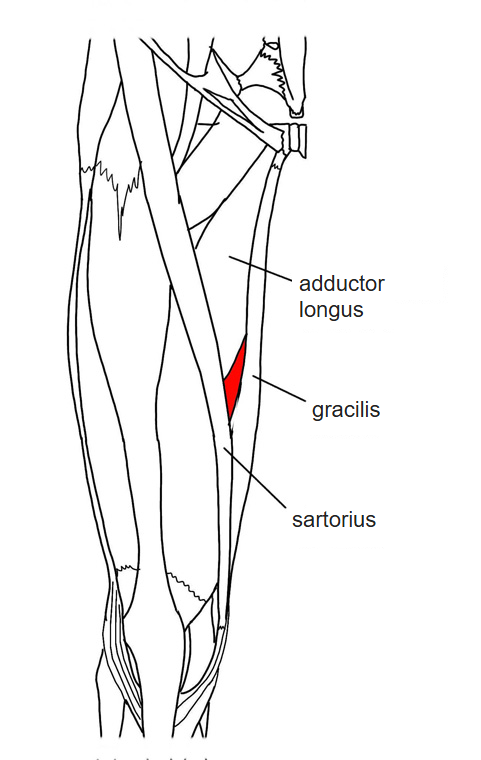
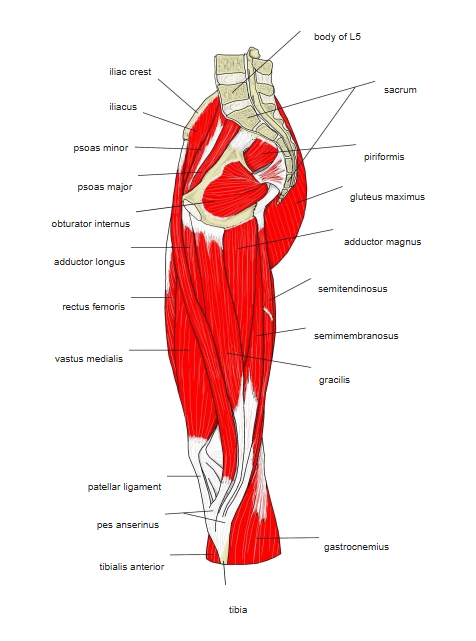
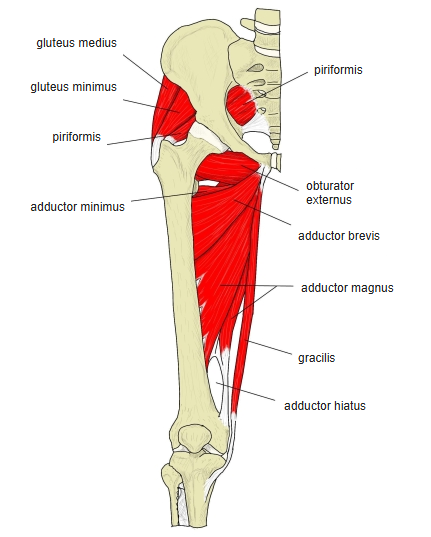
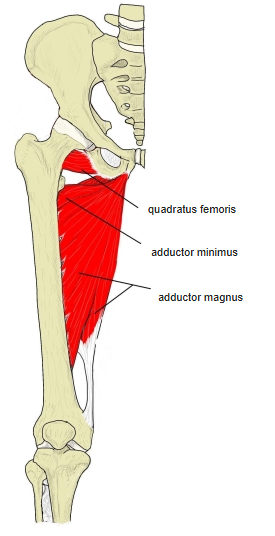
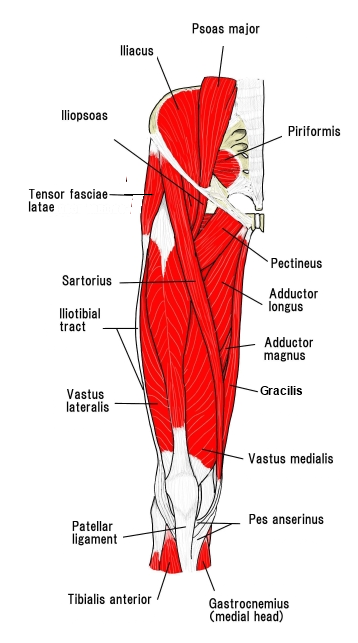
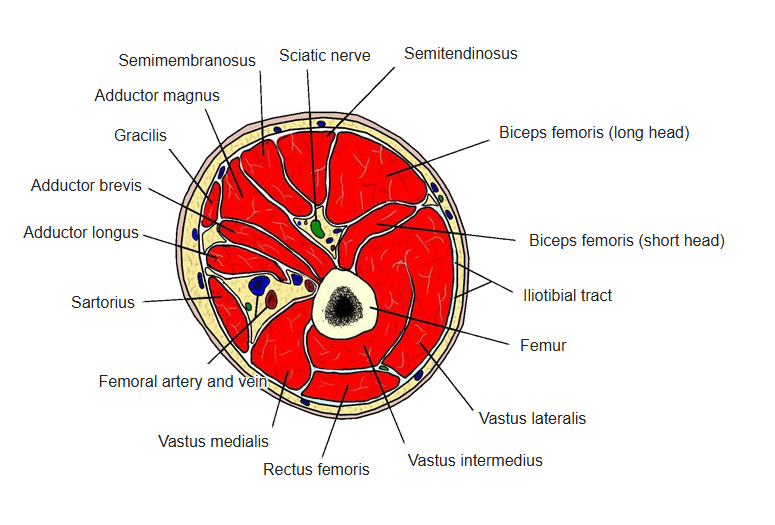
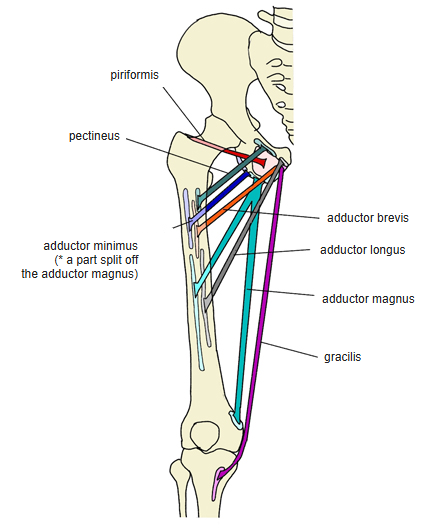
Origin / insertion
- Origin: ischiopubic ramus (adductor part) and ischial tuberosity (hamstring part)
- Insertion: medial lip of the linea aspera and the adductor tubercle of the medial condyle of the femur
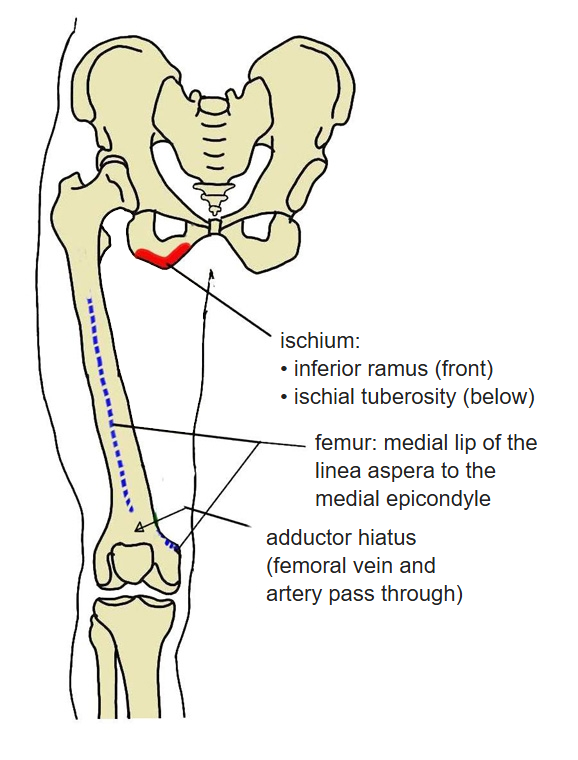
Action
- Adducts the thigh (adduction at the hip joint)
- Prometheus: adduction, lateral rotation and extension at the hip (the tendinous part rotates medially); steadies the pelvis in the frontal and sagittal planes
Innervation
- Obturator nerve (L2–L4) — adductor part; tibial part of the sciatic nerve (L4–S3) — hamstring part
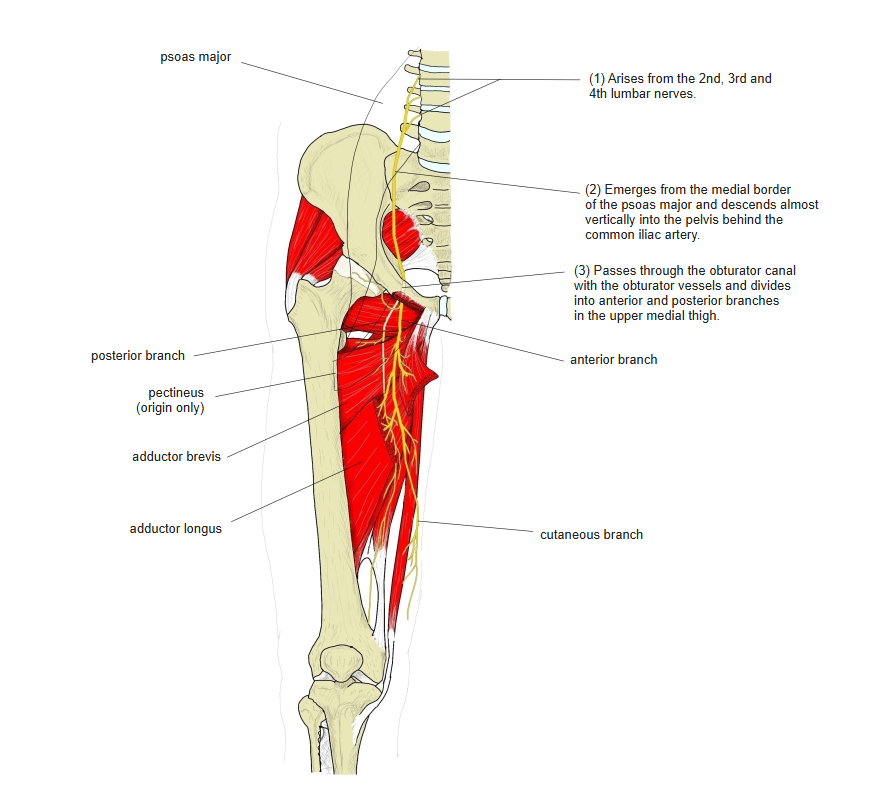
Blood supply
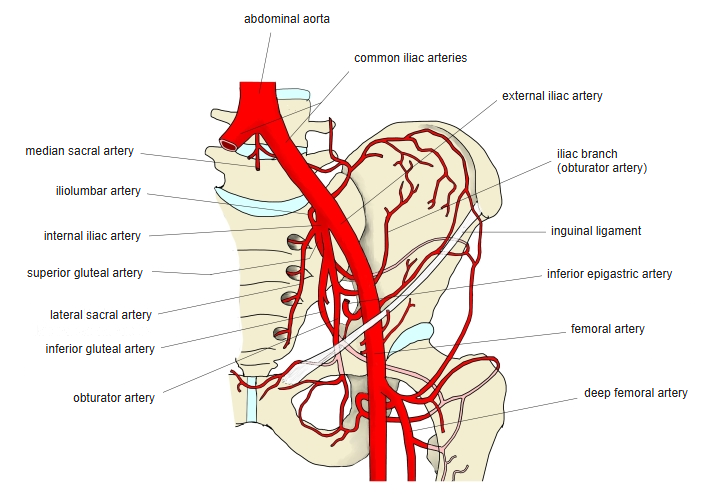
- Perforating branches of the deep femoral artery, obturator artery
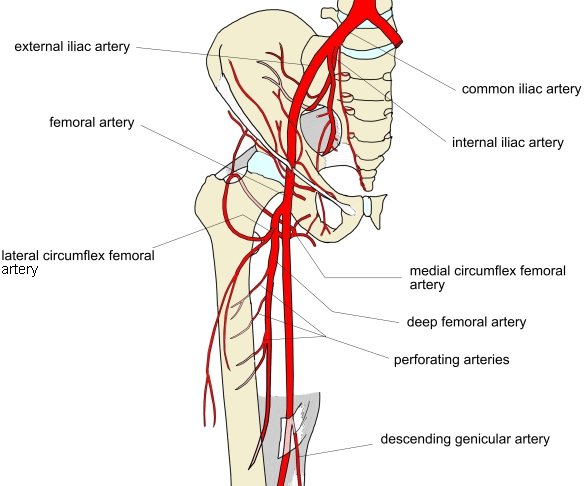
Related terms
- Adductor minimus
- Adductor longus
- Adductor brevis
- Gracilis
- Semimembranosus
- Ischial tuberosity
- Linea aspera
- Adductor hiatus
- Obturator nerve
References and sources
- Further reading: Adductor magnus muscle, Wikipedia.