Latin: musculus gracilis
Overview
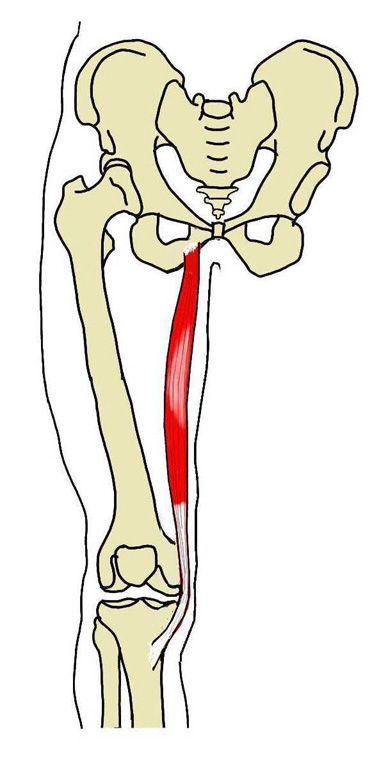
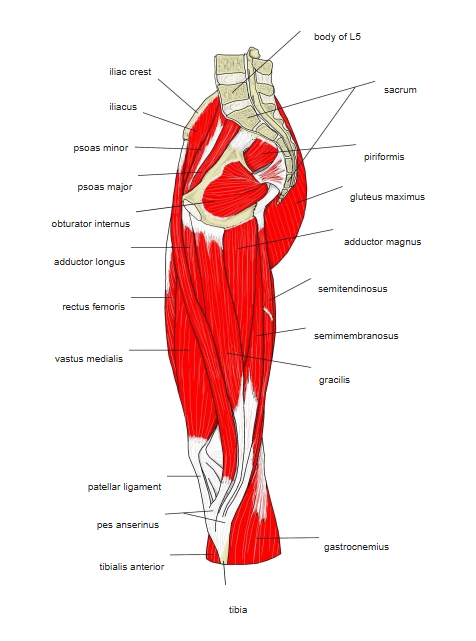
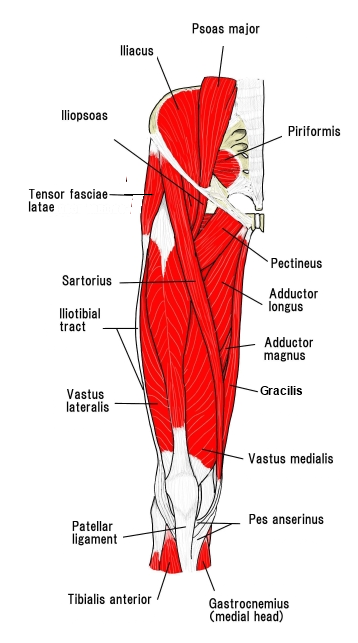
- The most superficial muscle on the medial side of the thigh; thin and flat.
- The only two-joint muscle of the adductor group.
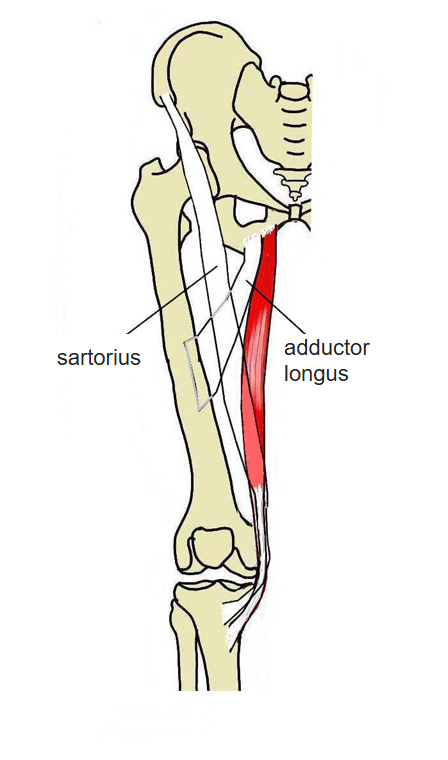
- Its tendon passes behind the medial condyle of the femur and forms the pes anserinus with the sartorius and semitendinosus.
- Continuous in places with the sartorius, semitendinosus and the adductors brevis, longus and magnus.
Position in the classification
Lower Limb › Thigh › Adductor group
Illustrations
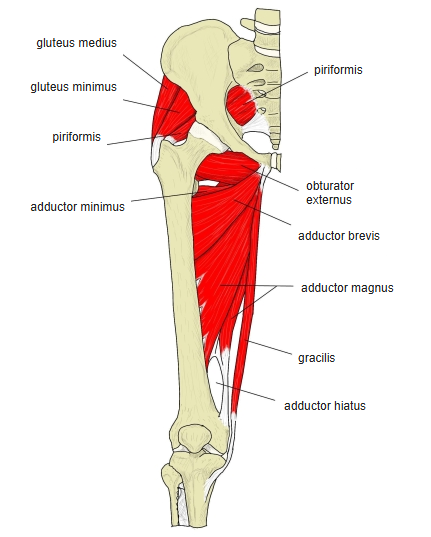
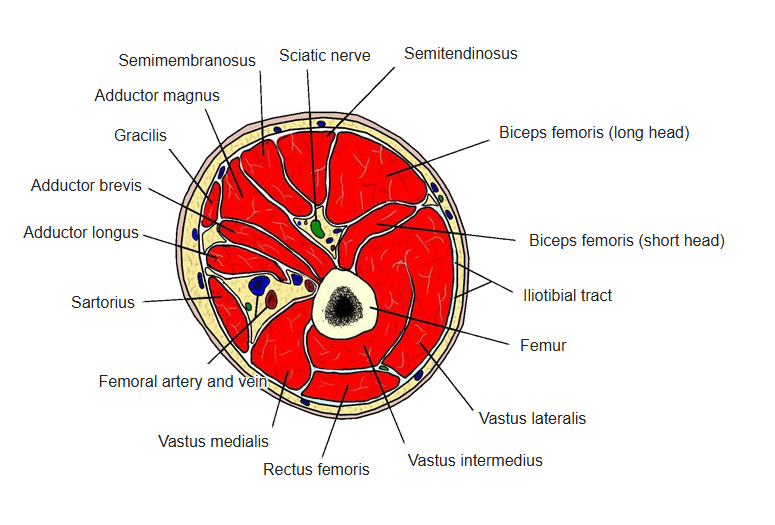
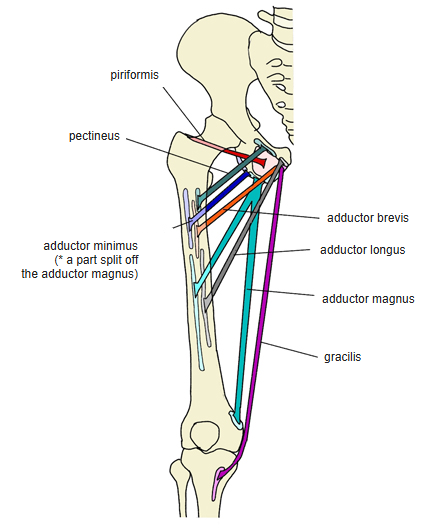
Origin / insertion
- Origin: body of the pubis along the lower half of the pubic symphysis and the inferior pubic ramus (upper half of the pubic arch)
- Insertion: medial side of the tibial tuberosity (pes anserinus) and the crural fascia
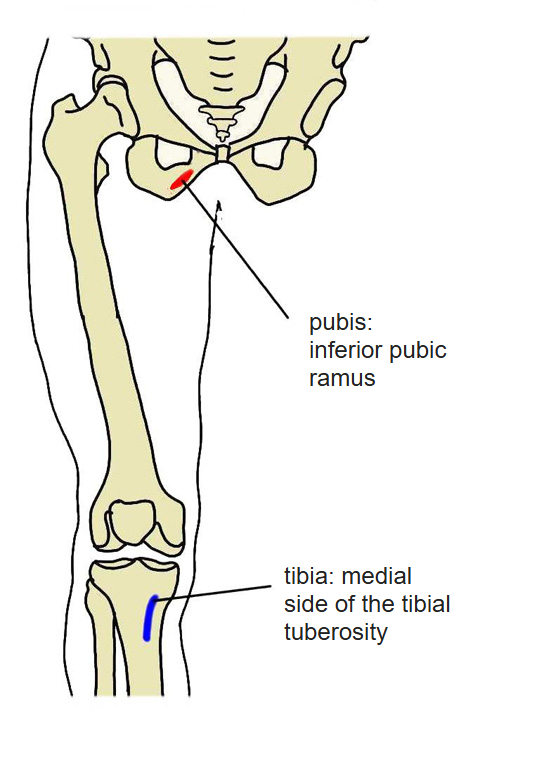
Action
- Adducts the thigh, flexes the knee and rotates the leg slightly medially
- With the knee extended, steadies the leg
- Some sources also list hip flexion, and medial rotation at the knee
Innervation
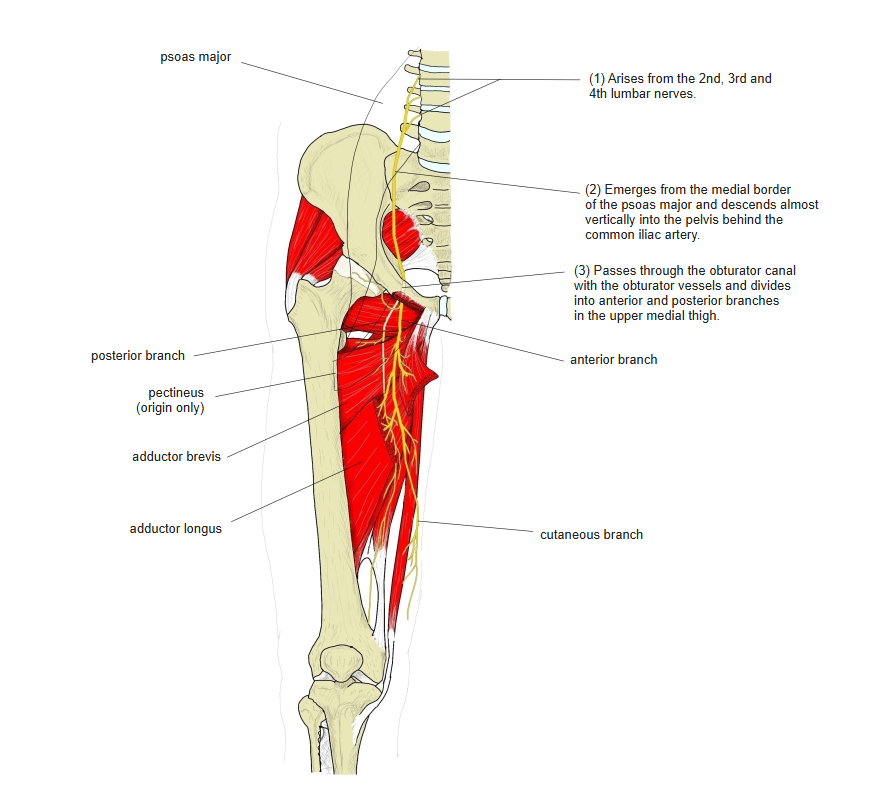
- Anterior branch of the obturator nerve (L2–L4)
Blood supply
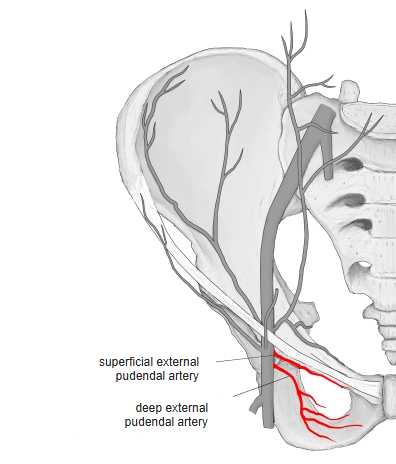
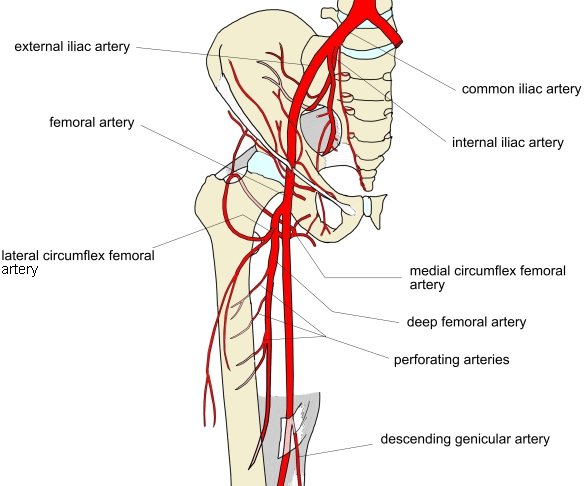
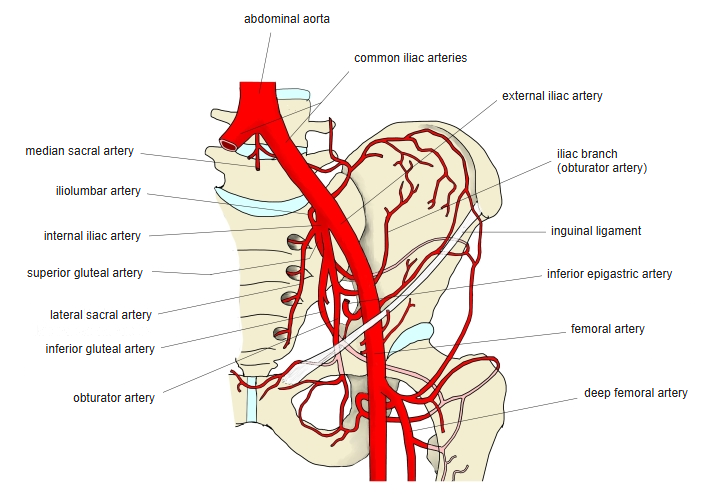
- Medial circumflex femoral artery (main supply, entering about 10 cm below the pubic symphysis); some sources also give the external pudendal, deep femoral and obturator arteries
Related terms
- Sartorius
- Semitendinosus
- Adductor longus
- Pes anserinus
- Tibial tuberosity
- Obturator nerve
References and sources
- Further reading: Gracilis muscle, Wikipedia.