Latin: musculus bulbospongiosus (bulbocavernosus in older texts)
Overview
- One of the superficial perineal muscles (sometimes also grouped with the muscles of the pelvic floor).
- Its shape, attachments and action differ between men and women.
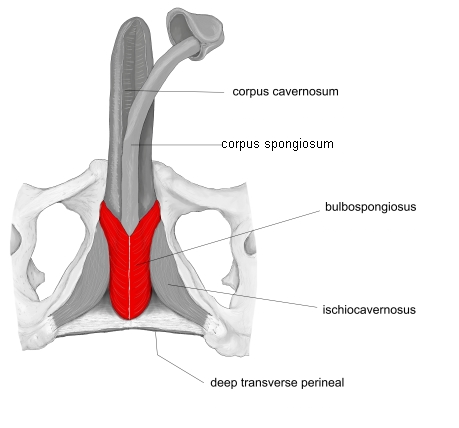
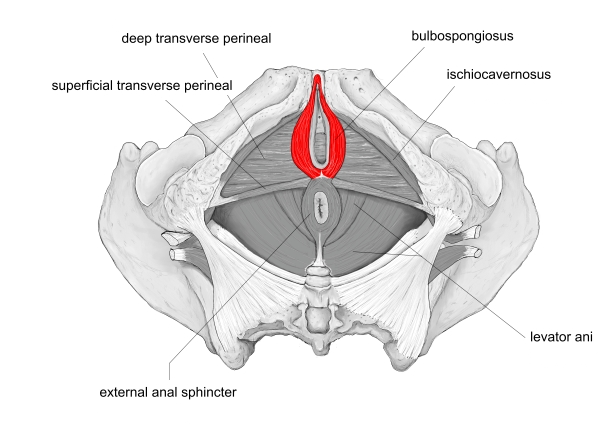
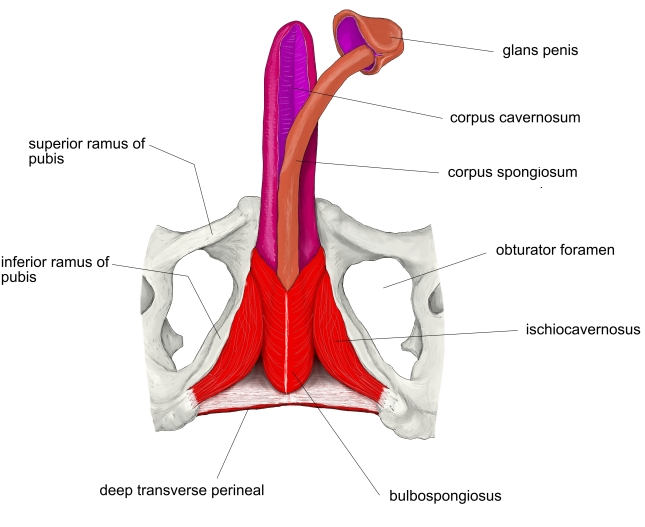
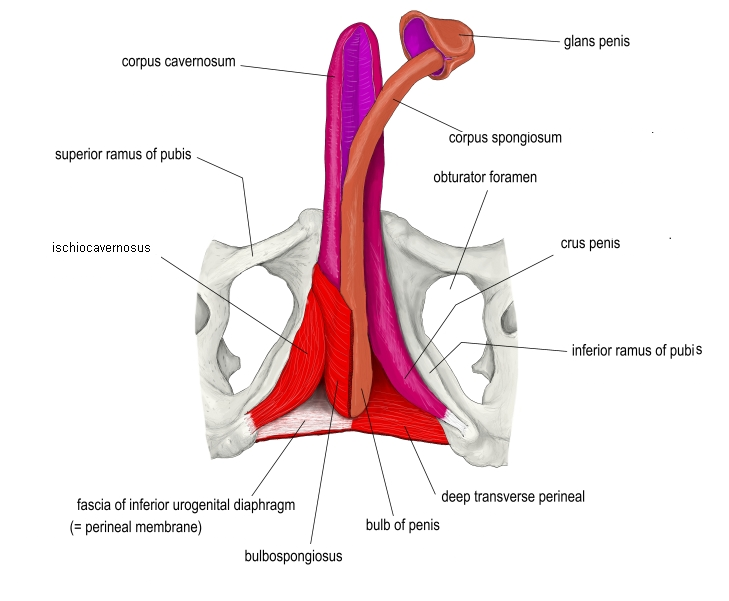
- Male: a single muscle of two symmetrical halves, united along the midline by a tendinous raphe, that surrounds the bulb of the penis.
- Female: two separate muscles covering the vestibular bulbs and greater vestibular glands.
- In the male its fibres form three sets: posterior, middle and anterior.
Position in the classification
Trunk › Perineum › Urogenital muscles
Illustrations
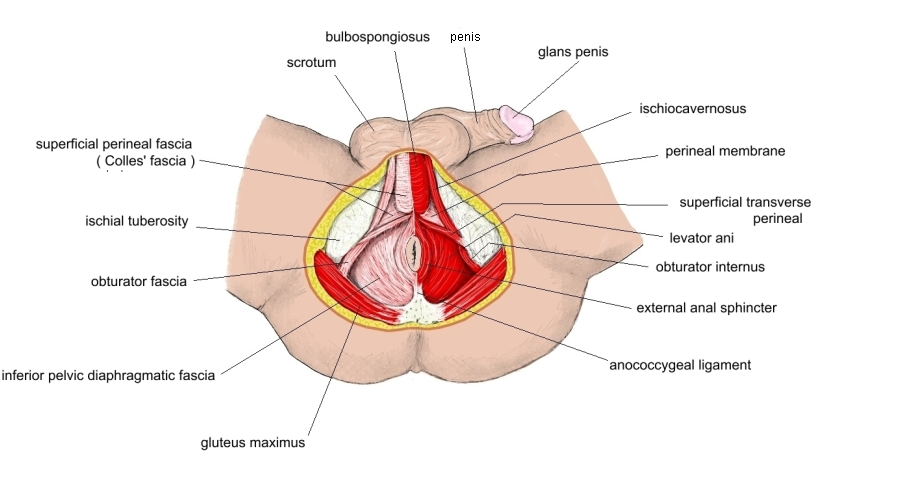
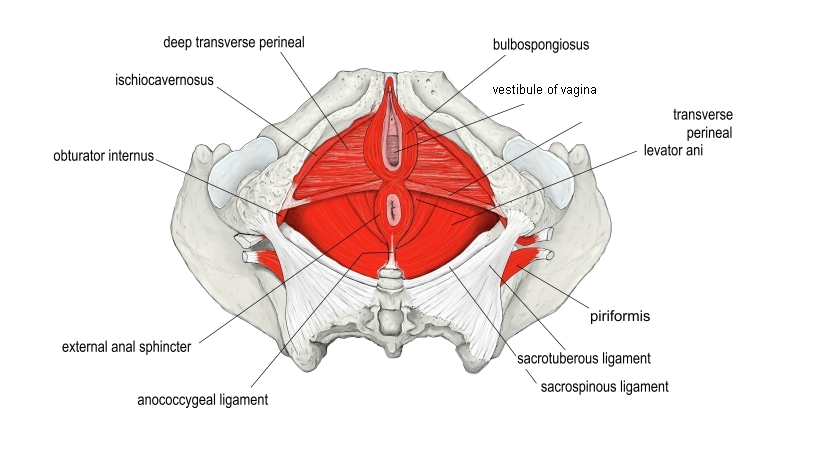
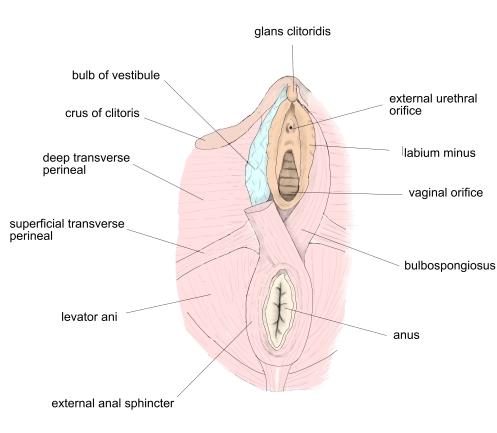
Origin / insertion
- Origin (male): perineal body and the median raphe on the underside of the corpus spongiosum
- Origin (female): the two muscles arise from the perineal body
- Insertion (male): posterior fibres end on the perineal membrane; middle fibres encircle the bulb and the corpus spongiosum and join those of the other side in an aponeurosis; anterior fibres insert into the corpus cavernosum and end in a tendinous expansion over the dorsal vessels of the penis
- Insertion (female): vestibular bulbs and corpora cavernosa of the clitoris
Action
- Male: compresses the bulb and empties the urethra (after urination, ejaculation); helps erection (its anterior fibres compress the deep dorsal vein of the penis)
- Female: empties the greater vestibular glands, helps clitoral erection and narrows the vaginal orifice
Innervation
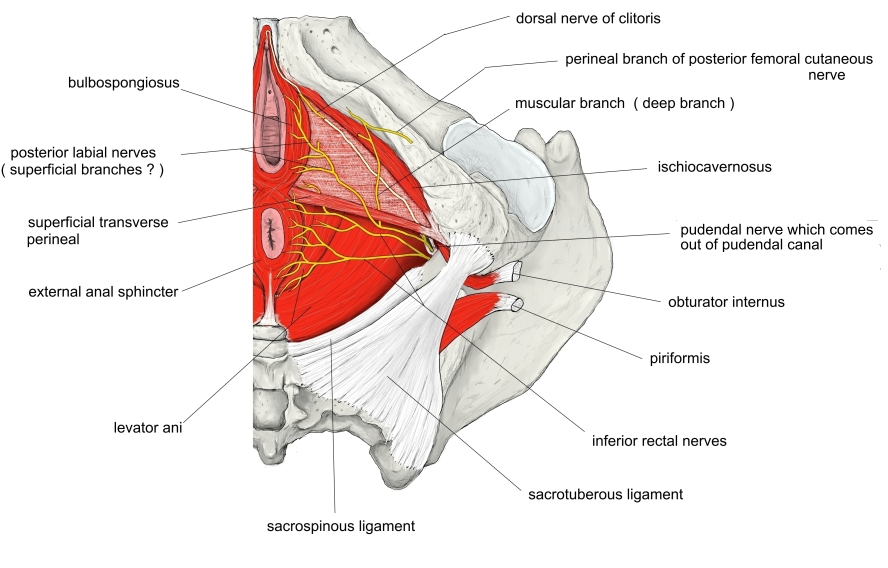
- Deep (muscular) branches of the perineal nerve, from the pudendal nerve (S2–S4)
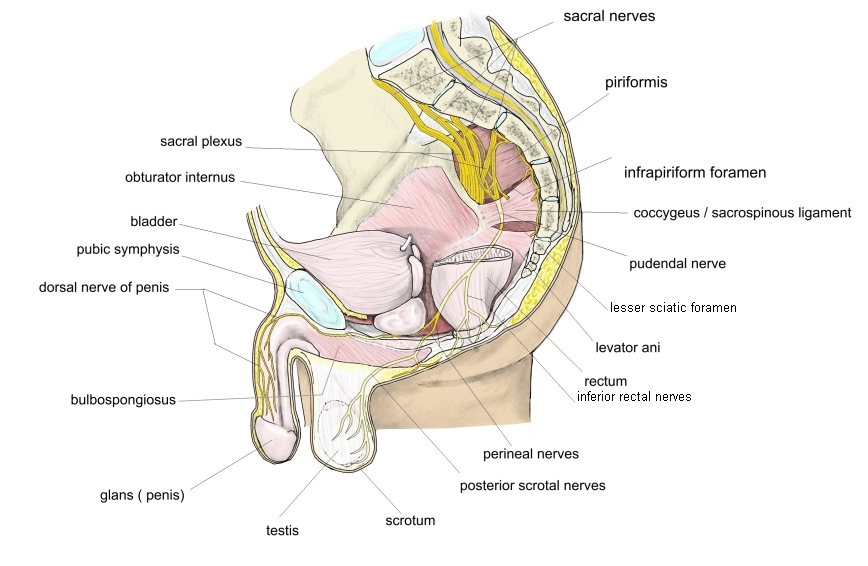
Blood supply
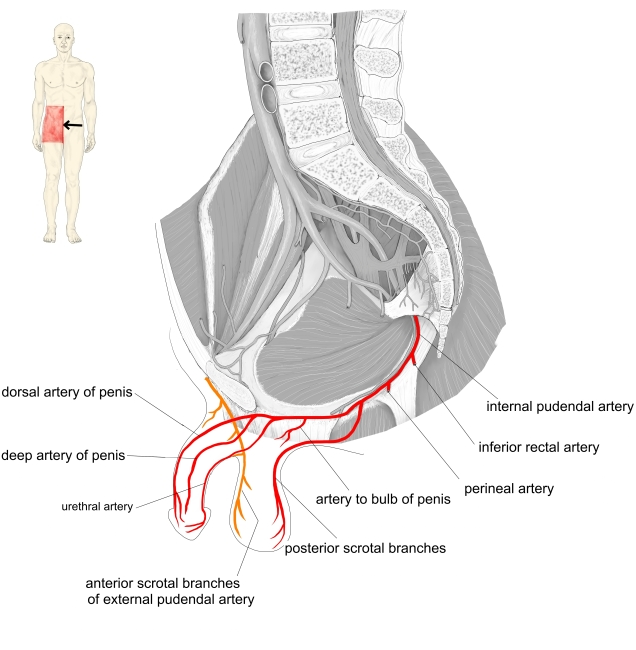
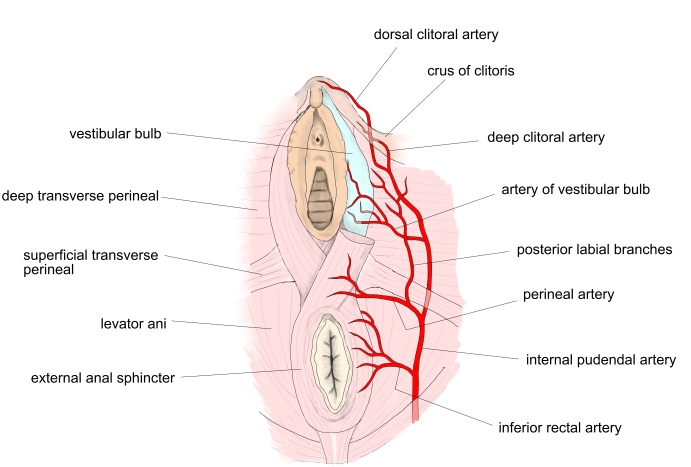
- Perineal artery (from the internal pudendal artery)
Related terms
- Ischiocavernosus
- Superficial transverse perineal
- External anal sphincter
- Perineal muscles
- Pudendal nerve
References and sources
- Further reading: Bulbospongiosus muscle, Wikipedia.