Latin: musculus transversus perinei profundus
Overview
- One of the muscles of the perineum, in the urogenital region.
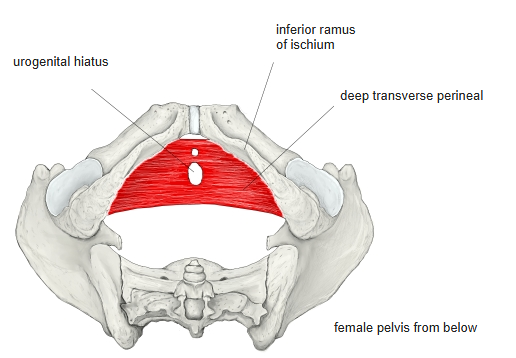
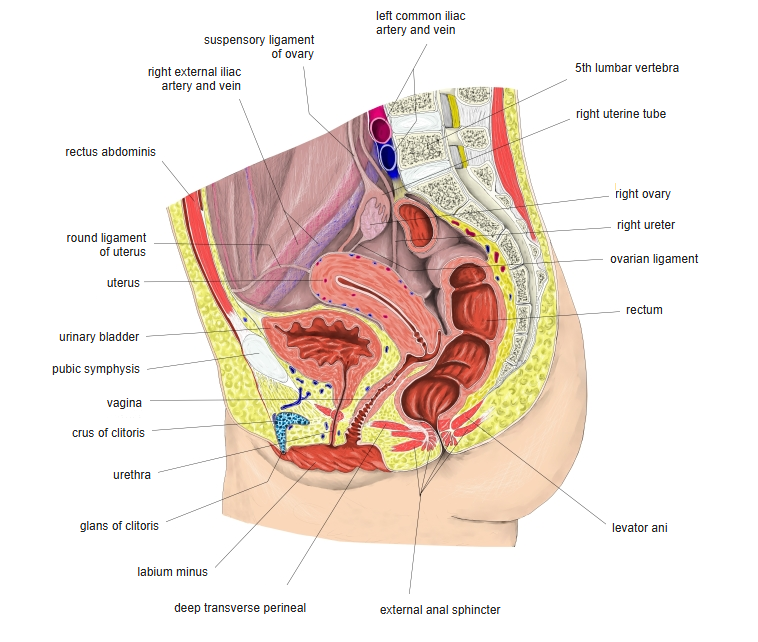
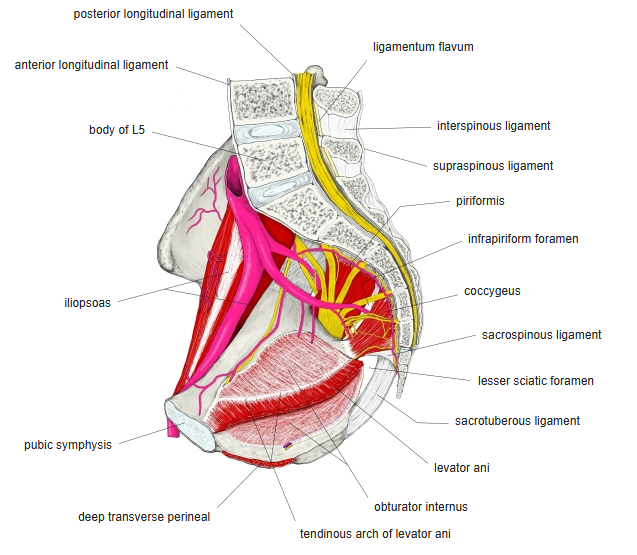
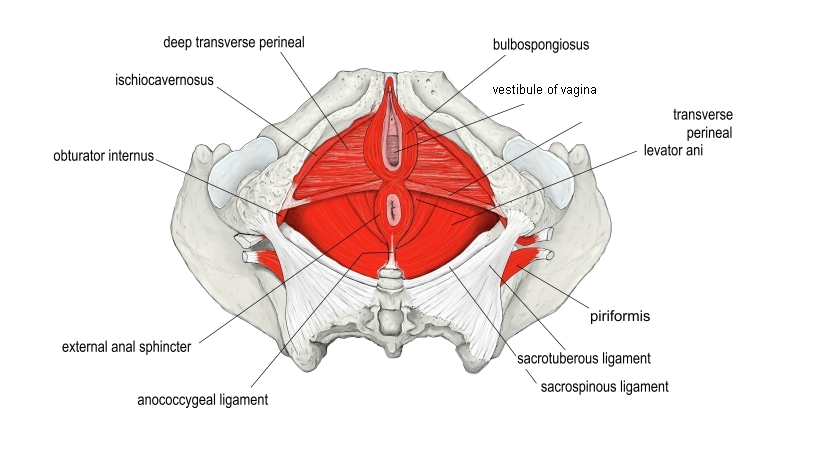
- Lies deeper than the superficial transverse perineal; with the sphincter urethrae it is enclosed by the fascia of the urogenital diaphragm and forms the urogenital diaphragm, which closes the front of the pelvic outlet. The urethra passes through it; the bulbourethral glands lie here.
- Formerly described together with the sphincter urethrae as the constrictor urethrae.
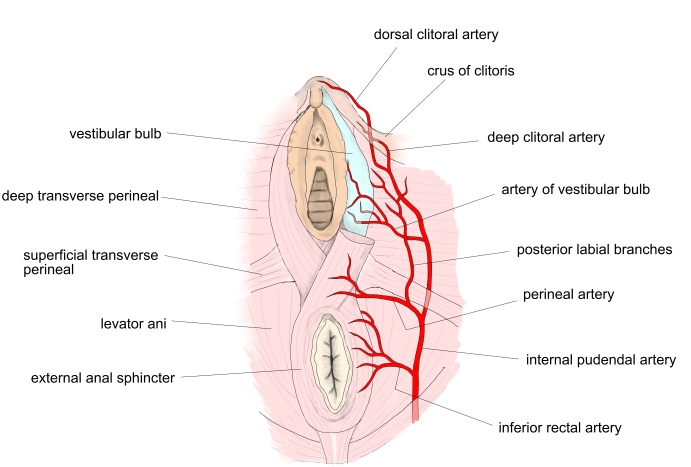
- Differs less between the sexes than the bulbospongiosus and ischiocavernosus. In women it follows almost the same course, is pierced by the urethra and vagina, is partly smooth muscle, and varies greatly between individuals.
- In men it lies just above the bulb of the penis.
Position in the classification
Trunk › Perineum › Urogenital muscles
- Bulbospongiosus
- Ischiocavernosus
- Transversus perinei superficialis
- Transversus perinei profundus
- Sphincter urethrae (external urethral sphincter)
Illustrations
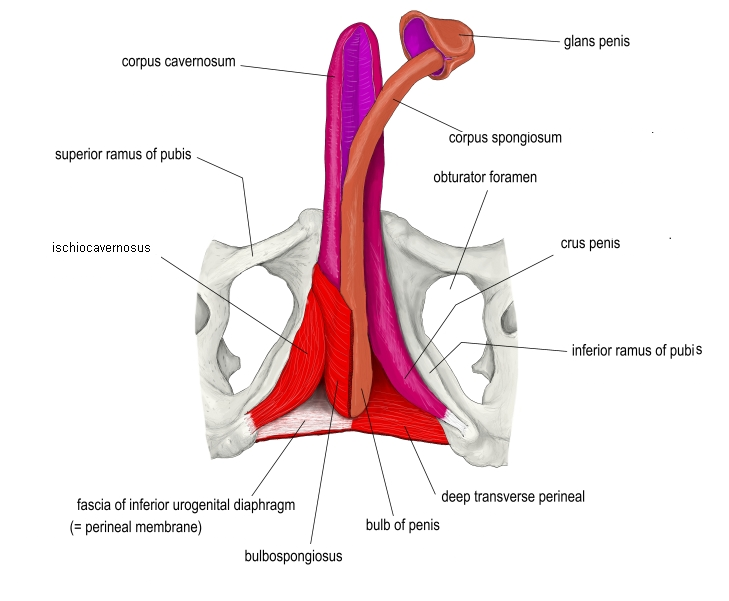
Origin / insertion
- Origin: junction of the inferior rami of the ischium and pubis
- Runs transversely.
- Insertion: meets its partner of the other side in the midline (a tendinous raphe / perineal body)
Action
- With the superficial transverse perineal, forms the transverse muscles of the perineum (the longitudinal ones being the bulbospongiosus and external anal sphincter)
- Supports the perineum and pelvic floor against abdominal pressure; fixes the perineal body
- In men also supports the bulb of the penis; helps expel the last drops of urine (and semen)
Innervation
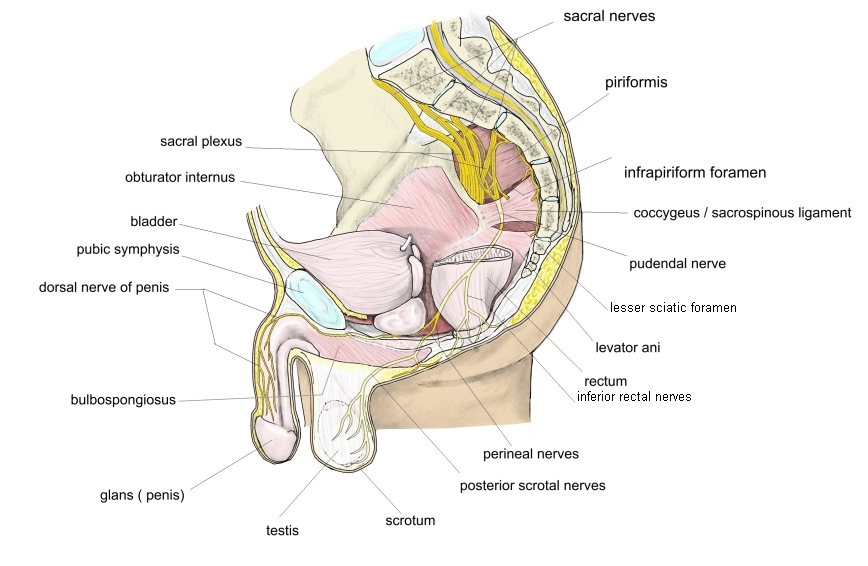
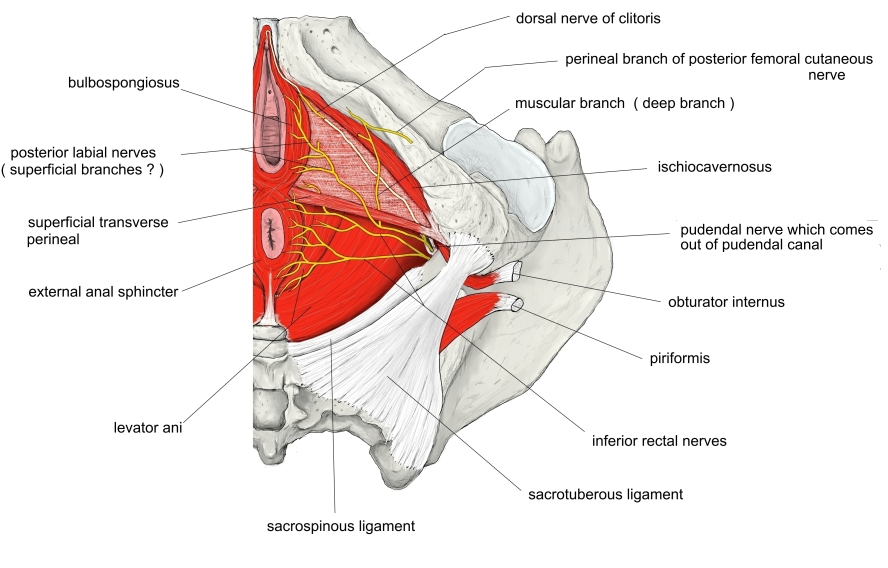
- Muscular branches of the perineal nerve, a branch of the pudendal nerve
Blood supply
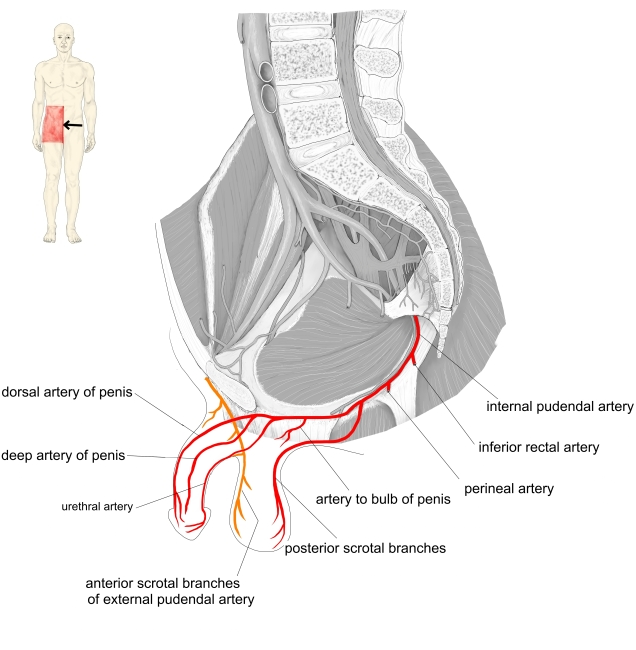
- Probably the perineal artery, a branch of the internal pudendal artery (not certain)
Related terms
- Superficial transverse perineal
- External urethral sphincter
- Bulbospongiosus
- Ischiocavernosus
- External anal sphincter
- Urogenital diaphragm
- Perineal body
- Pudendal nerve
- Internal pudendal artery
References and sources
- Further reading: Deep transverse perineal muscle, Wikipedia.