Latin: musculus subclavius
Overview
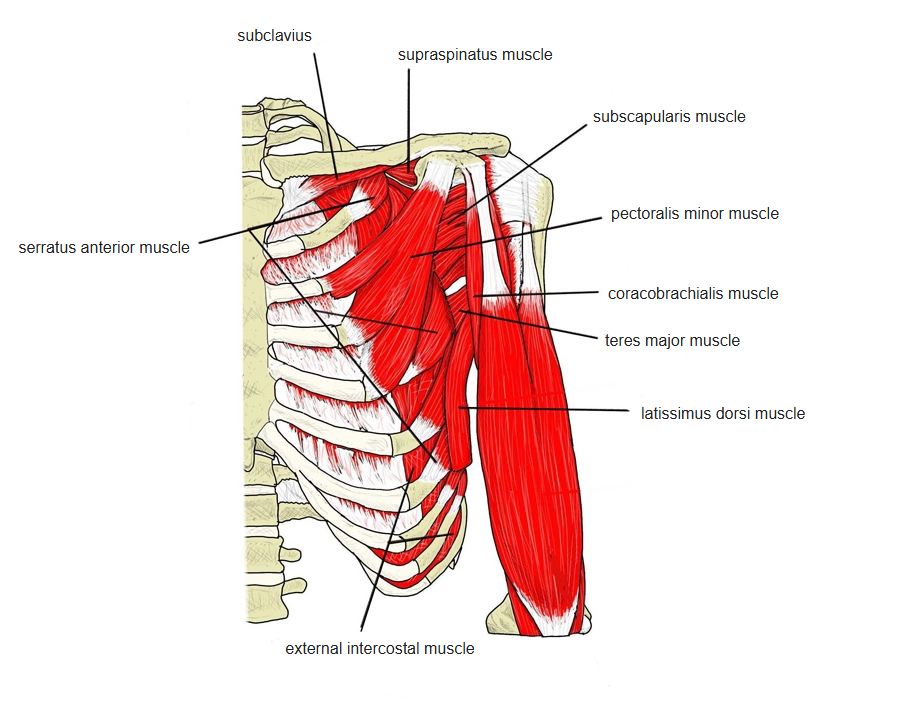
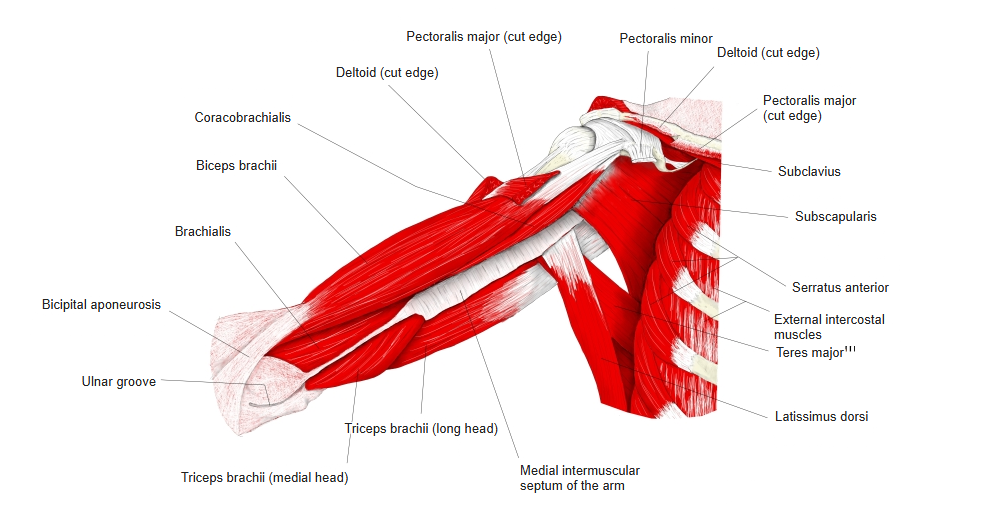
- One of the four superficial muscles of the thorax (with the pectoralis major, pectoralis minor and serratus anterior).
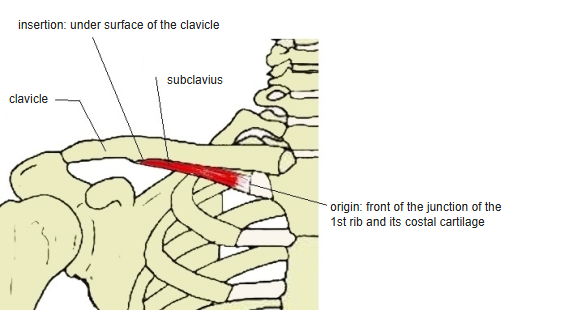
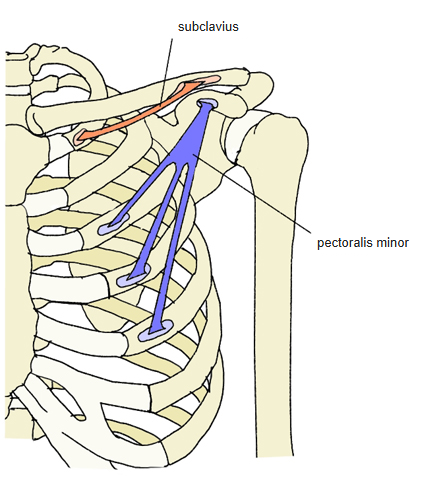
- A small, triangular muscle lying between the clavicle and the first rib.
- Arises from the trunk and ends on the shoulder girdle, on the ventral side.
- Covered in front by the clavipectoral fascia.
- With the pectoralis major and minor it forms the anterior wall of the axilla.
Position in the classification
Trunk › Thorax › Superficial muscles of the thorax
Illustrations
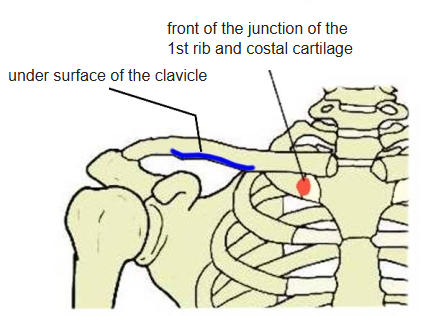
Origin / insertion
- Origin: front of the junction of the first rib and its costal cartilage, by a short thick tendon (in front of the costoclavicular ligament)
- The fibres run obliquely upward and laterally.
- Insertion: groove on the under surface of the clavicle (its middle part, apparently sparing both ends)
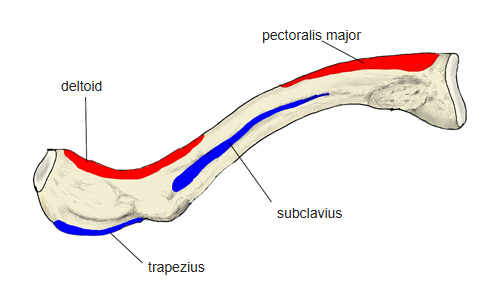
Action
- Pulls the clavicle forward and downward
- Steadies the clavicle while the arm moves at the shoulder
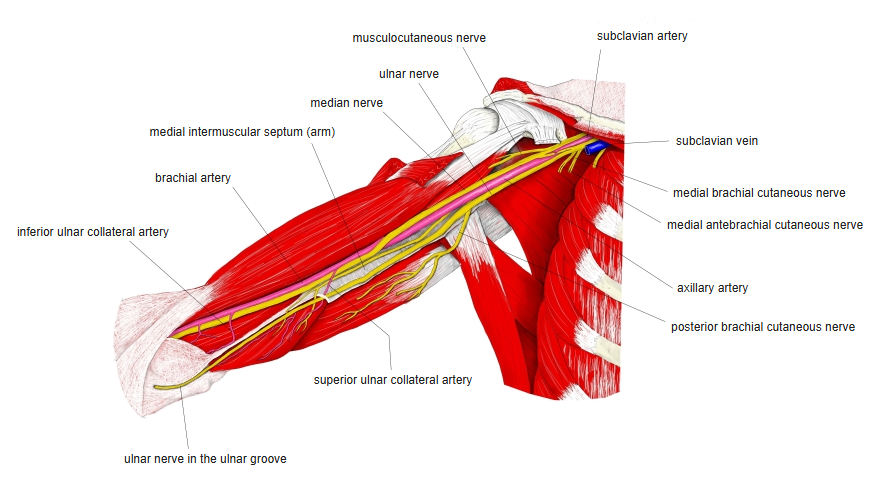
- Cushions the brachial plexus and subclavian vessels when the clavicle breaks
Innervation
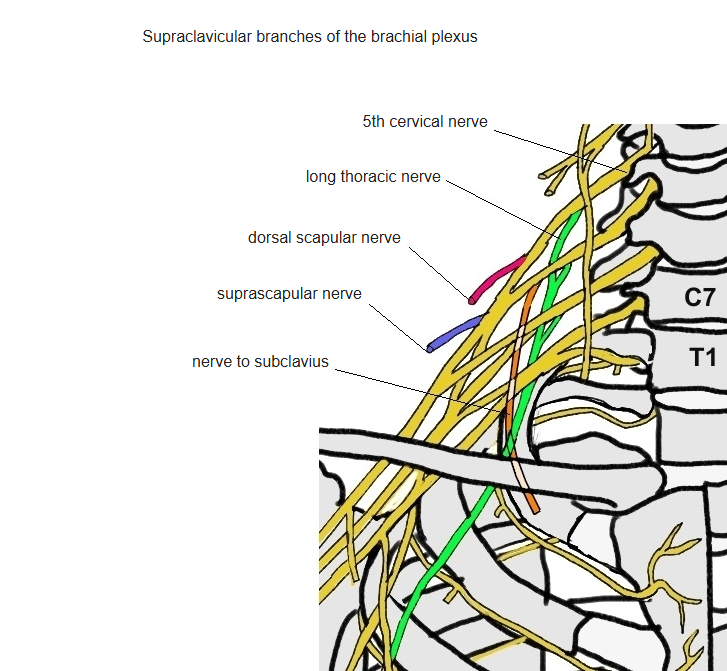
- Nerve to subclavius, from the upper trunk of the brachial plexus
- Segments: C5 or C5–C6 (sources differ)
Blood supply
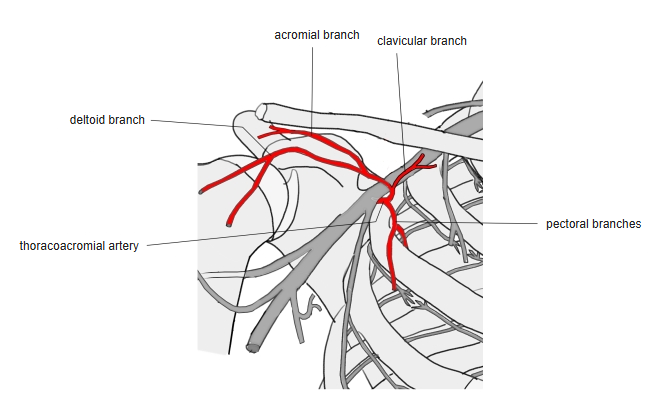
- Thoraco-acromial artery (clavicular branch)
Anatomical variations
- May be absent, or its fibres may be replaced entirely by a ligament
- May insert on the coracoid process instead of, or as well as, the clavicle
- An extra slip may run from the sternum to the upper border of the scapula, or from the manubrium to the clavicle
- Absence of the muscle has been linked with thoracic outlet syndrome
Related terms
- Superficial muscles of the thorax
- Pectoralis minor
- Pectoralis major
- Clavicle
- First rib
- Costoclavicular ligament
- Clavipectoral fascia
- Nerve to subclavius
- Brachial plexus
- Thoraco-acromial artery
- Subclavian artery
- Subclavian vein
- Thoracic outlet syndrome
References and sources
- Further reading: Subclavius muscle, Wikipedia.