Latin: Truncus pulmonalis
Overview
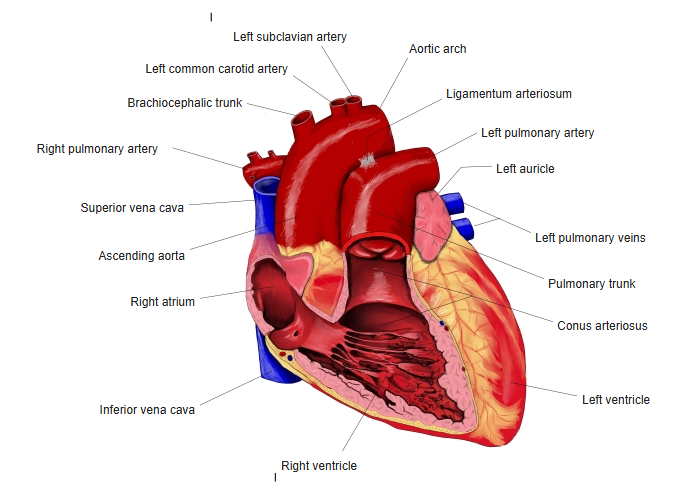
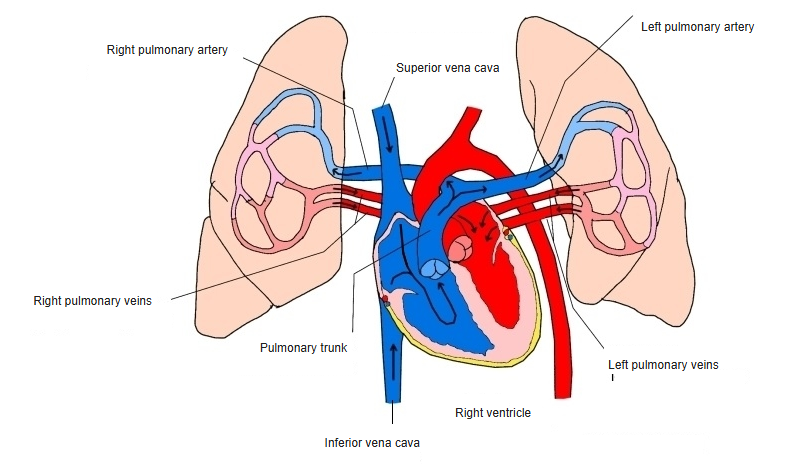
- The large artery that carries deoxygenated blood from the right ventricle toward the lungs (pulmonary circulation).
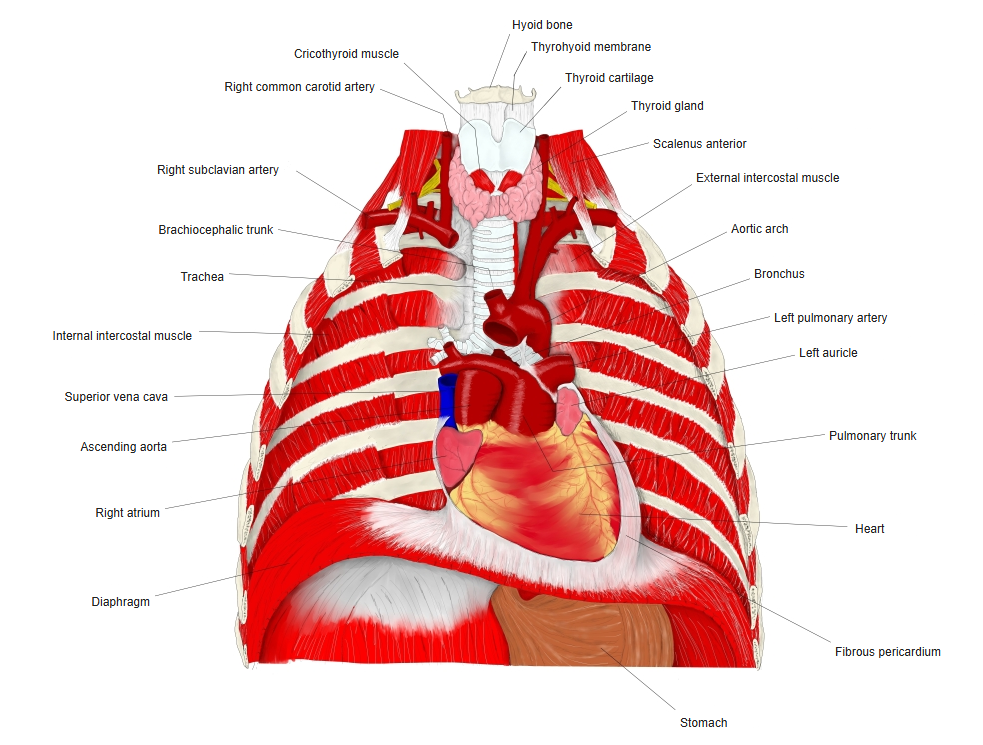
- Begins at the pulmonary valve, runs upward and backward to the left of the ascending aorta, and about 5 cm later divides under the aortic arch into the right and left pulmonary arteries.
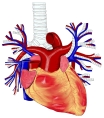
Pulmonary trunk and the heart 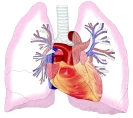
Pulmonary trunk and the great vessels
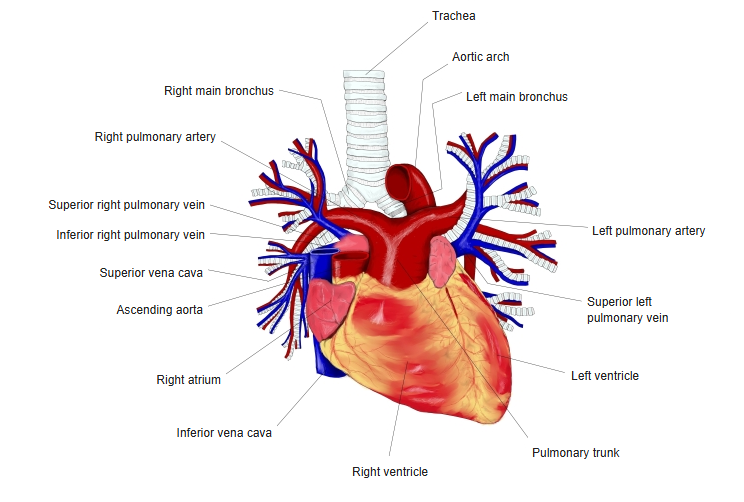
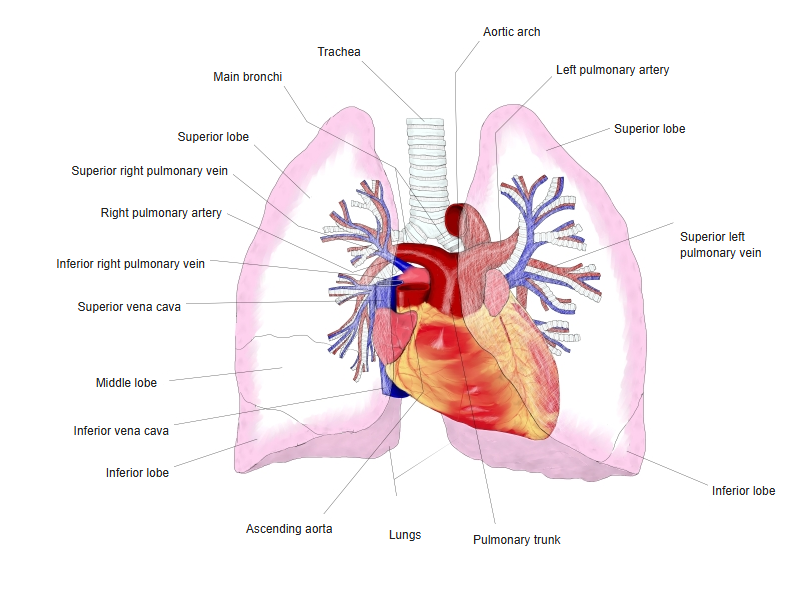
Pulmonary arteries
- The right pulmonary artery is longer and passes behind the ascending aorta and superior vena cava to the right lung.
- The left pulmonary artery is shorter; the ligamentum arteriosum connects it to the aortic arch.
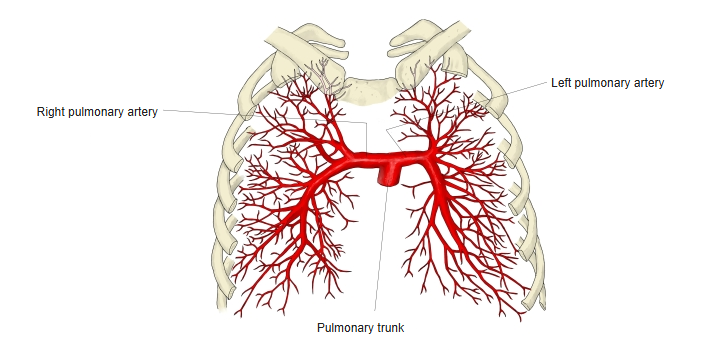
- Inside each lung the arteries divide with the bronchi into lobar and segmental arteries.
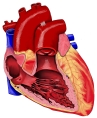
Pulmonary arteries and veins 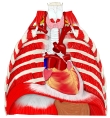
Pulmonary arteries in the lungs 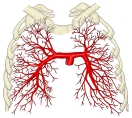
Pulmonary trunk and pulmonary arteries 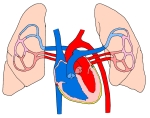
Branches of the pulmonary arteries
Clinical notes
- A pulmonary embolism is a blood clot that blocks the pulmonary trunk or its branches.
- In the fetus, blood passes from the pulmonary trunk to the aorta through the ductus arteriosus.
References and sources
- Further reading: Pulmonary trunk, Wikipedia.