Latin: musculus transversus perinei superficialis
Overview
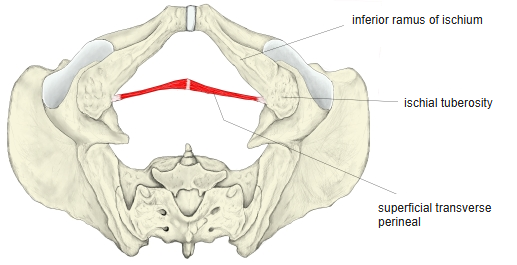
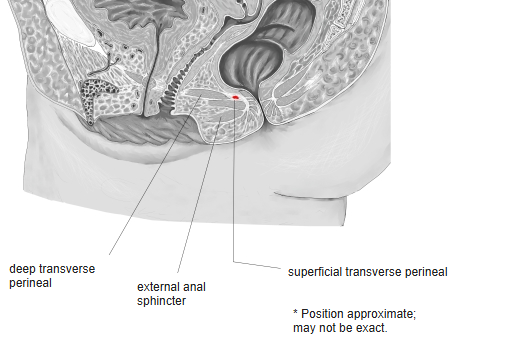
- One of the muscles of the perineum: a narrow, poorly developed slip crossing the perineum in front of the anus.
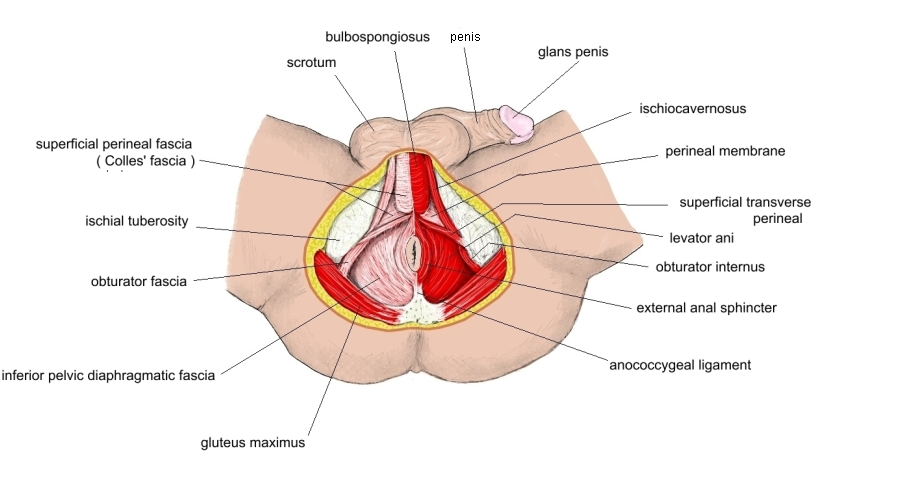
- Near its origin it often communicates with, and branches from, the ischiocavernosus.
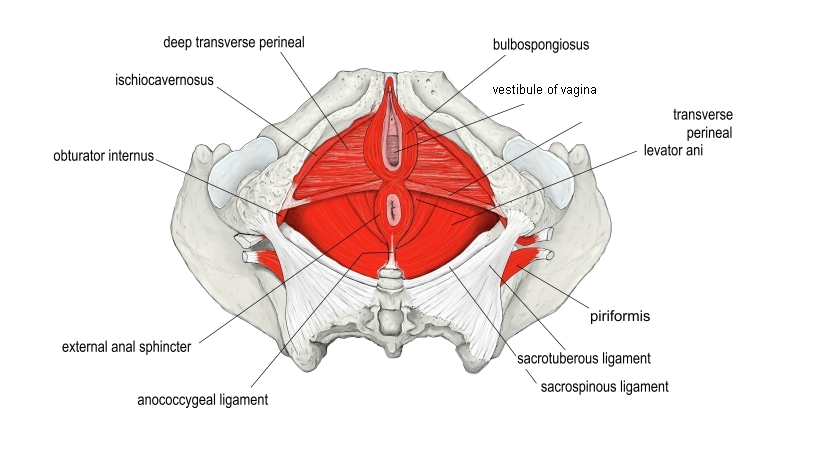
- With the deep transverse perineal it forms the transverse muscles of the perineum.
- In women it is somewhat reduced (sometimes only its fascia can be found), and fibres passing into the bulbospongiosus are not rare.
Position in the classification
Trunk › Perineum › Urogenital muscles
- Bulbospongiosus
- Ischiocavernosus
- Transversus perinei superficialis
- Transversus perinei profundus
- Sphincter urethrae (external urethral sphincter)
Illustrations
Origin / insertion
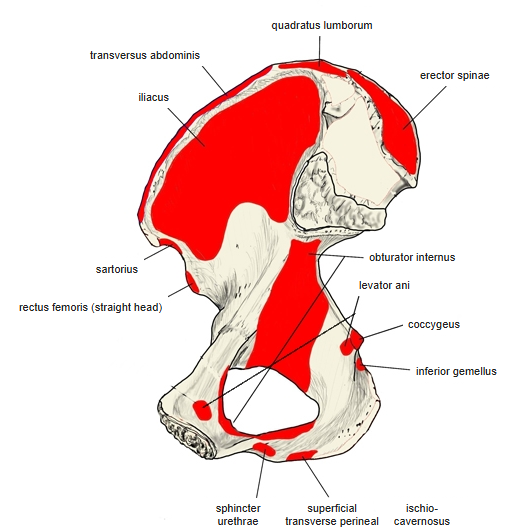
- Origin: inferior ramus of the ischium or the ischial tuberosity (inner, front part)
- Insertion: perineal body: the raphe between the external anal sphincter and bulbospongiosus, and the median septum of the bulbospongiosus
Action
- Little is said about its action; as a pelvic-floor muscle it probably helps to support the pelvic organs, in an auxiliary role because it is thin
Innervation
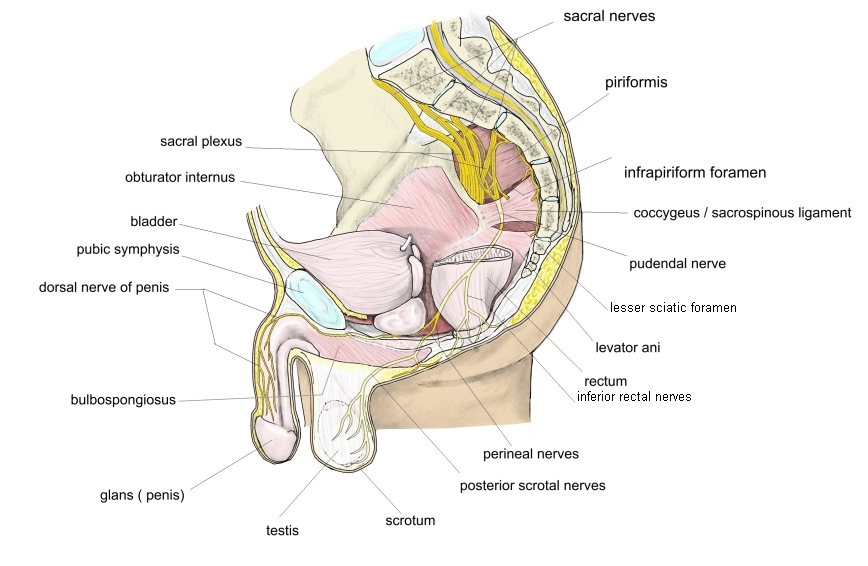
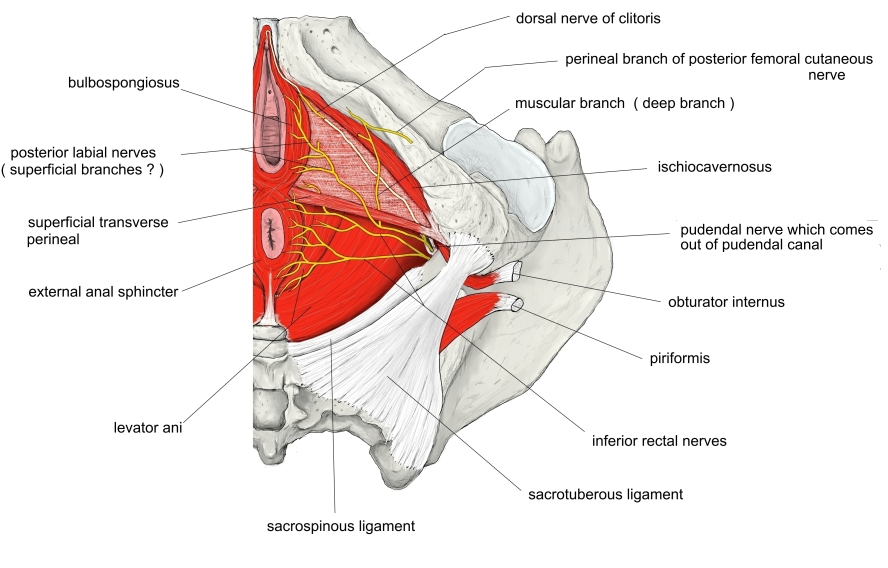
- Muscular branches of the perineal nerve (branch of the pudendal nerve)
Blood supply
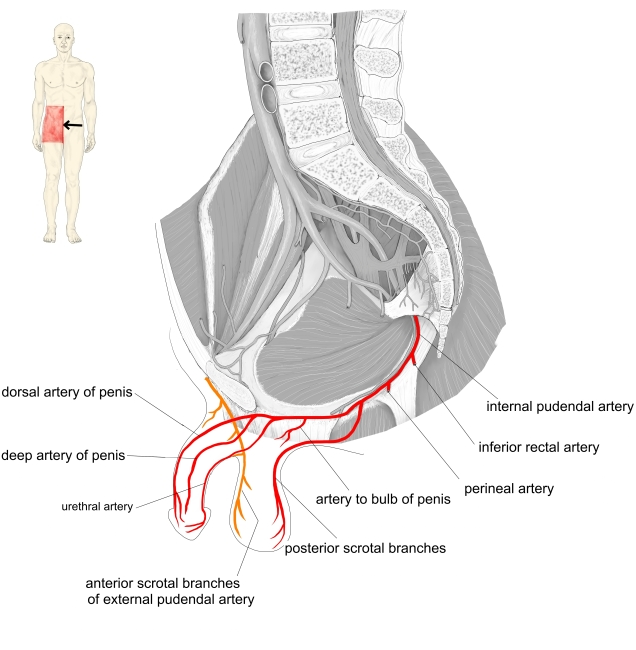
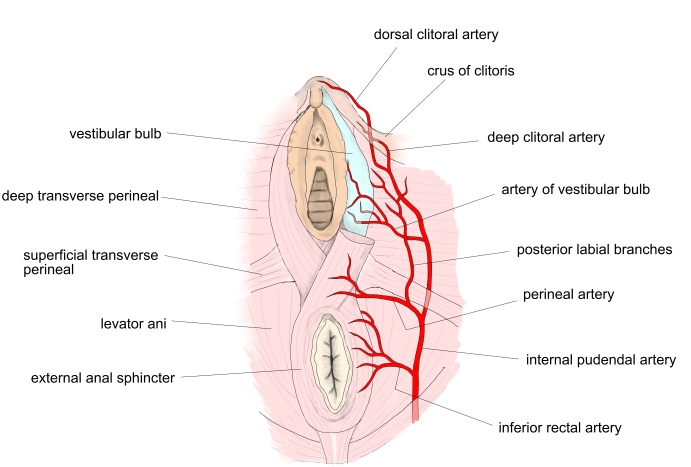
- Perineal artery (branch of the internal pudendal artery)
Related terms
- Deep transverse perineal
- Ischiocavernosus
- Bulbospongiosus
- External anal sphincter
- Perineal body
- Pudendal nerve
- Internal pudendal artery
References and sources
- Further reading: Superficial transverse perineal muscle, Wikipedia.