Cochlear cupula (Latin: cupula cochleae)
Also called Apex of cochlea or the cochlear apex
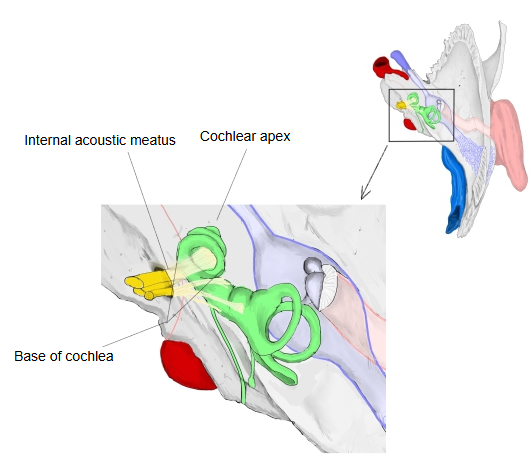
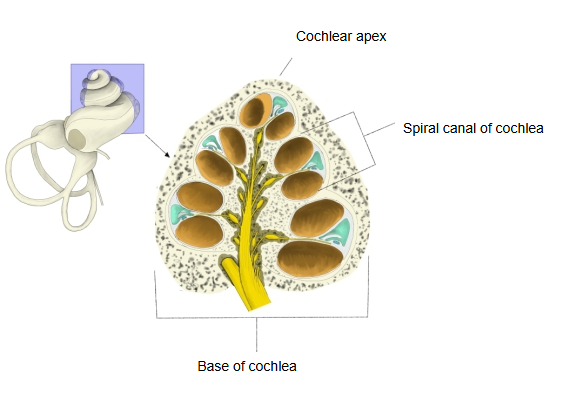
The cochlea is cone-shaped: its tip is called the cochlear cupula (apex of the cochlea), and its broad bottom part the base of the cochlea.
Cochlea: one of the parts of the internal ear (organ of hearing)Diameter of the base: 8–9 mm
· The base of the cochlea is pierced by the fibres of the cochlear nerve.
The cochlear cupula points anterolaterally in the skull, while the base of the cochlea faces posteromedially toward the internal acoustic meatus.
Internal acoustic meatus: a canal about 1 cm long in the temporal bone that carries nerves and vessels
· The apex points toward the medial wall of the tympanic cavity. The cochlea is about 5 mm high from base to apex. At the apex the cochlear duct ends blindly, and the scala vestibuli and scala tympani meet at the helicotrema. Hair cells in the apical turn respond best to low-frequency sounds.
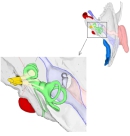 Inner ear (superior view)
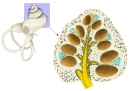 Cochlea (section)
Related terms
References and sources
- Further reading: Cochlea, Wikipedia.
- Further reading: Helicotrema, Wikipedia.
- Federative International Programme for Anatomical Terminology (FIPAT). Terminologia Anatomica, 2nd ed. (TA2), 2019.