Extra-ocular muscles (Latin: musculi externi bulbi oculi)
Also called Extrinsic muscles of the eye
muscles (9)
- Extra-ocular muscles (6) : skeletal muscles that move the eyeball
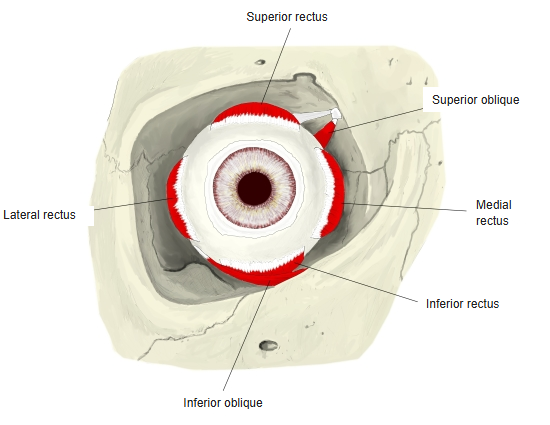
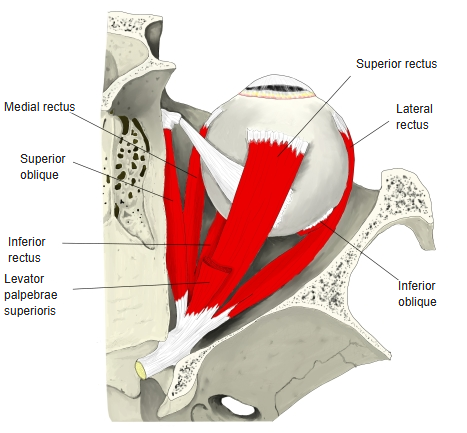
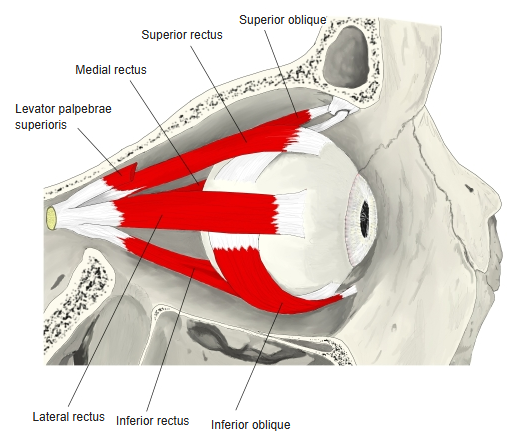
- Recti : superior rectus, inferior rectus, medial rectus, lateral rectus
- Obliques : superior oblique, inferior oblique
- Intra-ocular muscles (3) : smooth muscles inside the eyeball: ciliary muscle, sphincter pupillae, dilator pupillae
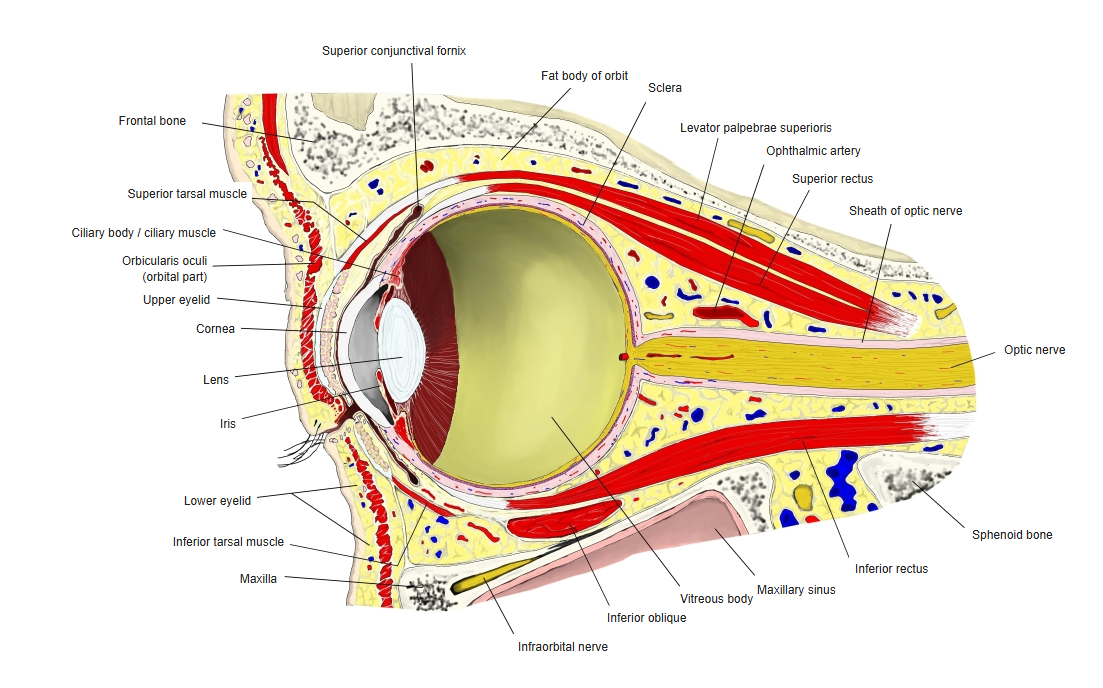
Other muscles found in the orbit are the levator palpebrae superioris, the orbitalis, and the superior and inferior tarsal muscles. The levator palpebrae superioris is usually described with the extra-ocular muscles, but it raises the upper eyelid and does not move the eyeball.
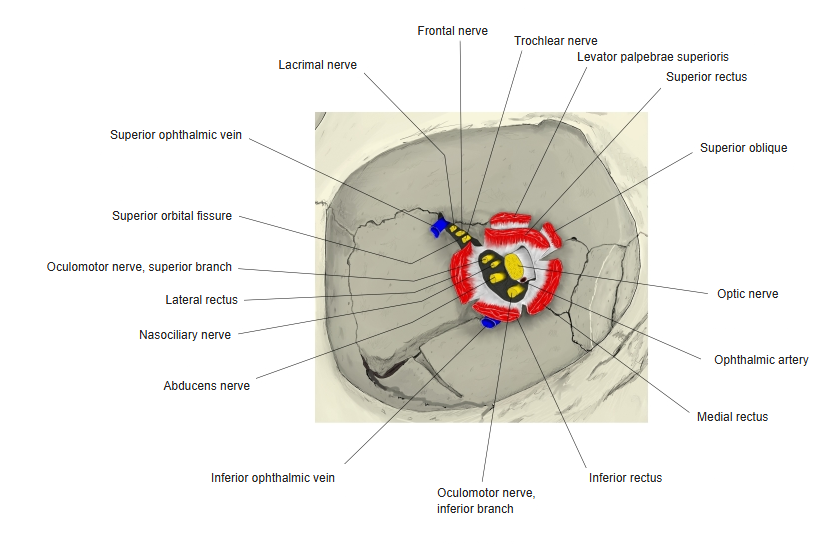
Recti: the four recti arise from the common tendinous ring at the apex of the orbit and insert into the sclera in front of the equator of the eyeball. Obliques: the tendon of the superior oblique turns around the trochlea at the front of the orbit; the inferior oblique is the only one that arises from the front of the orbital floor.
Nerve supply: the oculomotor nerve supplies all of them except the superior oblique (trochlear nerve) and the lateral rectus (abducens nerve). Sources differ on whether the wider term ocular muscles includes the intra-ocular muscles.
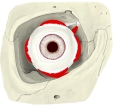 Right orbit (anterior view)
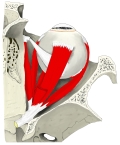 Right orbit (superior view)
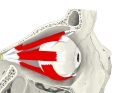 Right orbit (viewed from the left)
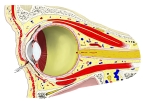 Orbit (sagittal section)
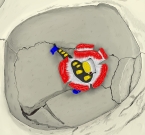 Apex of right orbit (common tendinous ring)
Related terms
- Inferior oblique
- Levator palpebrae superioris
- Trochlea of superior oblique
- Orbit
- Eyeball
- Right orbit (anterior view)
- Oculomotor nerve
References and sources
- Further reading: Extraocular muscles, Wikipedia.
- Federative International Programme for Anatomical Terminology (FIPAT). Terminologia Anatomica, 2nd ed. (TA2), 2019.