Jugular trunk (Latin: truncus jugularis)
Also called Jugular lymphatic trunk
Overview
The jugular trunk is one of the lymphatic trunks: the large-calibre lymphatic vessels that are part of the lymphatic system.
Lymphatic system: the system that collects tissue fluid and returns it to the bloodLymphatic vessels: tube-like structures that carry the lymph
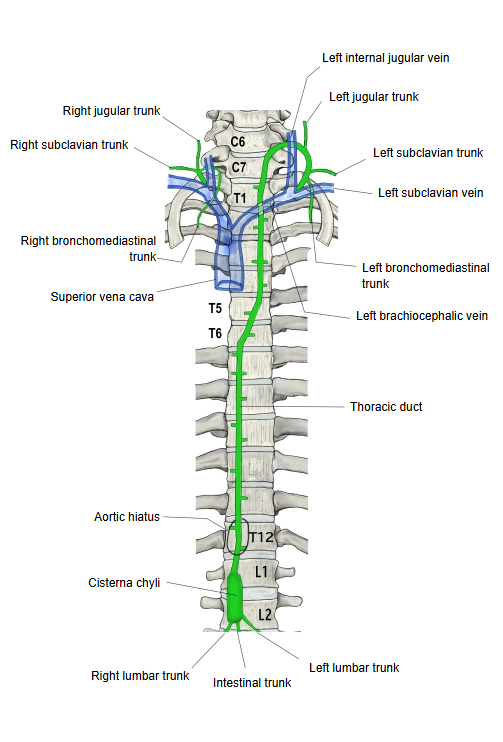
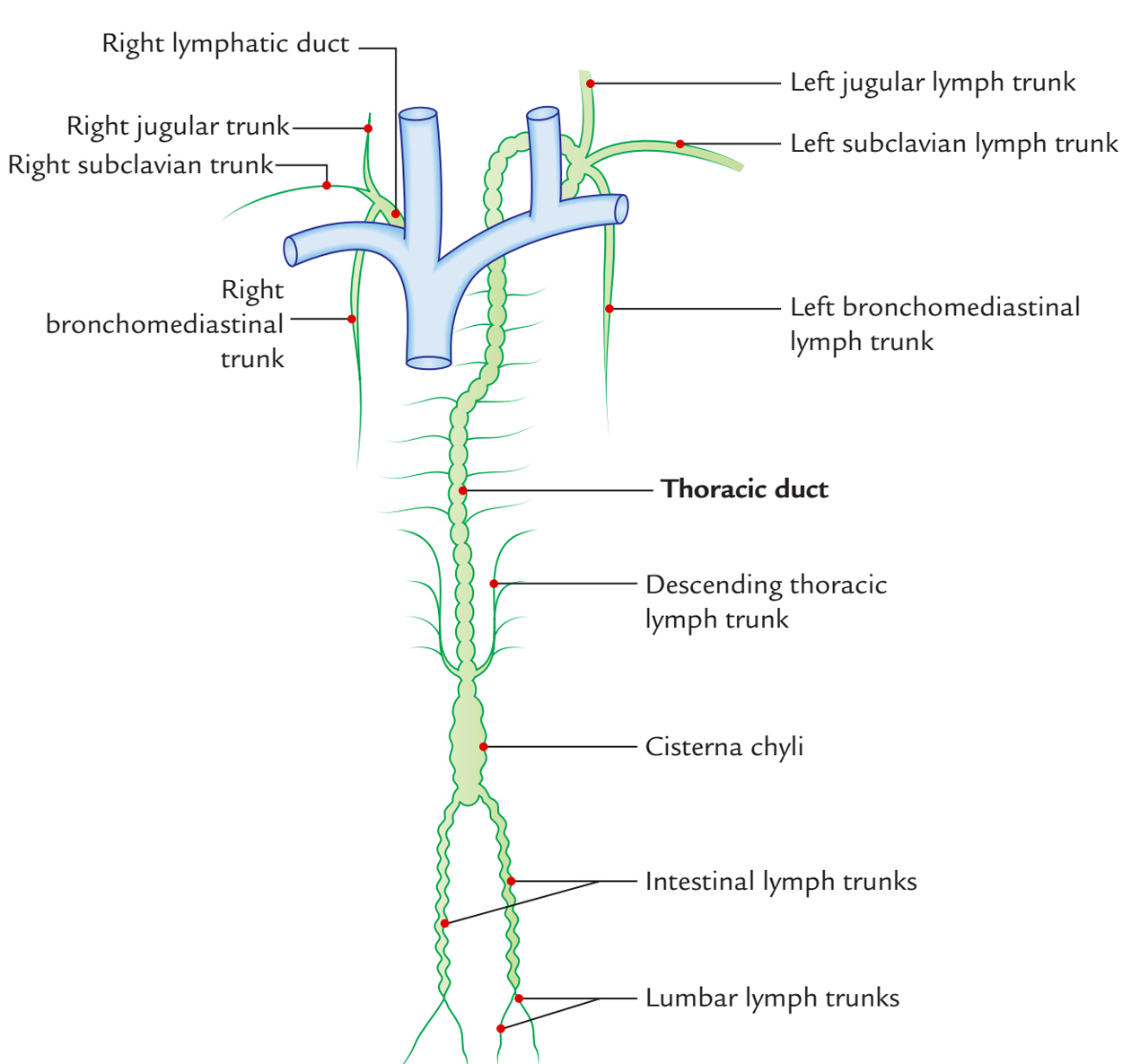
The lymphatic trunk that collects the lymph of the head and neck. There is one on each side, a right and a left; each is only a few centimetres long and a few millimetres wide.
· Right jugular trunk: collects the lymph of the right side of the head and neck and ends in the right lymphatic duct, or opens directly into the right venous angle.
· Left jugular trunk: collects the lymph of the left side of the head and neck and usually joins the end of the thoracic duct, or opens directly into the left venous angle.
Related lymph nodes: the deep cervical lymph nodes (superior and inferior deep cervical nodes). The jugular trunk is formed by their outgoing (efferent) vessels.
They lie in a chain along the common carotid artery and the internal jugular vein and are divided into an upper and a lower group
Sources differ on how the trunks end: each may join its duct, open separately into the internal jugular, subclavian or brachiocephalic vein, or divide into several channels.
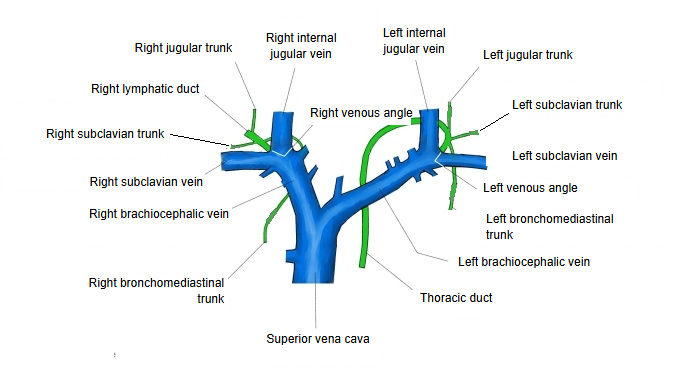

 Lymph vessels of the trunk
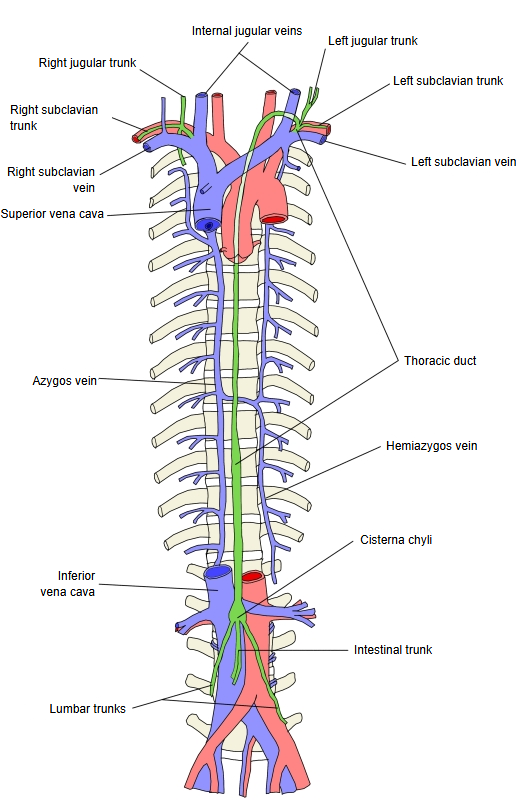
 Thoracic duct and the azygos system
 Thoracic duct on the spine

Reference websites
[Wikipedia]
· Lymph duct, Wikipedia.
[Websites with illustrations]
· Thoracic duct and lymph trunks (Earth's Lab)
· Jugular trunk (SlideTeam)

Related terms
References and sources
- Further reading: Lymph duct, Wikipedia.
- Further reading: Thoracic duct, Wikipedia.
- Federative International Programme for Anatomical Terminology (FIPAT). Terminologia Anatomica, 2nd ed. (TA2), 2019.