Latin: musculus adductor longus
Overview
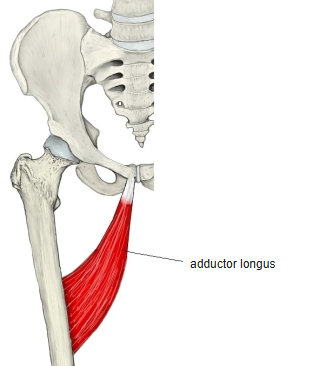
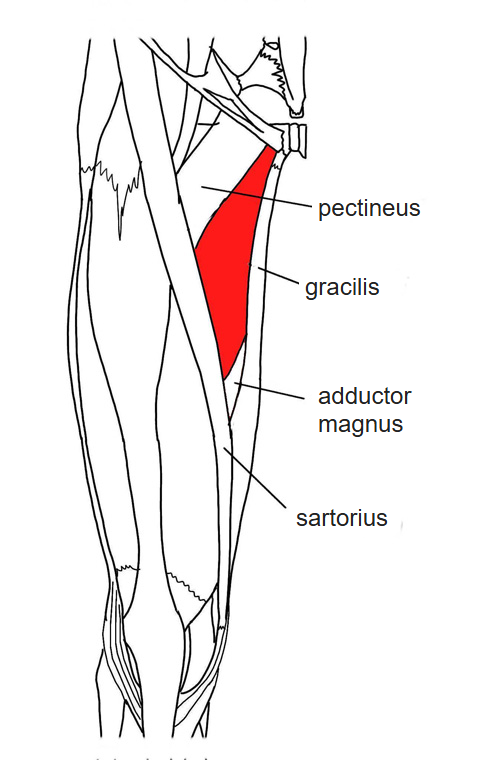
- The most anterior of the hip adductors; forms the medial wall of the femoral triangle.
- Arises by a long tendon, widens below and ends in a thin, broad tendon.
- Bundles at the distal edge of its tendon help form the vastoadductor membrane and the entrance of the adductor canal.
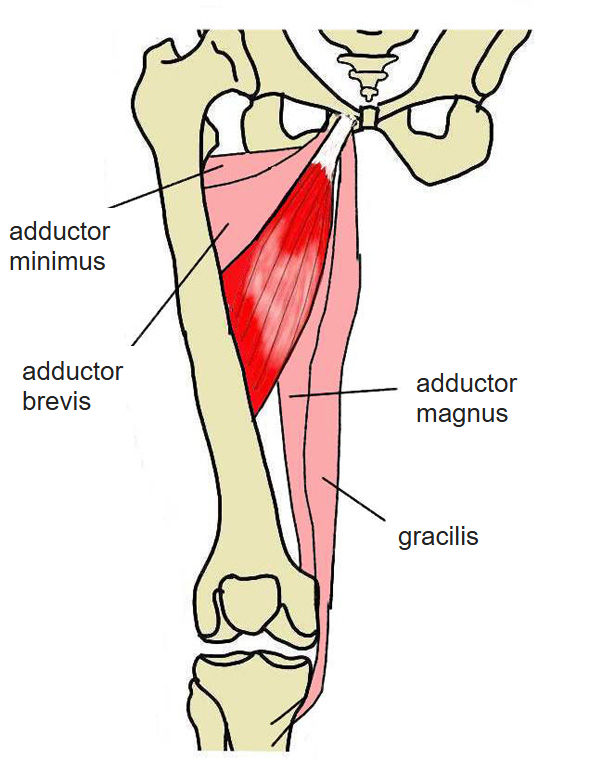
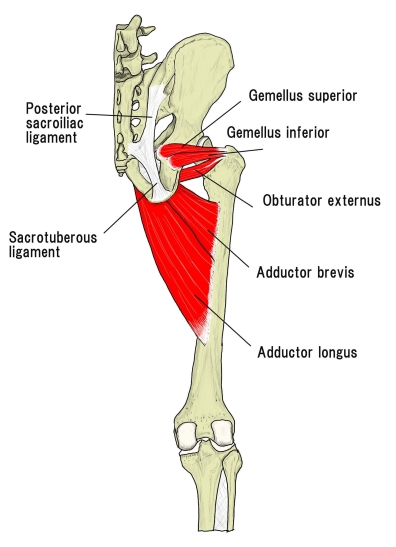
- The adductor brevis lies between it and the adductor magnus near the femur.
- Continuous in places with the adductor brevis and magnus, vastus lateralis and medialis, pectineus and gracilis.
Position in the classification
Lower Limb › Thigh › Adductor group
Illustrations
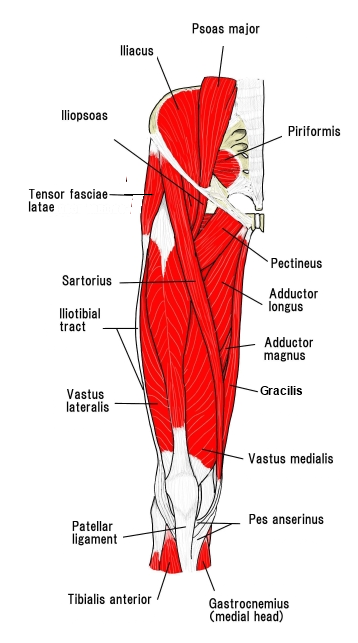
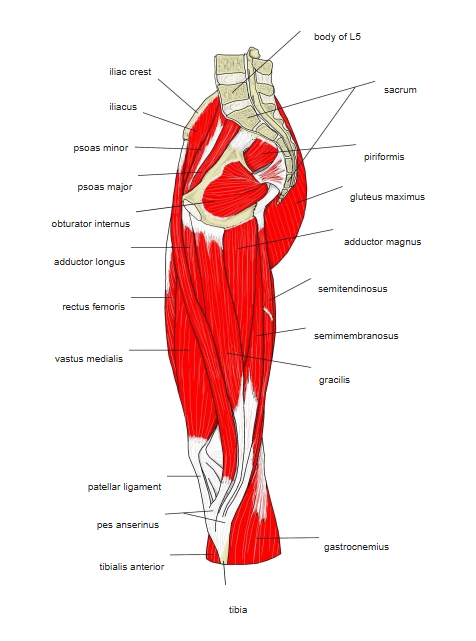
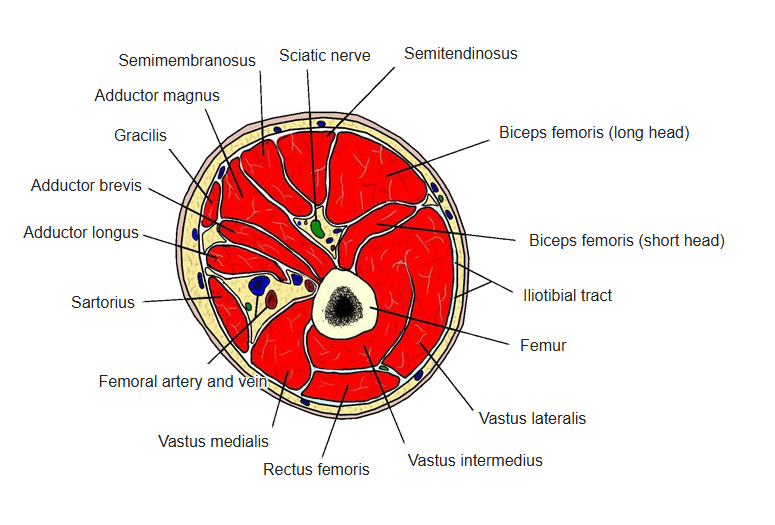
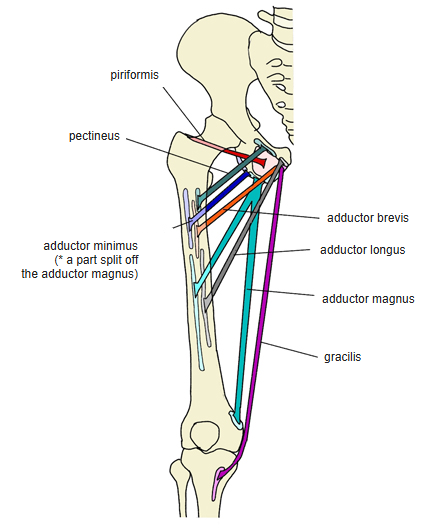
Origin / insertion
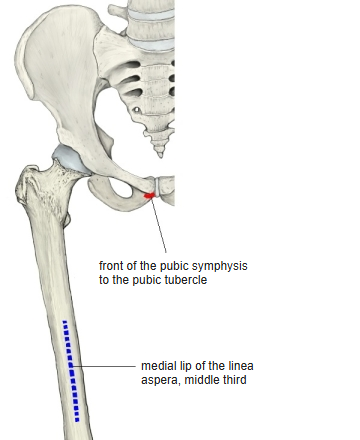
- Origin: anterior surface of the body of the pubis, inferior to the pubic crest and lateral to the pubic symphysis
- Insertion: middle third of the medial lip of the linea aspera
Action
- Adducts and flexes the thigh, and rotates it laterally
- Prometheus: adduction and flexion (to 70°), extension beyond 80° of flexion; steadies the pelvis
Innervation
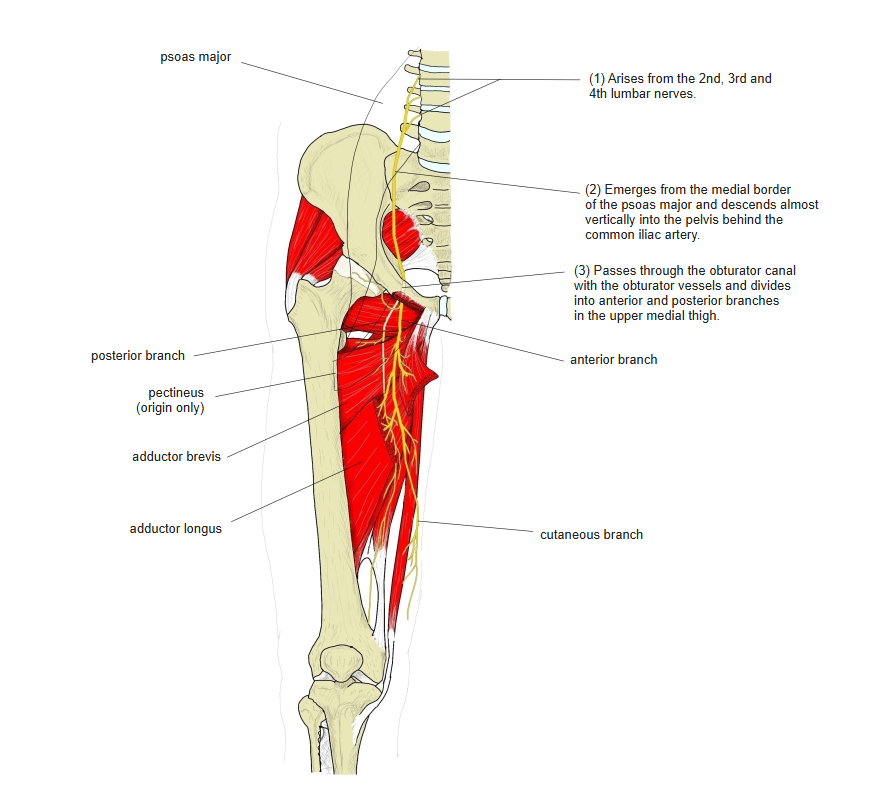
- Obturator nerve (L2–L4)
Blood supply
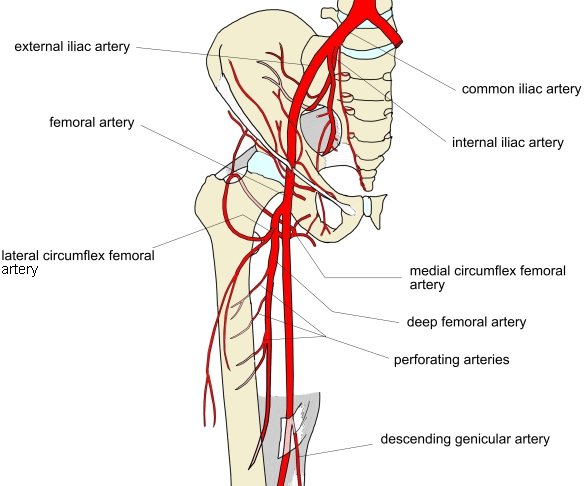
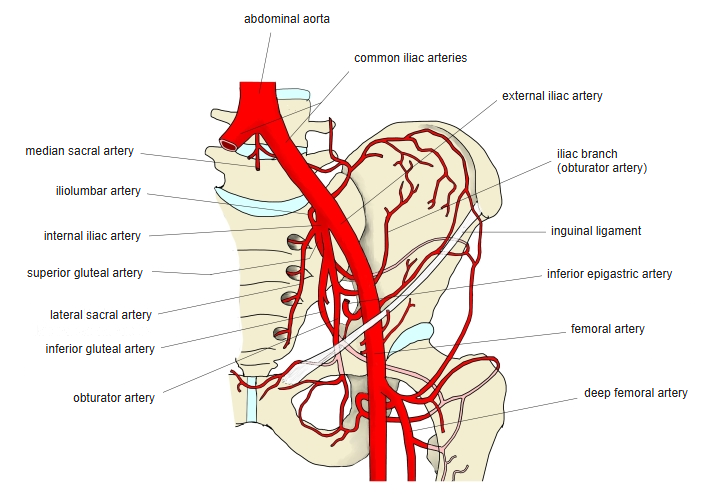
- Perforating branches of the deep femoral artery and the obturator artery
Related terms
- Adductor brevis
- Adductor magnus
- Pectineus
- Gracilis
- Femoral triangle
- Linea aspera
- Obturator nerve
References and sources
- Further reading: Adductor longus muscle, Wikipedia.