Bone trabeculae (Latin: trabeculae osseae)
Also called the trabeculae of spongy bone or the singular bone trabecula
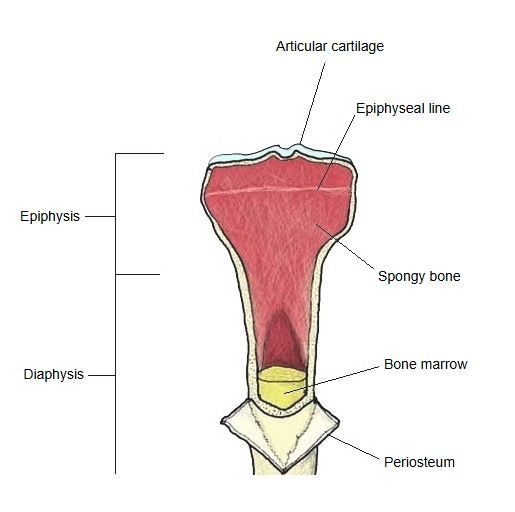
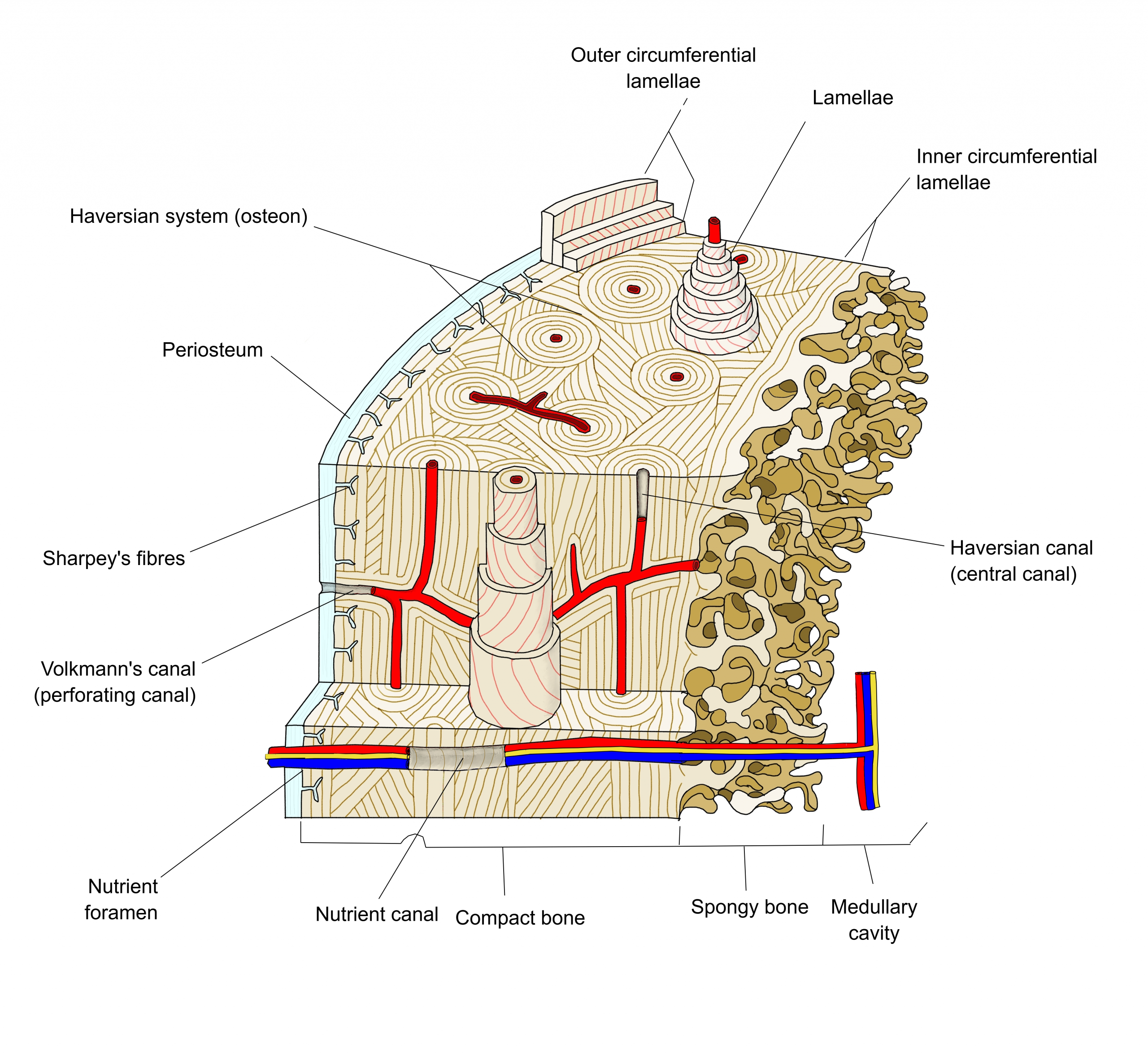
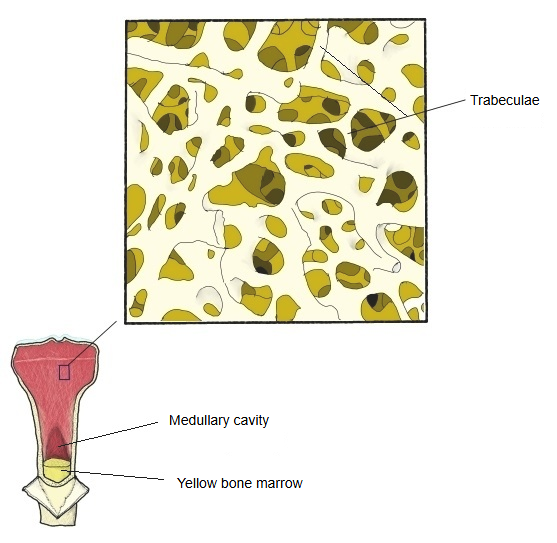
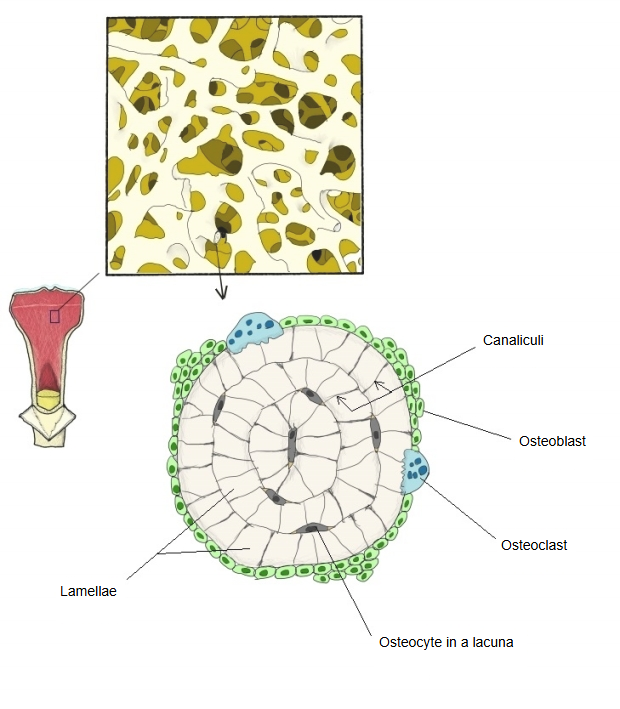
Trabeculae fill the ends (epiphyses) of long bones and the inside of short, flat and irregular bones, under a shell of compact bone. Each trabecula is built of bone lamellae lying mostly parallel to its surface, with osteocytes in lacunae; most trabeculae are too thin to contain osteons. They line up along the lines of stress, so the bone stays strong while remaining light, and the pattern changes when the load on the bone changes. Their surfaces are covered by endosteum, where osteoblasts and osteoclasts build and remove bone, and the spaces between them hold red bone marrow or yellow marrow. The general word trabecula is also used for connective-tissue strands in organs such as the lymph nodes and spleen.
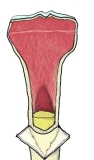 End of a long bone (section)
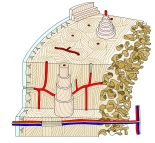 Compact and spongy bone
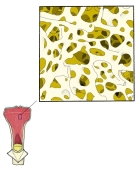 Trabeculae of spongy bone
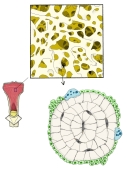 Bone cells and lamellae (enlarged)
Reference websites
[Wikipedia]
· Trabecula, Wikipedia.
· Bone: cancellous bone, Wikipedia.
[Websites with illustrations]
· Compact and spongy bone (Wikimedia Commons)

Related terms
References and sources
- Further reading: Trabecula, Wikipedia.
- Further reading: Bone (Cancellous bone), Wikipedia.
- Federative International Programme for Anatomical Terminology (FIPAT). Terminologia Anatomica, 2nd ed. (TA2), 2019.