Tarsal bones (Latin: ossa tarsi)
Also called the tarsus
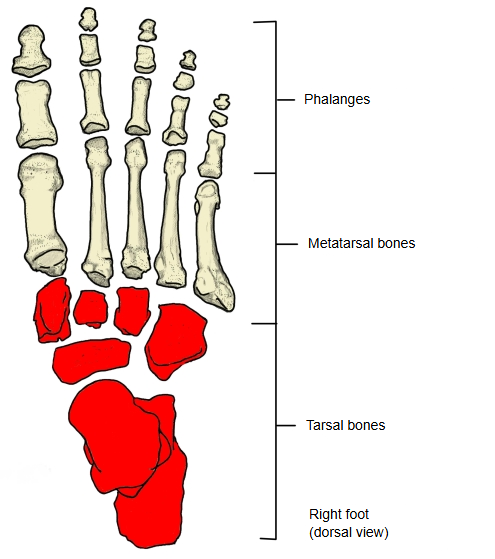
One of the groups of bones of the foot: the seven short bones that make up the tarsus, the ankle region and back half of the foot, between the leg bones and the metatarsals.
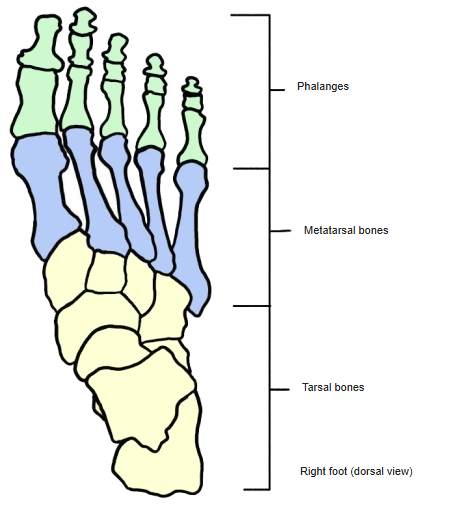
- Phalanges : long bones: proximal, middle and distal phalanges; 14 in each foot
- Metatarsal bones : long bones: 1st to 5th metatarsals; 5 in each foot
- Tarsal bones : short bones that form the tarsus; 7 in each foot
- Sesamoid bones : in addition to the above
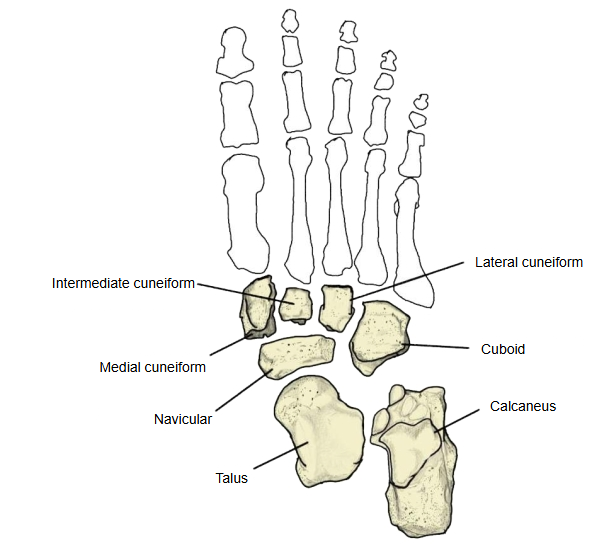
The seven tarsal bones are the talus, calcaneus, navicular, medial, intermediate and lateral cuneiforms, and cuboid. The talus meets the tibia and fibula at the ankle joint; the calcaneus is the largest and forms the heel. Together with the metatarsal bones they form the arches of the foot.
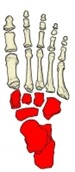 Right foot (dorsal)
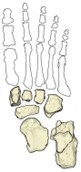 Tarsal bones (dorsal)
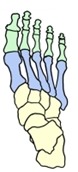 Bones of the foot
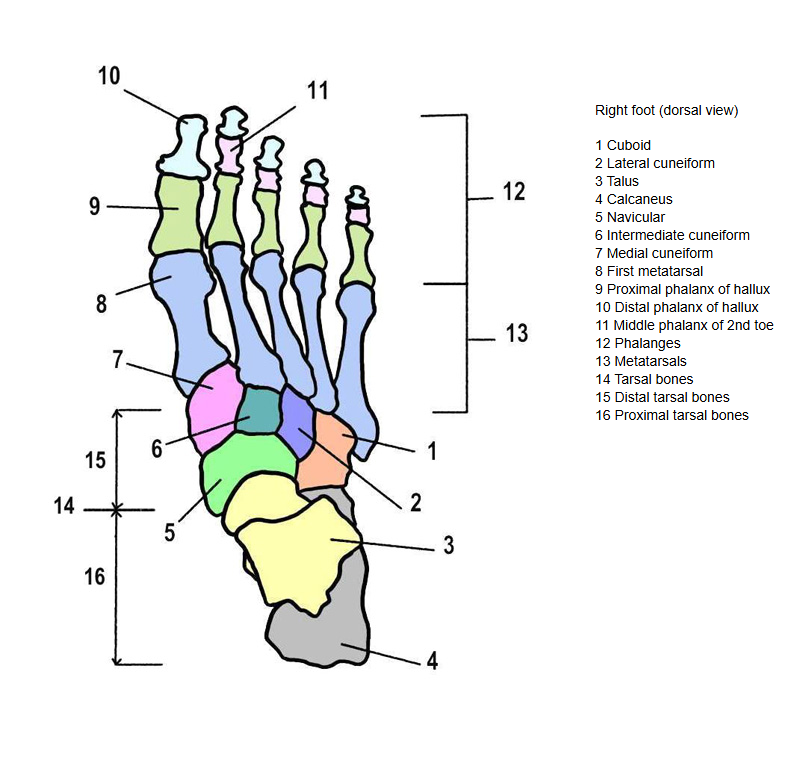
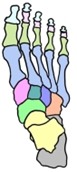 Right foot, numbered
In more detail
The three tarsal bones of the proximal row are called the proximal tarsal bones, and the four of the distal row the distal tarsal bones. Some texts place the navicular in neither row but treat it as an intermediate bone; sources differ.
- Distal tarsal bones : from the big-toe side to the little-toe side: medial cuneiform, intermediate cuneiform, lateral cuneiform, cuboid
- Proximal tarsal bones : navicular, talus, calcaneus
Sites with illustrations and photos
· Tarsal and metatarsal bones, 19th-century plate (Anatomy Atlases)

· Tarsal bones of the right foot, labelled photo (These Bones of Mine)

· Skeleton of the foot, photo (HeritageDaily)

Where it is found
Related terms
References and sources
- Further reading: Tarsus (skeleton), Wikipedia.
- Federative International Programme for Anatomical Terminology (FIPAT). Terminologia Anatomica, 2nd ed. (TA2), 2019.