Proximal carpal row (Latin: ossa carpi proximalia)
Also called the proximal row of carpal bones or the proximal carpal bones
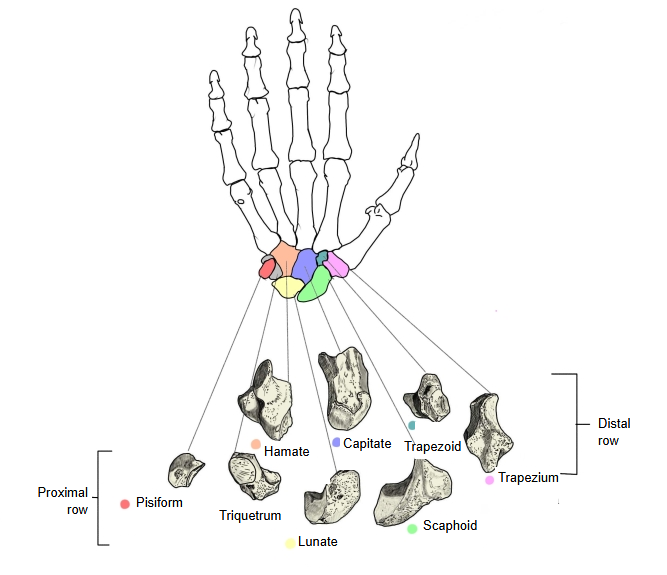
- Distal carpal row : the four carpal bones of the distal row.
- Proximal carpal row : the four carpal bones of the proximal row.
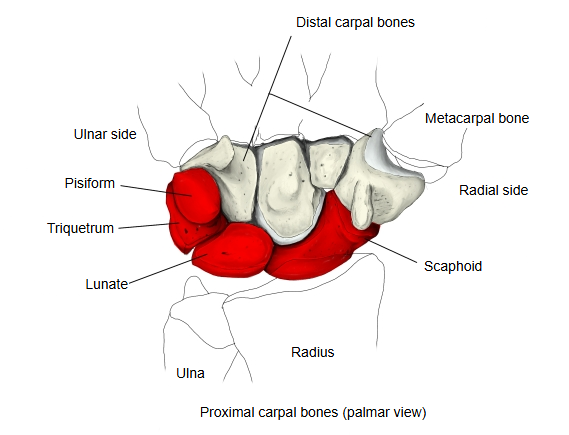
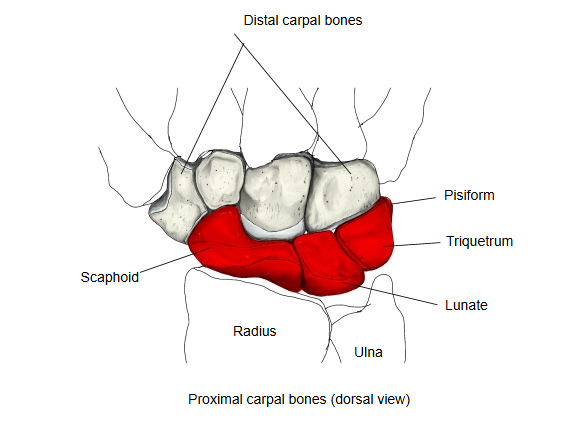
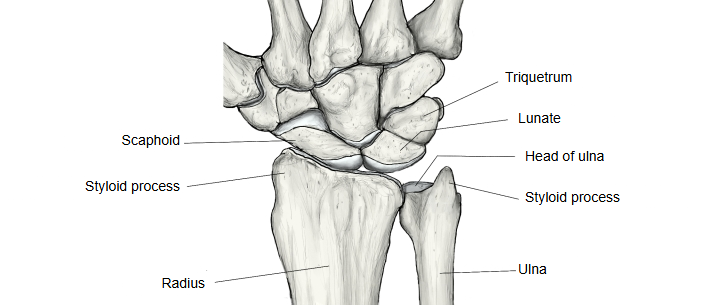
The scaphoid, lunate and triquetrum together form a smooth convex surface that meets the radius and the articular disc at the radiocarpal (wrist) joint; their distal surfaces meet the distal row at the midcarpal joint.
The pisiform sits on the palmar surface of the triquetrum within the tendon of flexor carpi ulnaris and takes no part in the wrist joint. Apart from the pisiform, no tendons insert on the proximal row (only muscle origins: the abductor pollicis brevis arises partly from the tubercle of the scaphoid); the row therefore moves largely passively between the forearm and the distal row. The scaphoid is the most commonly fractured carpal bone, typically after a fall on the outstretched hand.
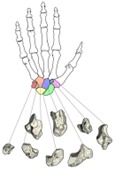 Carpal bones
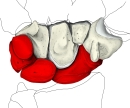 Proximal carpal bones (palmar view)
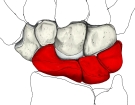 Proximal carpal bones (dorsal view)
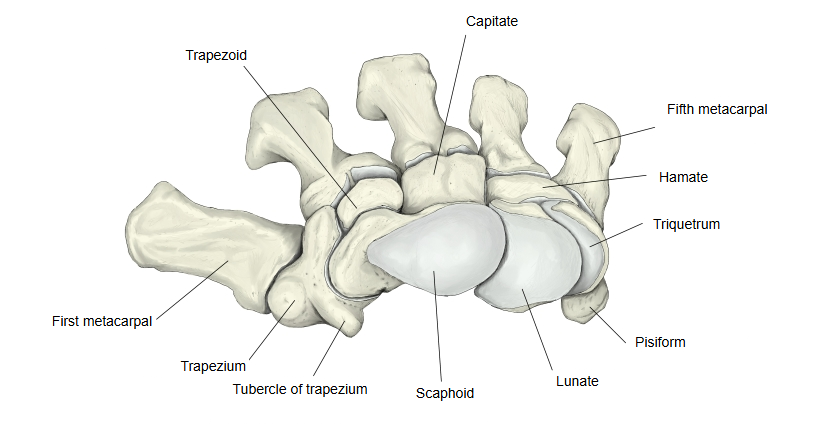 Carpal bones (proximal view)
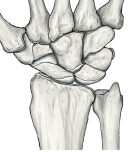 Right wrist (posterior)
Where it is found
Related terms
References and sources
- Further reading: Carpal bones, Wikipedia.
- Further reading: Wrist, Wikipedia.
- Federative International Programme for Anatomical Terminology (FIPAT). Terminologia Anatomica, 2nd ed. (TA2), 2019.