Area cribrosa (Latin: area cribrosa)
Overview
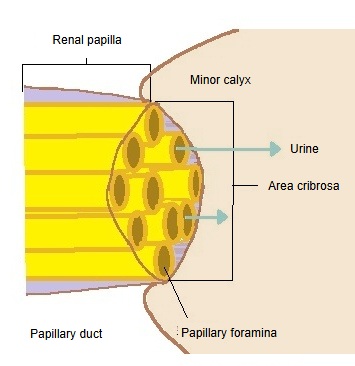
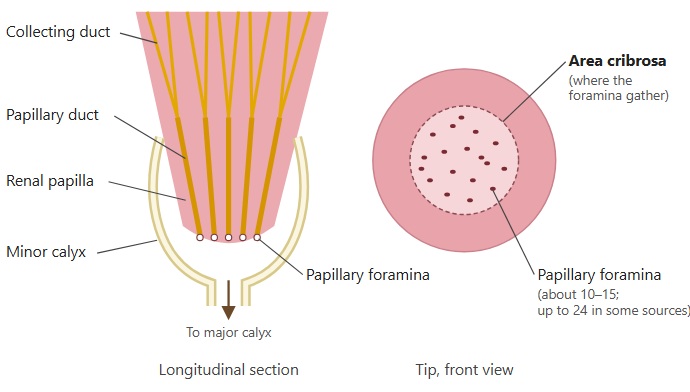
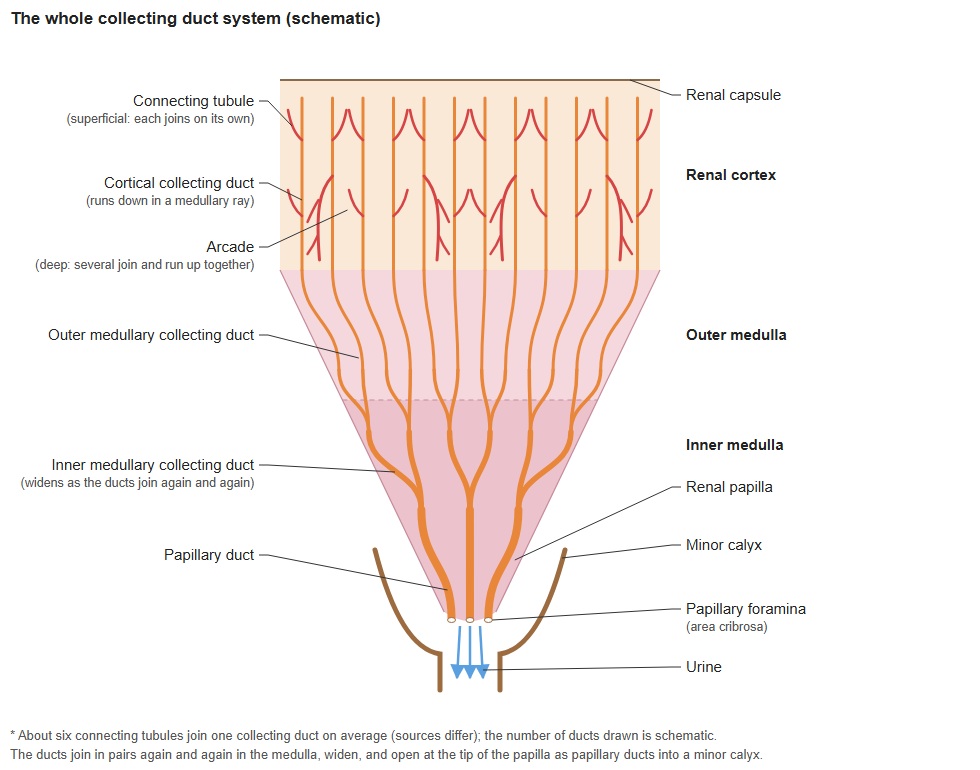
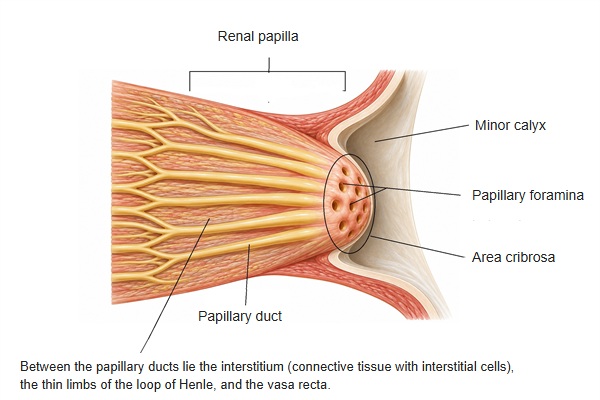
· Seen from the surface, a renal papilla has about 10 to 15 papillary foramina (larger papillae up to about 24). The openings can be seen with the naked eye and give the surface a sieve-like look, which is why this part is called the area cribrosa. The foramina are the outlets of the papillary ducts, which are formed by the union of collecting ducts.
· The papilla, with the area cribrosa at its tip, projects into the minor calyx, and the rim of the minor calyx is attached around the renal papilla.
· In a compound papilla, formed by the fusion of two or three papillae, the area cribrosa is larger and the papillary foramina are more numerous.
· Cribrosa is Latin for "sieve-like"; it is the same word as in lamina cribrosa, the cribriform plate of the ethmoid bone.
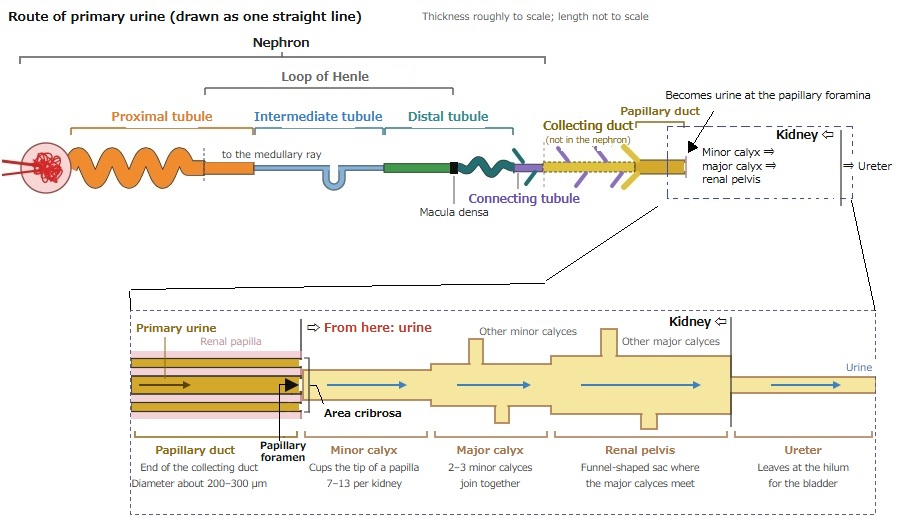
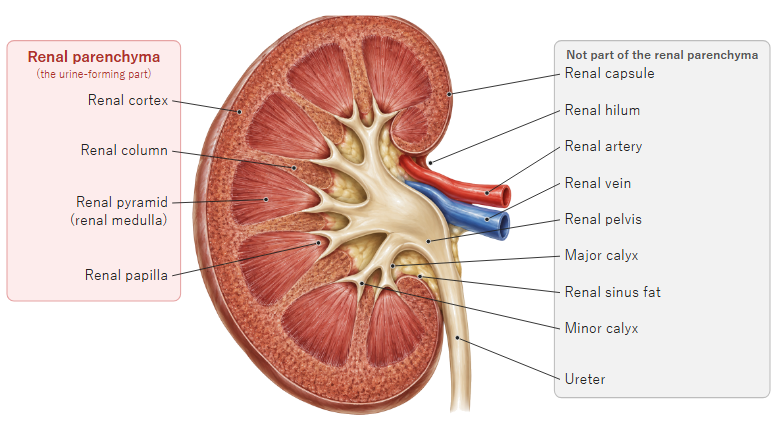
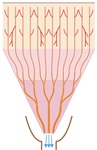 The whole collecting duct
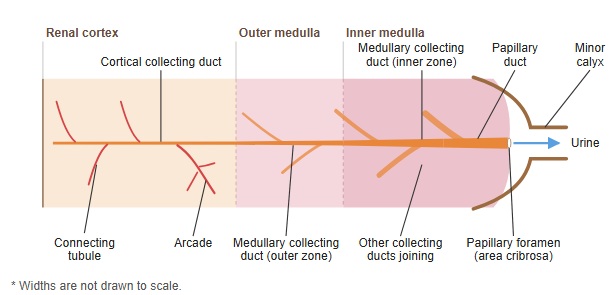
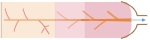 Flow through the collecting duct
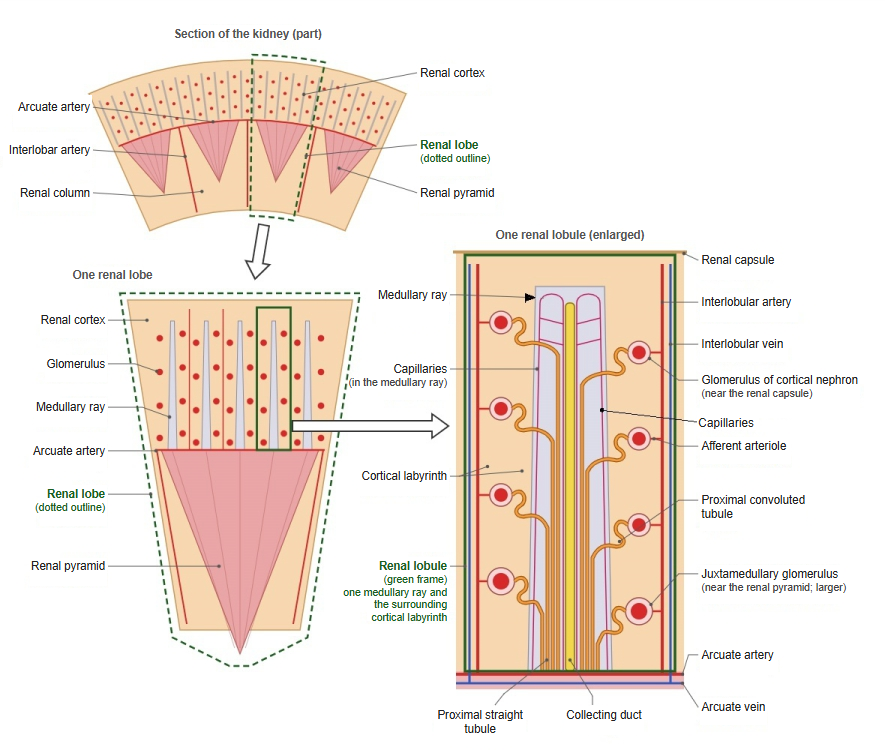
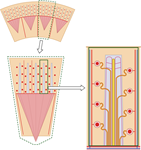 Renal lobe and renal lobule
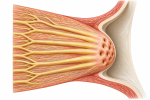 Renal papilla
Reference websites
[Wikipedia]
· Renal papilla, Wikipedia.
· Renal calyx, Wikipedia.
[Websites with illustrations]
· Kidney histology (Kenhub)
· Section of the kidney (Gray's Anatomy, fig. 1127) (Wikimedia Commons)

· Kidney structure (labelled diagram) (Wikimedia Commons)

Related terms
References and sources
- Further reading: Renal papilla, Wikipedia.
- Further reading: Renal calyx, Wikipedia.
- Federative International Programme for Anatomical Terminology (FIPAT). Terminologia Anatomica, 2nd ed. (TA2), 2019.