Articular surface (Latin: facies articularis)
An articular surface is the part of the surface of a bone that meets another bone at a joint.
It is covered with articular cartilage, usually hyaline cartilage
The cartilage lets the two surfaces of a synovial joint glide on each other with little friction. A small, flat articular surface is often called a facet.
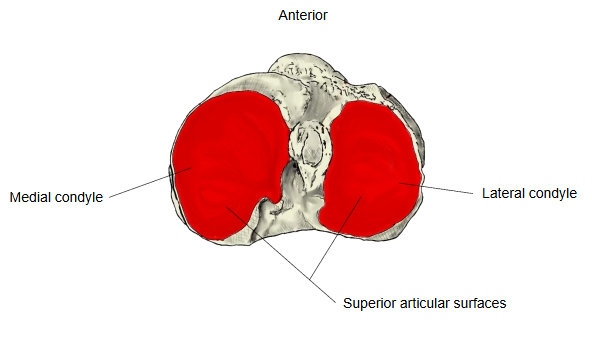
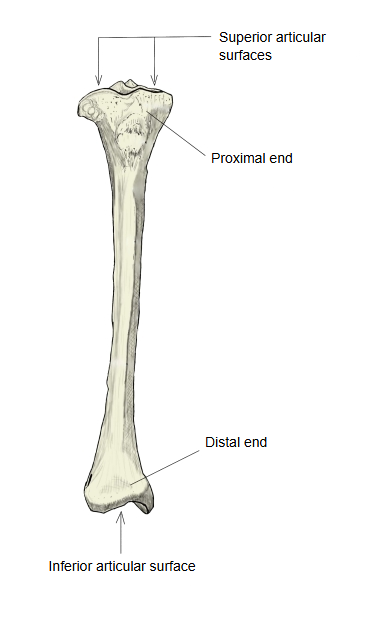
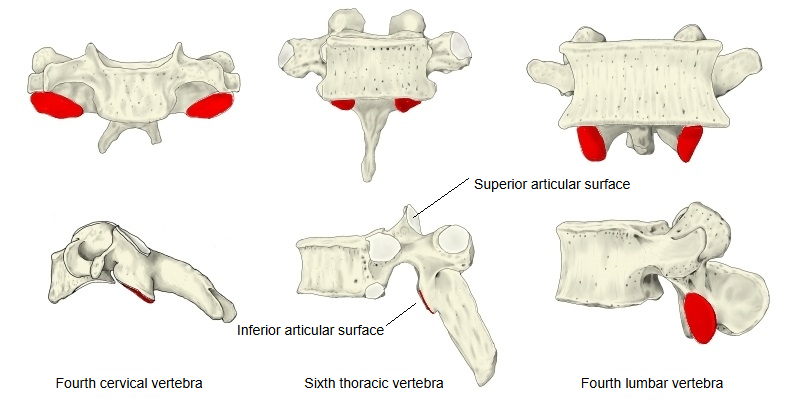
Many articular surfaces lie on the ends of long bones, but they are not limited to them. The superior articular surfaces of the tibia lie on its condyles and carry the condyles of the femur, and its inferior articular surface meets the talus. The inferior articular surfaces of a vertebra lie on its articular processes and meet the vertebra below.
A condyle carries an articular surface; an epicondyle does not.
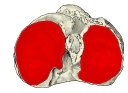 Superior articular surfaces of tibia
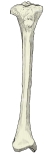 Inferior articular surface of tibia
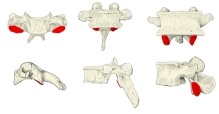 Inferior articular surfaces of vertebrae
Related terms
- Epicondyle
- Articular cartilage
- Hyaline cartilage
- Synovial joint
- Condyle
- Superior articular surface of tibia
- Inferior articular surface of tibia
- Inferior articular facet of vertebra
References and sources
- Further reading: Anatomical terms of bone, Wikipedia.
- Federative International Programme for Anatomical Terminology (FIPAT). Terminologia Anatomica, 2nd ed. (TA2), 2019.